
How a broken bone mends itself
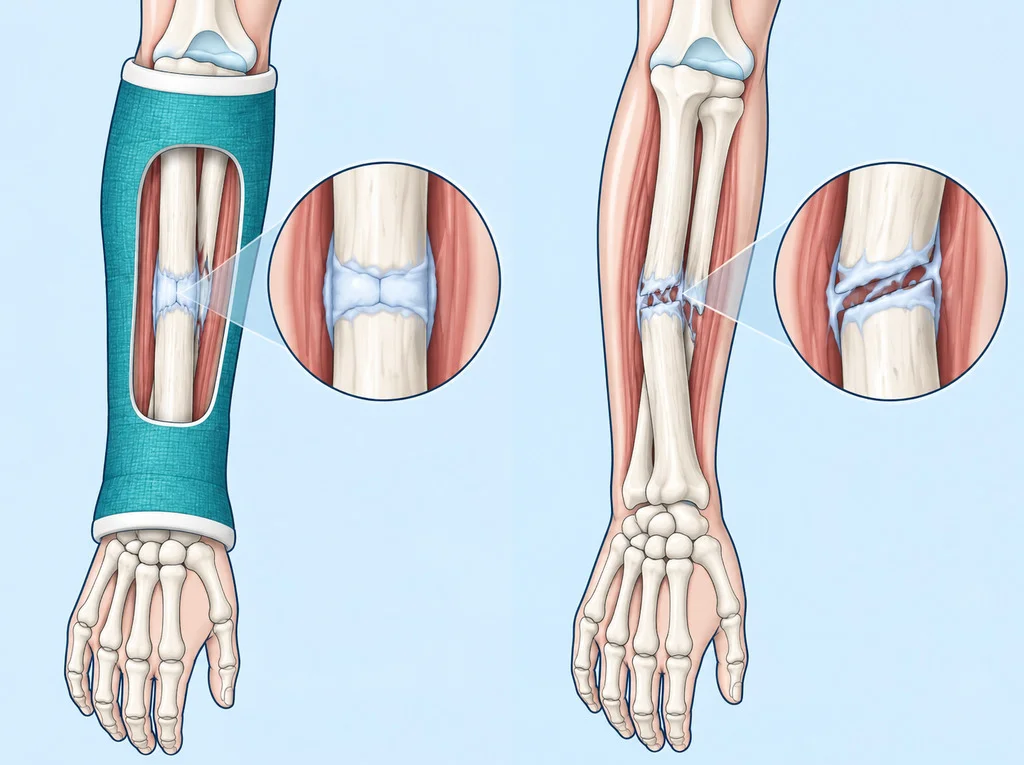
A cast does not heal a fracture. It holds the ends still while the body does something remarkable: it grows a temporary bridge of cartilage across the gap, turns that bridge to bone, and then spends years quietly filing it back into the right shape.
A break is not like a cut
When you cut your skin, it heals with scar: tissue that closes the gap but is never quite the same as what was there before. Cut skin twice in the same place and you can see the difference.
Bone does not do this. A fracture heals with new bone — and when the job is finished properly, the repair is not a patch. It is bone, laid out the way the rest of the bone is laid out.
That is why a fracture that has healed well can take the same load it took before, and it is why this is one of the more optimistic subjects in orthopaedics.
What the cast is actually for
This is the part most people have backwards.
A plaster cast, a splint, a plate or a rod does not make the bone join. None of them can. What they do is hold the two ends still enough and close enough that the body’s own repair can bridge the gap — because the repair is soft at first, and a soft bridge that is pulled apart every time you move never becomes a hard one.
So the answer to “when can I take it off?” is not “when the cast has done its work”. It is “when the bone underneath no longer needs holding”.
Four stages, running into each other
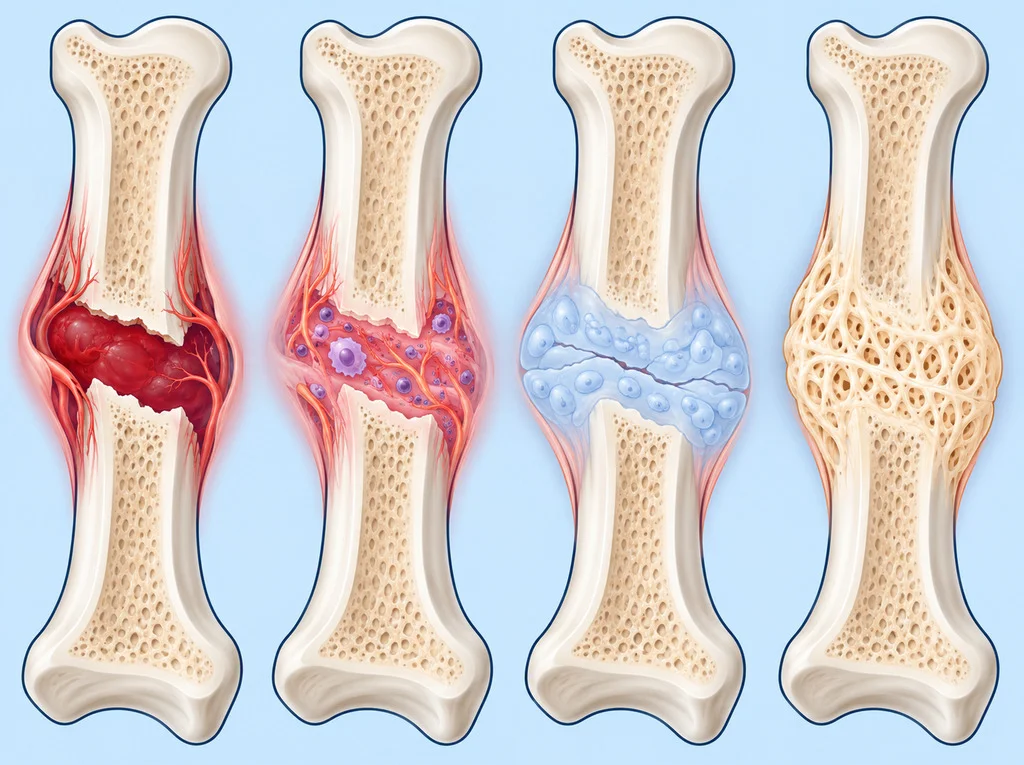
Reviews of fracture healing describe the process in stages. They overlap rather than starting and stopping neatly, but the order is always the same.
- A clot forms. Blood fills the break within hours. That clot is not waste — it is the scaffold everything else builds on, and it carries the first signals that call in the repair cells.
- Inflammation. Swelling, warmth and pain arrive, and with them the cells that clear the damage and summon the builders. The part that feels worst is the part doing the earliest work.
- A soft bridge. Over the following weeks the body grows cartilage across the gap — the same slippery material that caps the ends of bones in a joint, used here as temporary scaffolding. This is the callus. It is soft, and this is the stage during which the bone most needs protecting.
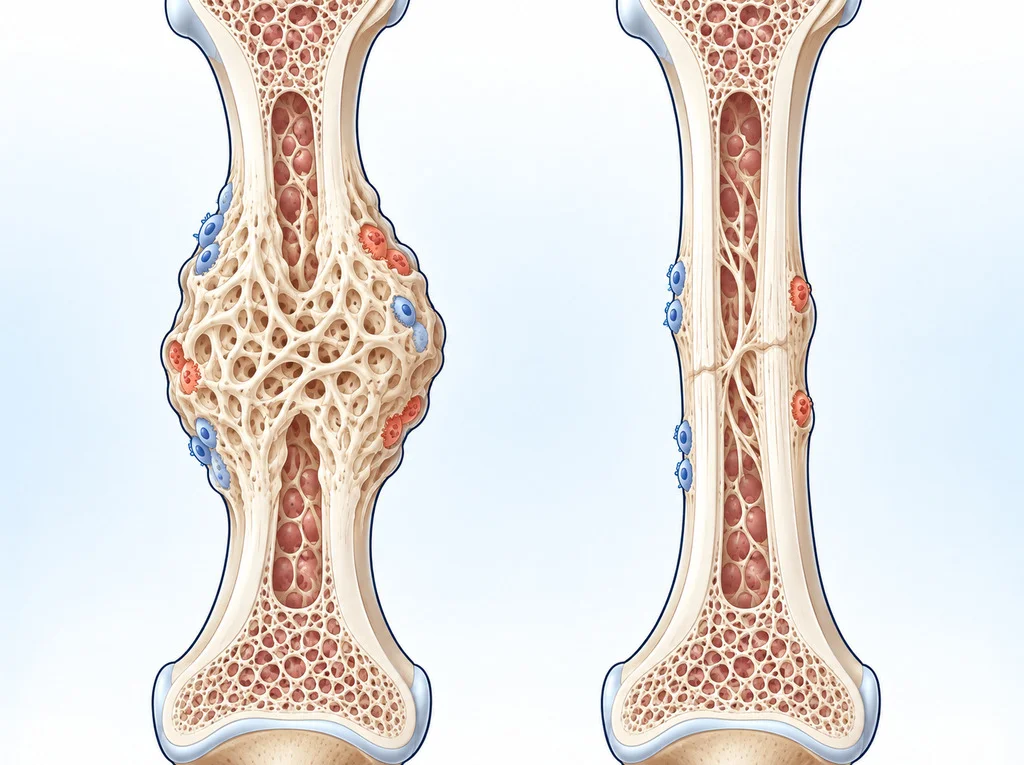
- The bridge turns to bone, then is filed back. The cartilage is replaced with bone, at first rough and bulky. Then, slowly, the same two crews that renew the skeleton all your life — one removing, one rebuilding — carve that bulk back into the right shape.
Still, but not frozen
Two things have to be true at once, and they pull in opposite directions.
The fracture needs to be still. A soft callus that is repeatedly disturbed does not harden.
Everything else needs to move. A limb that is not used at all loses muscle quickly, joints stiffen, and bone that carries no load has no reason to strengthen. That is why you are usually asked to move the joints above and below, to use the other limb, and to return to load on a schedule.
Those instructions are not a formality, and they are not the same for every fracture. “Move your fingers, keep the elbow going, no weight through the wrist” is a specific plan for a specific break — which is why the plan you were given matters more than anything written here.
What slows it down
Some of this you cannot change. Some of it you can.
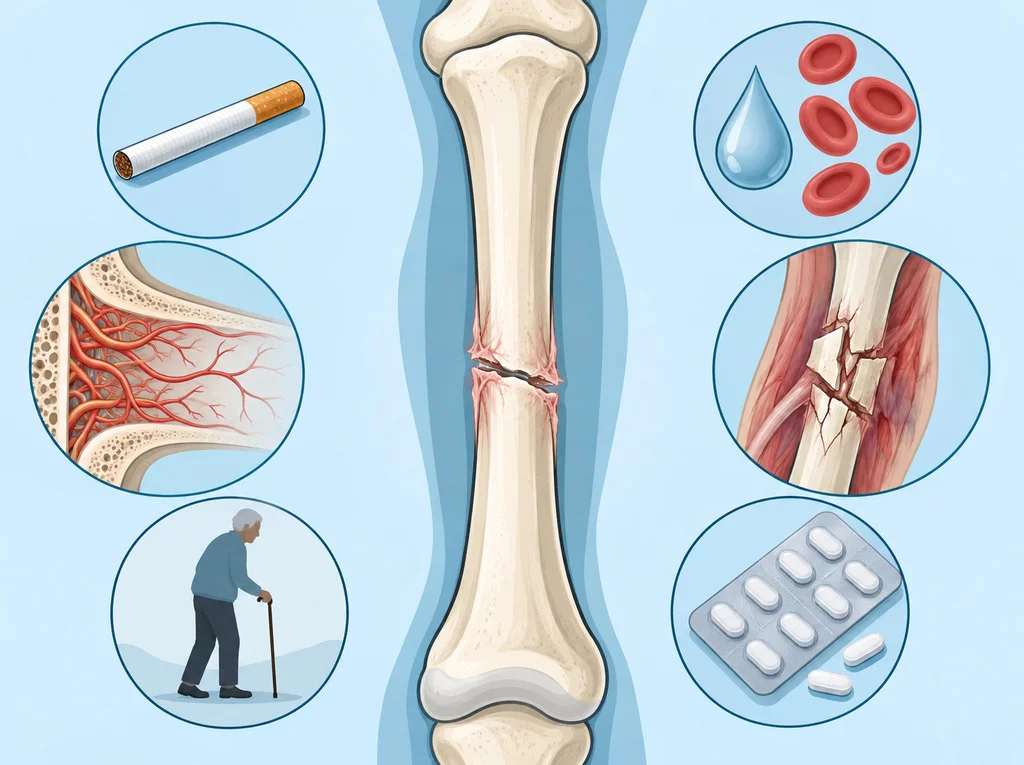
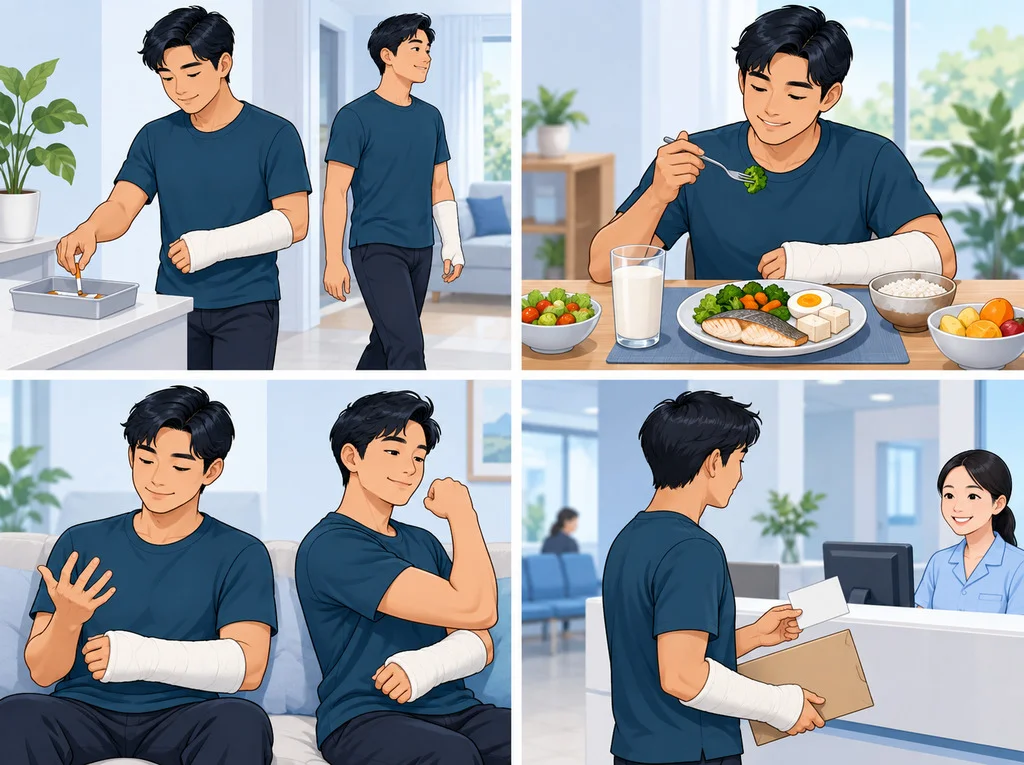
- Smoking. This is the big modifiable one. A meta-analysis of over 7,500 procedures found smokers had roughly twice the risk of a fracture failing to join, and when it did join, it took on average about four weeks longer. Stopping even around the time of the injury is worth doing.
- Diabetes and high blood sugar. Reviews of fracture healing in diabetes describe slower, less reliable healing through several mechanisms at once, including changes to the cells that build and remove bone.
- Age. Healing slows with age, and the reshaping stage in particular takes longer.
- Poor blood supply at the break. Blood is how the repair cells and materials arrive. Some bones — parts of the wrist, the hip, the shin — have leaner blood supply in places, and heal less predictably there.
- How badly the area was injured. A bone broken into several pieces with the surrounding soft tissue torn has more to rebuild than a clean crack.
- Some medicines. Several long-term medicines affect bone healing. That is not a reason to stop one on your own — it is a reason to tell the surgeon looking after your fracture what you take.
When a fracture does not join
Most do. A small minority do not, or take much longer than expected — a nonunion.
It is worth knowing this exists, for one reason only: it is treatable, and it is found by someone looking for it. Pain that never settles, or a limb that will not do what you were told to expect by now, is worth reporting rather than waiting out. The usual response is to work out why — alignment, blood supply, movement, infection, smoking, a medical cause — and address that.
What you can actually do
- Follow the loading plan you were given. Not more, not less. Both directions have a cost.
- Stop smoking, even now. Of everything on this page, this is the one with the largest effect that is entirely yours.
- Eat properly. Enough protein, calcium and vitamin D. Healing is construction work and it needs materials.
- Look after your blood sugar if you have diabetes.
- Keep the rest of you moving. The other limb, the other joints, and your general fitness are not on hold.
- Go to the appointments. The X-ray at six weeks is how anyone finds out early that something is not going to plan.
When to see a doctor
If bone thinning is what let the fracture happen in the first place, that is a separate problem worth addressing on its own — see osteoporosis and bone density scans. What bone is and how it renews itself is covered in bone is an organ, not a scaffold.
Questions to ask your doctor
- How long should this take to become solid, and how long before I am back to normal use?
- How much weight or load can I put through it now, and when does that change?
- Which joints should I be moving, and how often?
- Is there anything about me that makes slow healing more likely?
- When is the next X-ray, and what would make you want to see me sooner?
Frequently asked questions
How long does a broken bone take to heal?
It depends on which bone, how it broke, and who it belongs to — a child's forearm and an older adult's hip are different problems. Your surgeon's estimate for your fracture is the one that matters. What is common to all of them is that the timeline has two parts: the weeks until the bone is solid enough to use, and the months to years of quiet reshaping that follow.
If the X-ray still shows a line, has it not healed?
A fracture line can stay visible on an X-ray after the bone has become mechanically solid, and new bone can look untidy for a long time while it is still being reshaped. This is one of the reasons the picture is read alongside your symptoms and your examination rather than on its own.
Does a healed fracture stay weaker?
Usually not. The remodelling phase replaces the rough repair bone with properly organised bone, and a well-aligned fracture that has healed can be as strong as it was before. What does raise the risk of a future break is whatever caused the first one — thin bone, or falling.
Will taking calcium make it heal faster?
Enough calcium, vitamin D and protein are needed for the job, but extra on top of enough does not speed it up, and what you need depends on your diet, your blood tests and your other medicines. It is a question for your doctor or pharmacist rather than something to decide from a page.
References
- Einhorn TA, Gerstenfeld LC. Fracture healing: mechanisms and interventions. Nat Rev Rheumatol. 2015
- Bahney CS et al. Cellular biology of fracture healing. J Orthop Res. 2019
- Saul D, Khosla S. Fracture Healing in the Setting of Endocrine Diseases, Aging, and Cellular Senescence. Endocr Rev. 2022
- Pearson RG et al. Do smokers have greater risk of delayed and non-union after fracture, osteotomy and arthrodesis? A systematic review with meta-analysis. BMJ Open. 2016
- Tanios M et al. Diabetes and Impaired Fracture Healing: A Narrative Review of Recent Literature. Curr Osteoporos Rep. 2022
Related conditions
Written by Assoc. Prof. Sorawut Thamyongkit, M.D.