
Looking after it yourself
What you do while waiting for an appointment, or alongside treatment, matters more than most people expect. Here is what actually helps, and what to stop believing.
Start with what you control
While you wait for an appointment, or alongside treatment, several things are yours to do and they make a real difference. The systematic review of high-quality guidelines for musculoskeletal pain distilled eleven agreed recommendations, including educating patients, promoting movement and exercise, and keeping people at work.
Adjust activity rather than stopping it
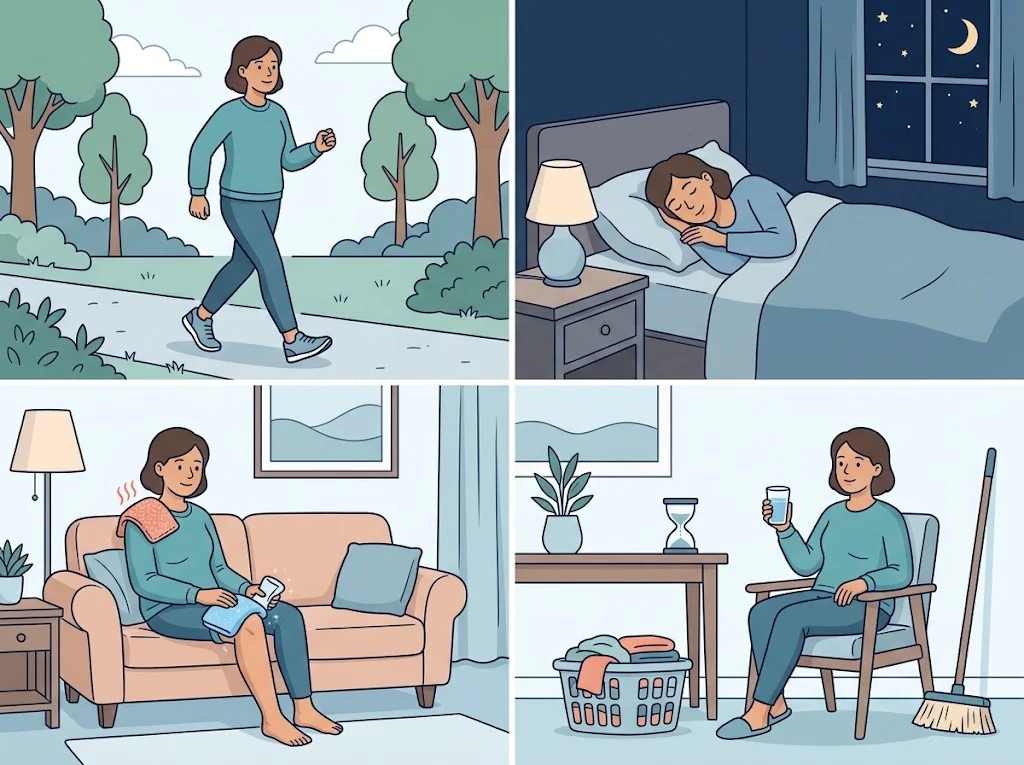
Many people hear “rest” as “stop everything”. What works better is to adjust.
- Cut back what causes sharp pain, but keep doing what you can
- Break heavy tasks into short blocks instead of one long push
- Change position often; do not sit or stand one way for long
- If something leaves you worse the next day, do about a third less next time
Heat and cold
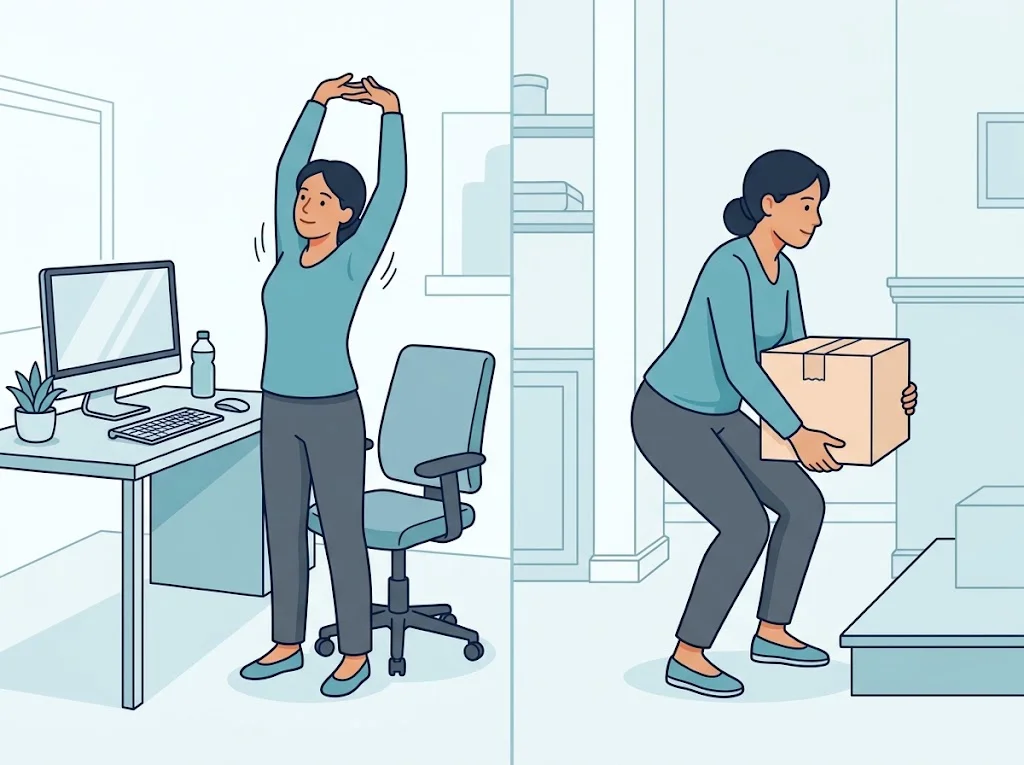
Both are tools for easing symptoms, not treatments for a cause. In practice:
- Cold tends to help a fresh injury with swelling
- Heat tends to help muscle tightness and longer-standing symptoms
Always wrap it — never put a hot or cold pack straight on skin — and take particular care if you have numbness, diabetes or circulation problems, because you may not feel skin being damaged.
The things people overlook
Sleep. Pain makes sleep harder, and poor sleep makes things hurt more; the two feed each other. If symptoms are disturbing your sleep regularly, say so — it is useful information for planning treatment.
Body weight. With every step, the knee carries several times body weight, so even modest weight loss noticeably reduces the load, at the knee and the hip alike.
Staying at work. One of the eleven agreed recommendations is to try to keep patients working. Long absences do not generally speed recovery and make returning harder. If your job is heavy, discuss temporary adjustments rather than stopping altogether.
When to see a doctor
Questions to ask your doctor
- What should I cut back for now, and what can I carry on with?
- Heat or cold for me, and for how long?
- What reaction is normal, and what should bring me back to you?
- How should I adjust my work or working posture?
- By when should I notice a change?
Frequently asked questions
Heat or ice?
In practice cold tends to help a fresh injury with swelling, and heat tends to help muscle tightness and longer-standing symptoms. Both ease symptoms rather than treating a cause. Use whichever makes you more comfortable and able to move.
Should I rest in bed?
Rest helps in the first days of a flare-up, but several days of it weakens muscle and stiffens joints quickly. Current guidance is to keep moving as much as you can manage.
Do supplements help?
This site recommends no products, and the evidence for many supplements is unclear. If you take one or are thinking about it, tell your doctor or pharmacist — particularly if you take other medicines.
References
Related conditions
Written by Assoc. Prof. Sorawut Thamyongkit, M.D.