
Shoulder rehabilitation
A shoulder needs both range of movement and strength around the shoulder blade. Programmes usually begin with movement that needs no effort from you, then add resistance — over months rather than weeks.
Why shoulders are slow
The shoulder socket is very shallow compared with the ball that sits in it. That is what allows the arm to move in almost any direction — and it means nearly all the stability comes from ligaments, capsule and the muscles around them. When one part is not working, another takes the load, and usually complains.
Just as important is the shoulder blade. Your arm is not attached directly to the trunk; it hangs from a shoulder blade that slides across the ribs. If the blade is not steady, the whole timing of lifting the arm is wrong. That is why almost every shoulder programme contains exercises that appear to have nothing to do with the shoulder.
The usual sequence
Early — movement without effort. Exercises where gravity or the other arm does the work, such as pendulum swings or using a stick to push the arm up. The aim is to keep range while the joint is not ready to take load.
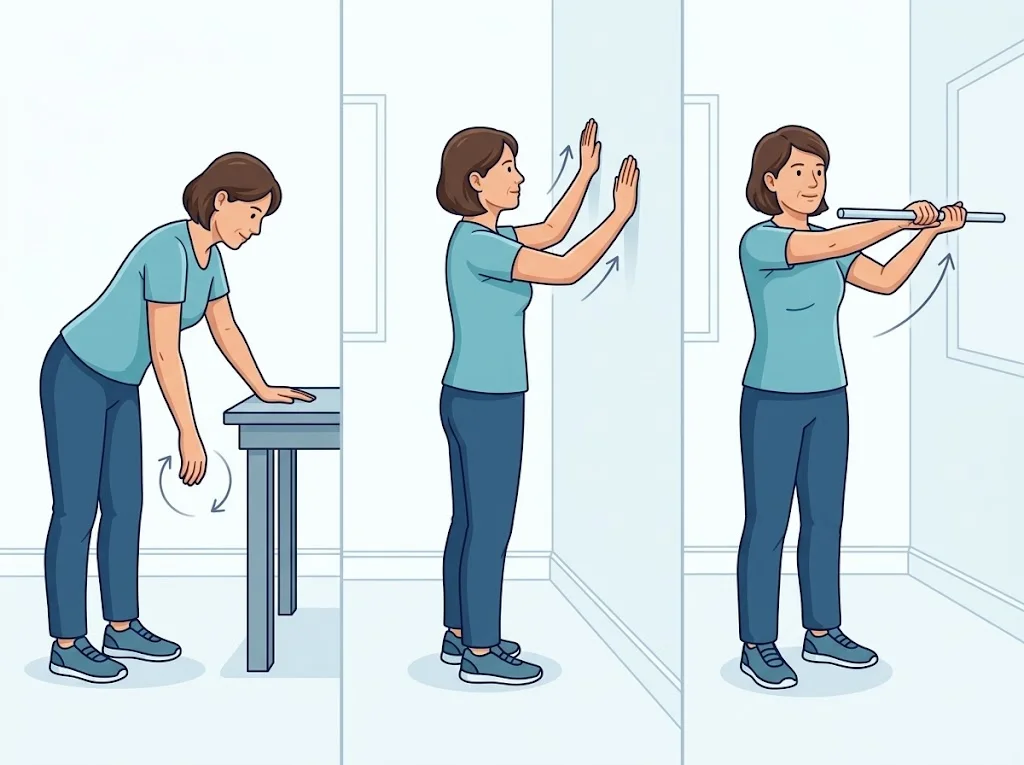
Second — range and setting the blade. Add stretches you can do yourself, and start training the shoulder blade into the right position. These look simple enough to be dismissed, and they are the foundation for everything after.
Third — add resistance. Bands or light weights, working rotation in and out and pulling the shoulder blades together, increasing gradually.
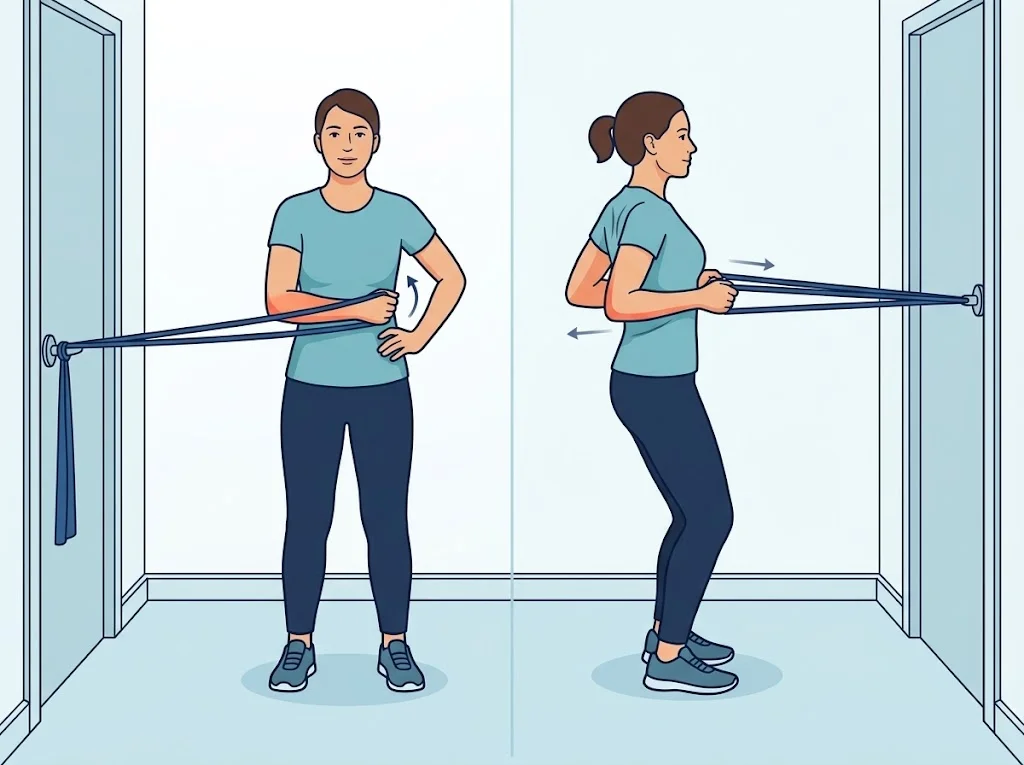
Fourth — return to use. Practise what you actually need: reaching a high shelf, carrying a child, or returning to sport.

What kind of programme works
A systematic review with meta-analyses of exercise for rotator cuff-related shoulder pain pooled 22 randomised trials with 1,281 participants. Motor control programmes produced slightly better function than non-specific exercise programmes, in both the short and medium term, on moderate-certainty evidence.
The authors themselves noted that the advantage may not come from the type of exercise at all, but from features these programmes share — being progressed over time and tailored to the individual.
The practical conclusion: do not go hunting for a magic exercise. What matters more is having someone adjust the programme to you, and doing it consistently while making it gradually harder.
When to see a doctor
After shoulder surgery
If you have had surgery, such as a rotator cuff repair, everything above is replaced by your surgeon’s protocol. A repaired tendon takes weeks to attach to bone, and adding load too early can pull the repair apart.
Early on you may be told to move only the elbow, wrist and fingers, and to let someone else — or your other arm — move the shoulder for you while you do nothing. That is not lost time; it is part of the plan.
The rotator cuff tear article has demonstration videos for the period after surgery, and frozen shoulder has exercises with clips for a stiff shoulder.
Questions to ask your doctor or physiotherapist
- What phase is my shoulder in, and what is this phase for?
- Which movements are off limits right now, and until when?
- How firmly should I stretch, and how will I know I have gone too far?
- When can I go back to lifting or reaching overhead?
- If six weeks of exercise changes nothing, what is the next step?
Frequently asked questions
How many times a day should I exercise?
Movement and stretching exercises are often done in several short sessions a day; resistance work is usually every other day so the muscle can recover. The exact plan should come from the clinician who has examined you.
Should I force a stiff shoulder through the pain?
No. Stretch to the point of clear tightness and hold there. Forcing through sharp pain generally makes things more painful without speeding recovery.
I have had rotator cuff surgery. Can I start exercising?
After surgery you must follow the surgeon's staged protocol exactly, because a repaired tendon needs time to heal to bone. Starting too early can undo the repair. The surgeon's timetable overrides everything else.
References
- Lafrance S et al. The Efficacy of Exercise Therapy for Rotator Cuff-Related Shoulder Pain According to the FITT Principle: A Systematic Review With Meta-analyses. J Orthop Sports Phys Ther. 2024
- Lin I et al. What does best practice care for musculoskeletal pain look like? Eleven consistent recommendations from high-quality clinical practice guidelines: systematic review. Br J Sports Med. 2019
Related conditions



Written by Assoc. Prof. Sorawut Thamyongkit, M.D.