
Nerve conduction studies and EMG
These tests measure how fast and how strongly electrical signals travel along a nerve. They help locate a compressed nerve and grade how severe it is — but a normal result does not rule everything out.
What the test does
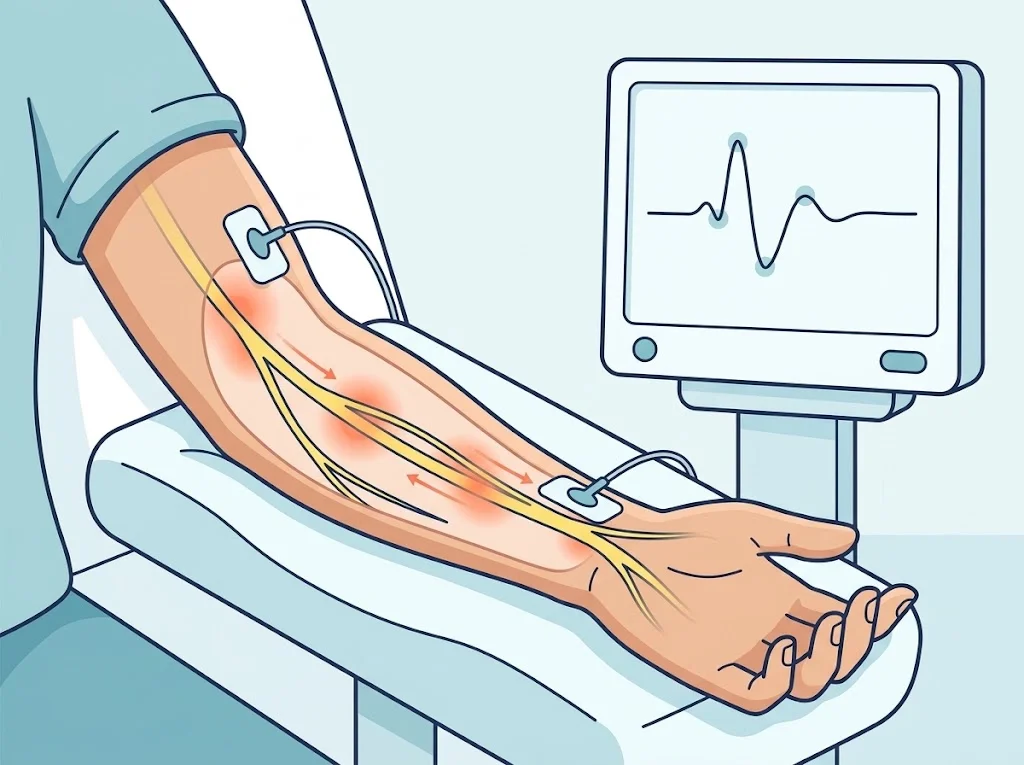
Nerves work by electrical signal. When one is compressed or damaged, the signal travels more slowly or arrives weaker. This test measures exactly that.
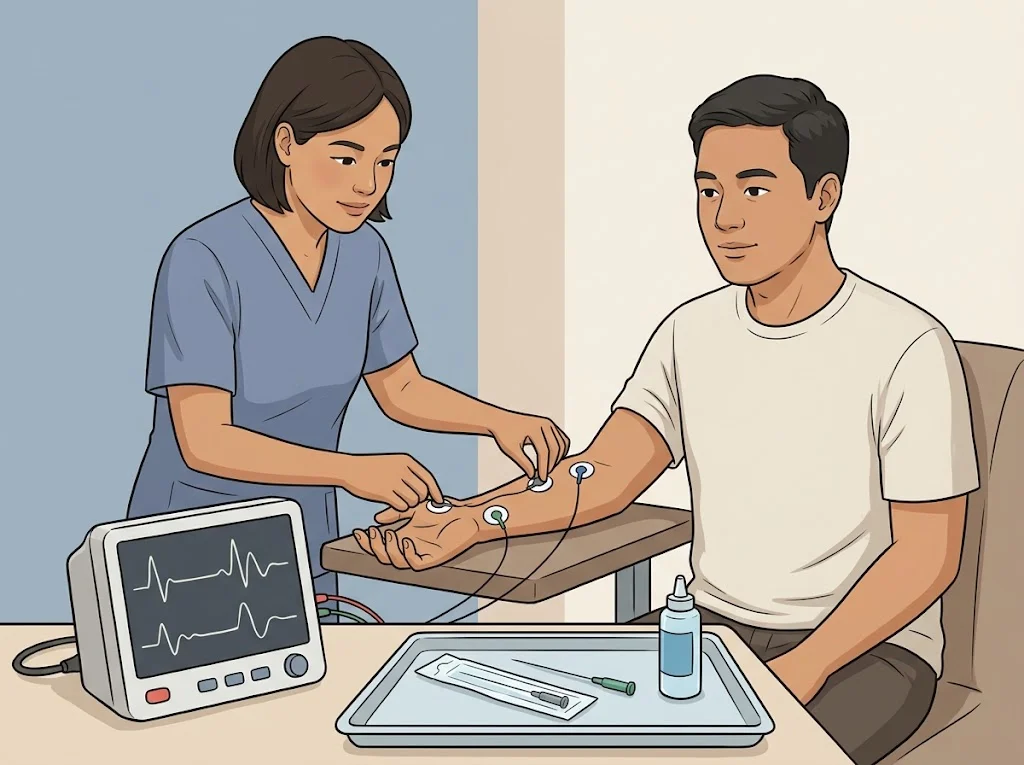
Nerve conduction study (NCS). Small electrodes are taped to the skin. A mild electrical pulse stimulates the nerve at one point, and the machine records how fast and how strongly the signal arrives at another. It feels like brief, mild shocks.
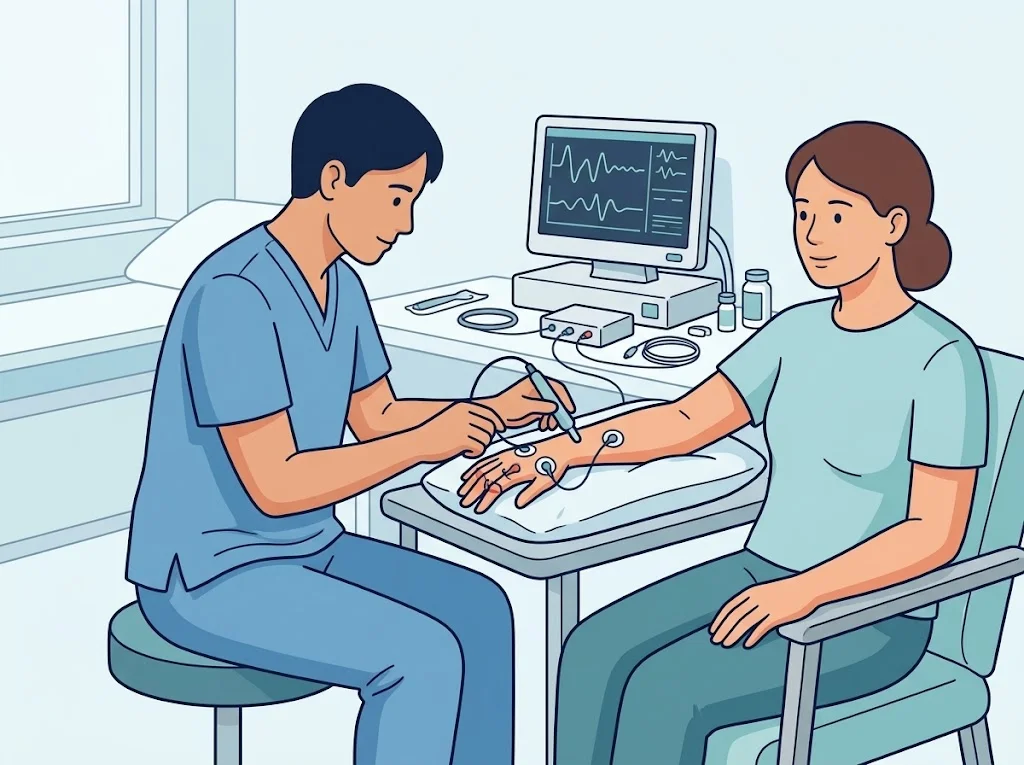
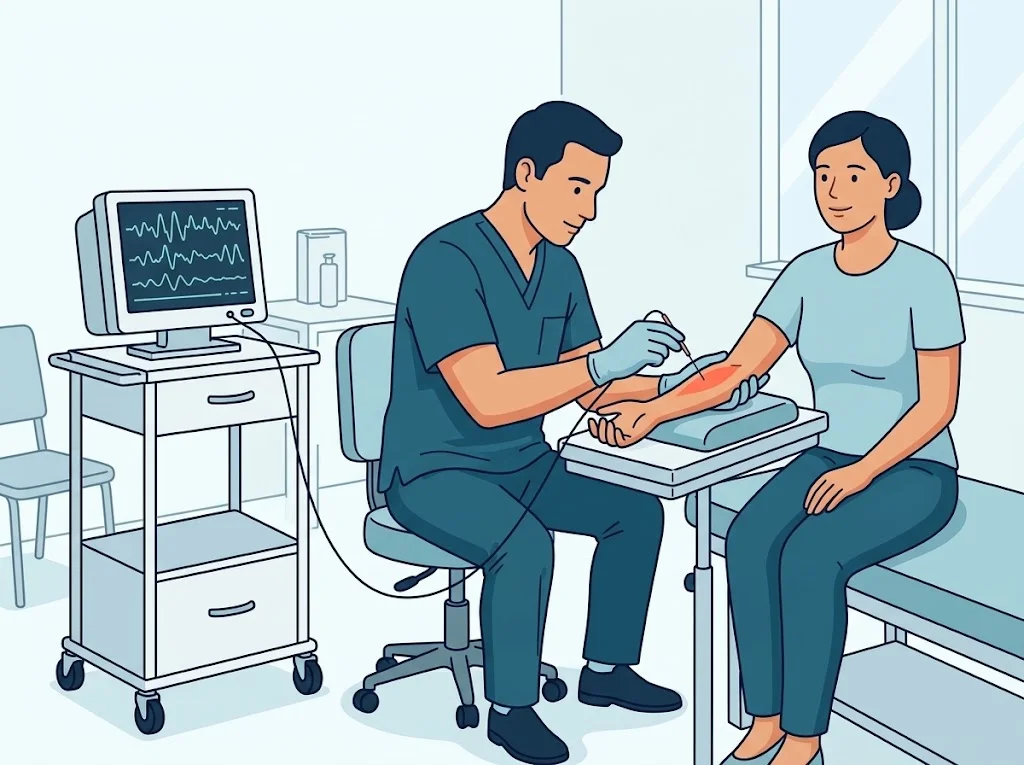
Electromyography (EMG). A very fine needle is placed into a muscle to listen to its electrical activity at rest and while you tense it. This part shows whether the muscle is still receiving normal instructions from its nerve.
Not everyone needs both. Your doctor chooses according to the question being asked.
When it is used
- Carpal tunnel syndrome, which is the most common reason
- Numbness or weakness where it is unclear whether the problem is in the neck, the arm, or a peripheral nerve
- Leg pain where a compressed nerve root is suspected
- Nerve damage from other causes, such as diabetes
- Before surgery in some cases, to confirm the site and severity
What the result can and cannot tell you
The clinical practice guideline on managing carpal tunnel syndrome sets out the role of electrodiagnostic testing as a tool that supports diagnosis and planning — not a test that every patient needs.
Preparing
- Wash the arm or leg. Use no lotion, cream or oil on the day — it interferes with the electrodes
- Wear loose clothing that gives access to the limb
- Tell the staff if you take blood thinners, bleed easily, have a pacemaker or implanted electrical device, or have significant swelling in the area
- Cold hands or feet change the readings, so the area may be warmed first
Afterwards
You can go home straight away and carry on as normal. Where the needle was placed may ache for a day or two and can bruise slightly. If the area becomes more swollen, red or painful, or you develop a fever, see a doctor.
Questions to ask your doctor
- How will this test change my treatment?
- If the result is normal but I still have symptoms, what happens next?
- How severe is what was found, and what does that mean for the choice of treatment?
- Will this need repeating, and when?
Frequently asked questions
Does it hurt?
The conduction part feels like brief mild electric shocks. The needle part feels like a pinprick with some ache when you tense the muscle. Most people manage it, and the sensations stop when the test does.
My result was normal. Does that mean nothing is wrong?
Not necessarily. Early in nerve compression the study can still read normal while you genuinely have symptoms. Your doctor uses the result alongside your symptoms and examination, not on its own.
How do I prepare?
Wash the area and use no lotion or cream on the day. Wear loose clothing. Tell the staff if you take blood thinners, bleed easily, or have a pacemaker or other implanted device.
References
- Shapiro LM et al. American Academy of Orthopaedic Surgeons/ASSH Clinical Practice Guideline Summary: Management of Carpal Tunnel Syndrome. J Am Acad Orthop Surg. 2024
- Jiménez-Del-Barrio S et al. The effectiveness of manual therapy on pain, physical function, and nerve conduction studies in carpal tunnel syndrome patients: a systematic review and meta-analysis. Int Orthop. 2021
Related conditions



Written by Assoc. Prof. Sorawut Thamyongkit, M.D.