
Principles that apply to almost any rehabilitation
Shoulder, knee or back, the shape of a rehabilitation programme is the same: load the body a little more than it is used to, keep going, and judge progress by what you can do rather than by how one day felt.
What rehabilitation actually is
Many people understand “rehab” as resting until the problem goes away. In practice it is close to the opposite: it means gradually exposing the body to more load, until you can do what you need to do again.
Tissue adapts to the load it receives. Unused muscle weakens quickly, an unmoved joint stiffens, and bone that carries no weight thins. Rest is a short-term tool, not a treatment plan.
A systematic review of high-quality clinical practice guidelines for musculoskeletal pain distilled eleven recommendations they agree on. Two of them are to promote movement and exercise, and to offer good non-surgical care before considering surgery.
The four phases most programmes follow
The names vary, but the structure rarely does.
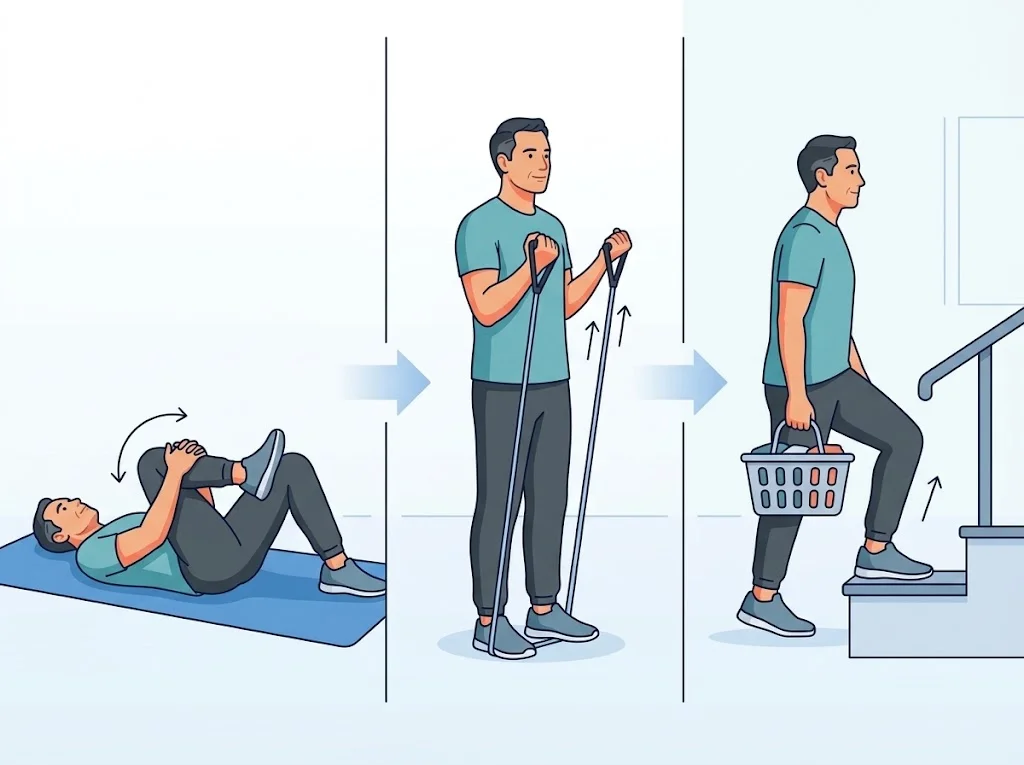
Phase 1 — protect and settle
The aim is to let the injured part calm down without letting everything else weaken alongside it. You may need to reduce some activities, use a support, or apply ice or heat — while still moving neighbouring joints and exercising the rest of your body.
Phase 2 — restore movement
Get the joint moving through as much of its range as it will go, before working on strength. A stiff joint makes the muscles work in the wrong pattern, and pain elsewhere often follows.
Phase 3 — build strength
This is the longest phase and the one people abandon. Muscle needs enough resistance, increasing over time, to actually get stronger. Doing the same exercise with the same load every day for six months will not get you there.
Phase 4 — return to real use
Practise what resembles what you want to go back to: stairs, lifting, carrying a grandchild, or returning to sport. Being strong in a clinic does not automatically mean being ready for the real thing.
Increasing the load safely
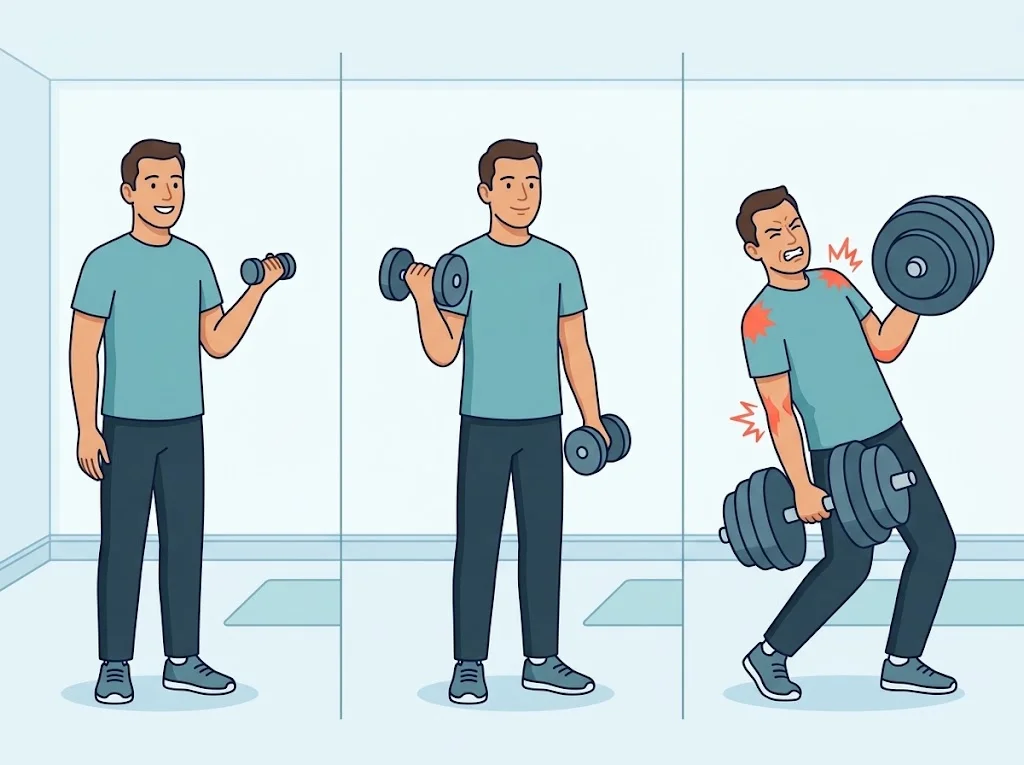
Change one thing at a time, and change it a little.
- Add repetitions first, then add load or resistance
- Increase by around 10% a week, not by doubling
- Do not increase repetitions, load and frequency all in the same week
- After a week off, come back slightly below where you stopped, not at the same level
When to see a doctor
Beyond that list: if you have followed a programme consistently for six to eight weeks and nothing at all has improved, that alone is a good reason to go back. The programme may need changing, or something may need investigating.
How to measure progress
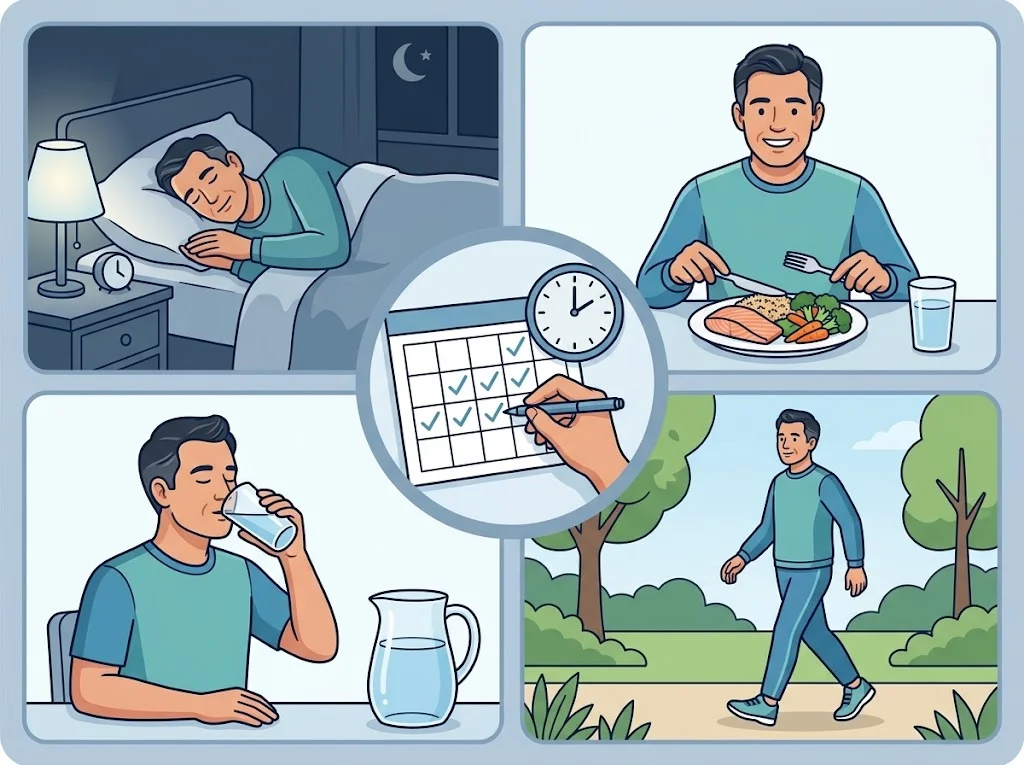
Pain on any given day is a noisy measure. It moves with sleep, stress and what you did yesterday. What you can actually do is more useful.
- How far you walk before needing to stop
- How many flights of stairs without holding the rail
- How much you can lift without trouble
- How many hours you sleep unbroken
- How often you need pain relief
Write it down once a week and compare with last month, not with yesterday.
Questions to ask your doctor or physiotherapist
- Which phase am I in, and what is this phase trying to achieve?
- Which exercises should I do daily, and which two or three times a week?
- What is a normal reaction after exercising, and what should bring me back to you?
- What should I avoid for now, and when can I return to it?
- By when should I expect to notice a change, and what if I do not?
Frequently asked questions
It hurts when I exercise. Should I stop?
Mild tightness or ache during and after exercise is common. Sharp pain, or pain that makes you change how you move, is a signal to do less. If your symptoms have not returned to their usual level within about a day, that session was too much: reduce it and build back up. If you are unsure, ask your doctor or physiotherapist.
How long before I notice a difference?
Most people feel some change at four to six weeks, with clearer results by three months. Different tissues adapt at different speeds — muscle responds faster than tendon or cartilage. Consistency matters more than how hard any one session is.
Can I just rest until it settles?
Rest helps in the first days of a flare-up, but prolonged rest weakens muscle and stiffens joints quickly, and usually makes returning to activity harder. Current guidelines favour staying as active as you can manage.
Do I need a gym or equipment?
Usually not. Many effective programmes use only body weight, a chair, a wall and an inexpensive resistance band. What cannot be substituted is consistency and gradually increasing the difficulty.
References
Related conditions


Written by Assoc. Prof. Sorawut Thamyongkit, M.D.