
Knee osteoarthritis
Knee osteoarthritis is the gradual thinning of the smooth cartilage that lines the knee joint, causing pain, stiffness and difficulty walking. Most people manage it well without surgery, through activity changes, weight management and exercise.
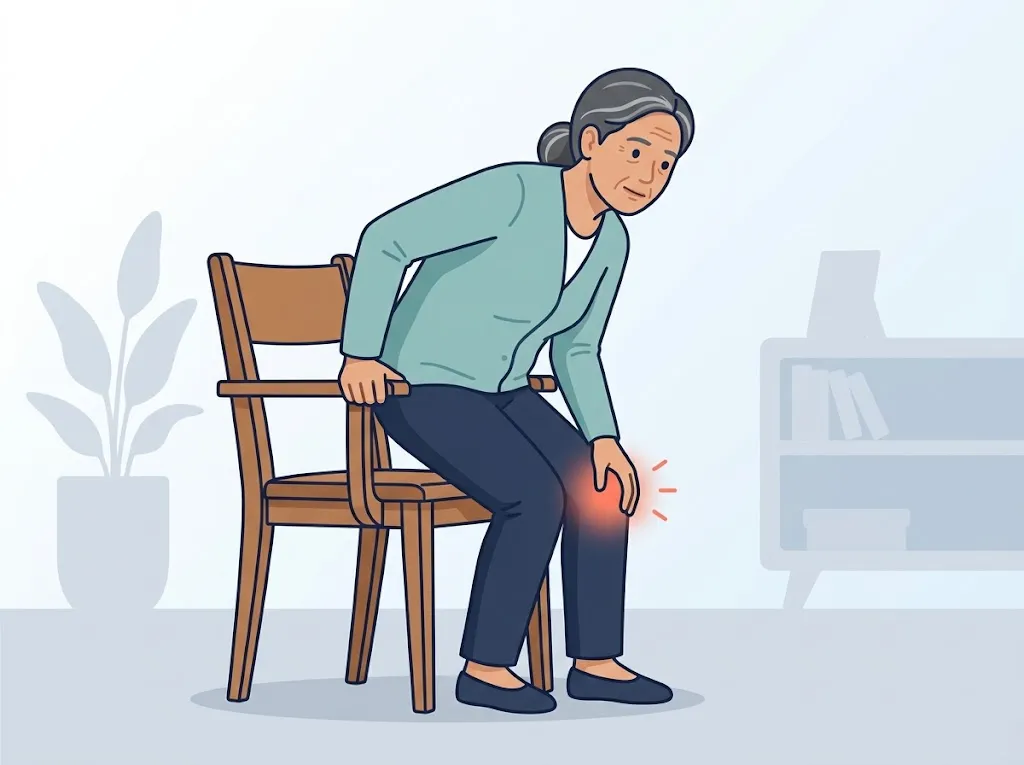
What it is
The ends of the bones that meet to form your knee are covered by a smooth, slippery layer called The smooth, slippery layer covering the bone ends inside a joint. It lets the joint glide and spreads the load.. It lets the joint glide and helps spread the load when you move.
In knee osteoarthritis this cartilage gradually thins and loses its smoothness. As the surface becomes less even, moving the joint creates more friction, which brings pain and stiffness. Over time, extra bone can form around the edges of the joint, so the knee may look larger or change shape.
This happens slowly, over years. It is not something that appears overnight, and it does not mean you will be unable to walk in the future. Many people with knee osteoarthritis carry on with normal life once it is managed well.
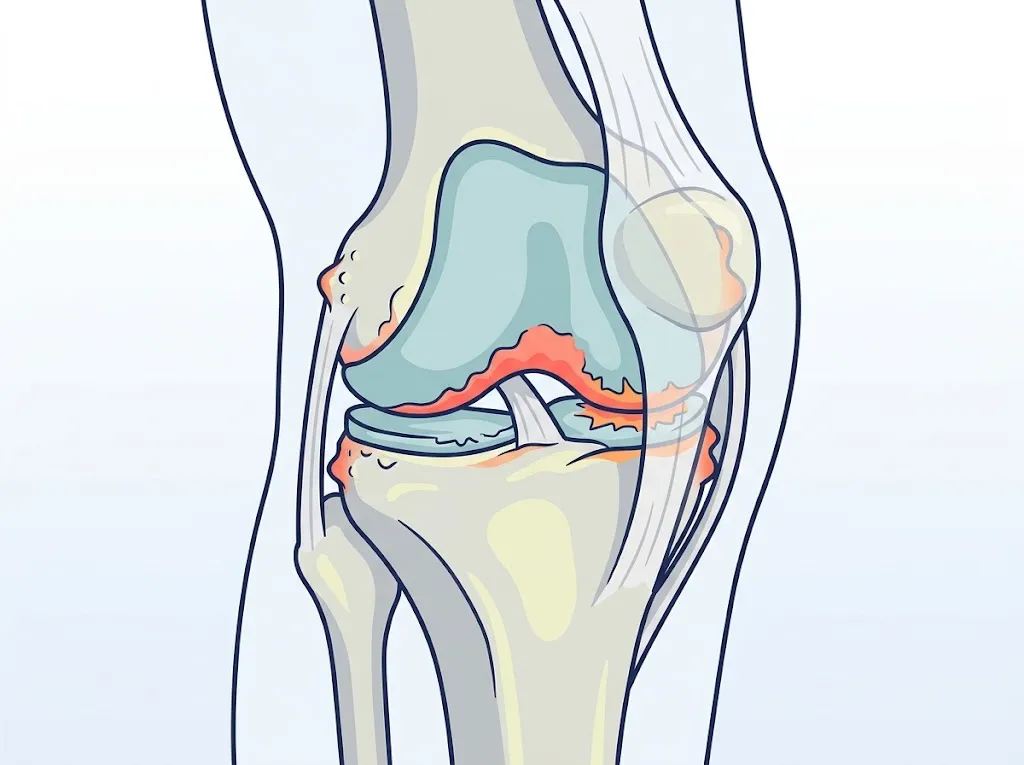
Symptoms
Common symptoms include:
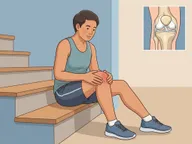
- Pain when you use the knee — walking a distance, going up or down stairs, getting out of a chair, or squatting — which usually eases with rest.
- Stiffness in the morning, or after sitting for a long time, that typically lasts less than about 30 minutes and improves once you move.
- A grating or crackling sensation as you bend and straighten the knee.
- Occasional swelling, especially after a heavier day than usual.
- Not being able to fully bend or straighten the knee as time goes on.
- A bow-legged shape in people who have had it a long time and worn one side of the joint more than the other.
Symptoms usually come and go, with better spells and worse spells, rather than getting worse every single day.
Causes and risk factors
Knee osteoarthritis usually comes from several factors together, not one single cause.
- Getting older is the most common factor.
- Carrying extra weight. With every step, the knee takes several times your body weight, so losing weight meaningfully reduces the load on the joint.
- A previous knee injury, such as an ACL tear, a meniscus tear, or a fracture that ran into the joint surface.
- Repeated heavy loading of the joint, such as regular squatting, kneeling or lifting heavy loads.
- Weak thigh muscles, which leaves the joint with less help carrying the load.
- Family history, and the natural alignment of your legs if you are bow-legged or knock-kneed.
When to see a doctor
Most knee pain is not an emergency and can wait for an ordinary appointment. Some symptoms, though, need to be seen straight away, because they can come from another cause that needs urgent treatment.
Apart from those urgent signs, see a doctor if knee pain lasts more than two to three weeks, if it disturbs your sleep or your work, or if over-the-counter painkillers are not helping.
How it is diagnosed
The diagnosis mostly rests on your history and a physical examination. Your doctor will ask what the pain is like, what makes it better or worse, and how it affects your daily life. They will then check how the joint moves, where it is tender, whether it is swollen, how stable it is, and how your leg is aligned.
X-rays show narrowing of the space between the bones and any extra bone growth. One thing is important to understand: how worn the joint looks on an X-ray and how much it hurts often do not match. Some people have a badly worn X-ray and little pain; others have a mild X-ray and a lot of pain. Treatment is therefore guided mainly by your symptoms.
An MRI is usually not needed to diagnose knee osteoarthritis. Your doctor will only arrange further scans if another problem is suspected alongside it.
Treatment options
Non-surgical treatment
Non-surgical care is the main approach, and it deserves a proper try first.
- Exercise has the strongest evidence behind it — both strengthening the thigh muscles and low-impact aerobic exercise such as walking on the flat, cycling, or exercising in water. The benefit shows up when you keep it up steadily over several weeks.
- Weight loss, for those carrying extra weight. Even a modest loss makes a meaningful difference to pain.
- Changing how you use the knee: reducing positions that load it heavily, such as squatting, kneeling, sitting on the floor, and frequent stairs.
- Heat or cold packs both help. Use whichever feels better to you.
- Walking aids. A stick held on the opposite side to the painful knee genuinely reduces the load on the joint. Cushioned, supportive shoes help too.
- Medicines. Your doctor may consider paracetamol, or anti-inflammatory medicines (NSAIDs) as a gel or as tablets. Each group has its own cautions, particularly for people with kidney, heart or stomach conditions, so always check with a doctor or pharmacist before using them.
- Injections into the joint, such as a steroid, can settle a flare-up. The relief is temporary, and injections should not be repeated too often.
Surgery
Surgery is considered when non-surgical treatment has been given a proper try and pain still interferes with daily life or sleep.
Knee replacement (knee arthroplasty) removes the worn joint surfaces and replaces them with artificial ones. The main aim is to reduce pain and restore comfortable walking and daily activity. Most people are satisfied with the result, but every operation carries risk — including infection, blood clots and stiffness — so the benefits and risks need weighing up with your own surgeon.
For younger people with wear on only one side of the joint, there may be other options, such as realigning the bone or replacing only part of the joint surface. Your surgeon will explain what suits your situation.
Keyhole washout of the joint on its own does not help ordinary knee osteoarthritis and is not recommended for it.
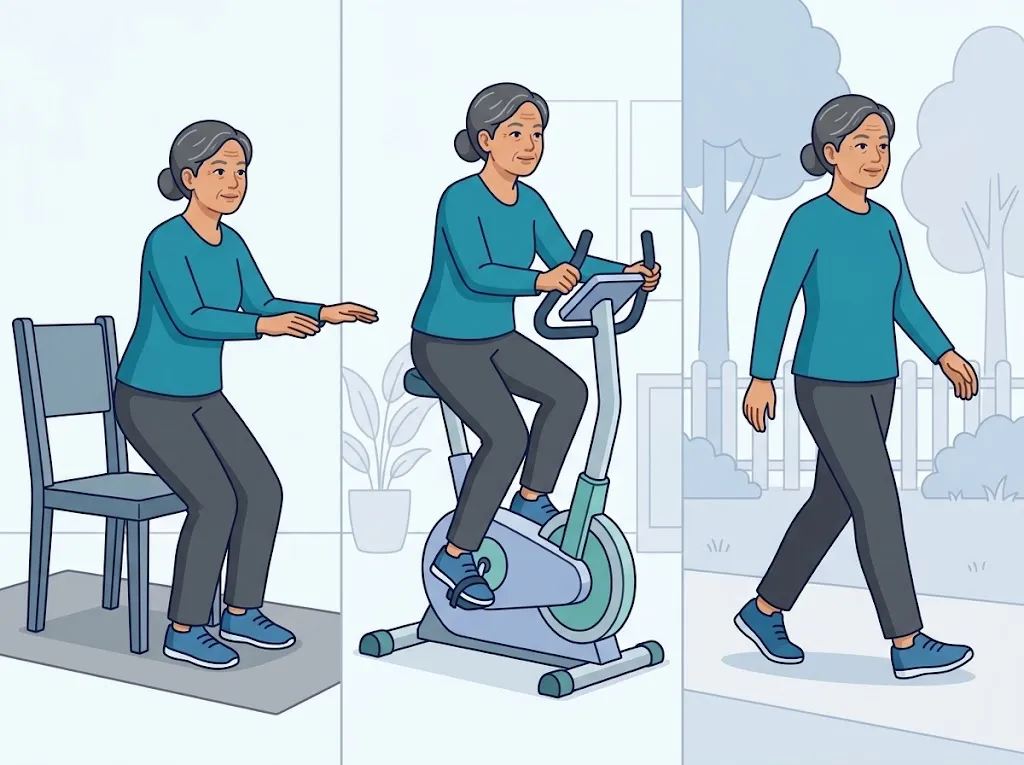
Recovery and rehabilitation
With non-surgical treatment, symptoms usually improve gradually over weeks to months. Consistency matters more than intensity: small goals you can meet every day beat occasional hard sessions.
After a knee replacement, you will normally be up and walking with a walking aid in the early days, then build up distance and bend gradually with a physiotherapy programme. Feeling close to normal usually takes several months, and the exact timeline differs from person to person. The team looking after you will set the goals for each stage.
Prevention and self-care
- Keep your weight in a healthy range.
- Strengthen your thigh muscles regularly — for example straightening the knee while seated, or standing up from a chair slowly.
- Choose low-impact exercise, and warm up before you start.
- Avoid long periods of squatting, kneeling or sitting on the floor.
- Wear shoes that fit well and cushion the impact.
- If exercise makes the pain noticeably worse, ease off and speak to a doctor or physiotherapist rather than pushing through it.
Questions to ask your doctor
- What is most likely causing my knee pain, and is there another cause that should be ruled out?
- What kind of exercise should I start with, and how often?
- Which activities should I avoid, and which can I carry on with?
- Do the medicines I take now have any cautions given my other conditions?
- When should I come back, or what symptoms should bring me back sooner?
Frequently asked questions
Can knee osteoarthritis be cured?
Cartilage that has already worn away cannot be restored to how it was. The good news is that most people control their symptoms very well without surgery. The aim of treatment is less pain and a normal daily life, not a normal-looking X-ray.
Should I rest my knee and stop walking?
Stopping movement altogether is not the answer. Resting too much weakens the muscles around the knee and makes the joint stiffer. Change the kind of activity instead — swap long flights of stairs for walking on the flat or cycling — then build back up as you are able.
Does everyone need a knee replacement in the end?
No. A knee replacement is usually considered when pain interferes with daily life or sleep and non-surgical treatments have been given a proper try without enough benefit. The decision depends on your symptoms and what you need from your knee, not on the X-ray alone.
Do joint supplements work?
The evidence is inconsistent. Some studies show a small reduction in pain, others find no difference from a dummy tablet. If you want to try one, speak to a doctor or pharmacist first, particularly if you have other conditions or take other medicines, and do not use it in place of exercise, which has much stronger evidence behind it.
References
Related educational reading
These pages explain tests, treatments and rehabilitation that often come up with this condition. They are general reading, not a treatment sequence arranged for you — that has to come from a doctor who has examined you.
Body basics
Treatment
Related conditions
Written by Assoc. Prof. Sorawut Thamyongkit, M.D.