
Meniscus tear
The meniscus is a C-shaped pad of cartilage that spreads load across the knee. A tear can cause pain, catching, or a knee that locks. Treatment depends on your age, the tear, and your symptoms.
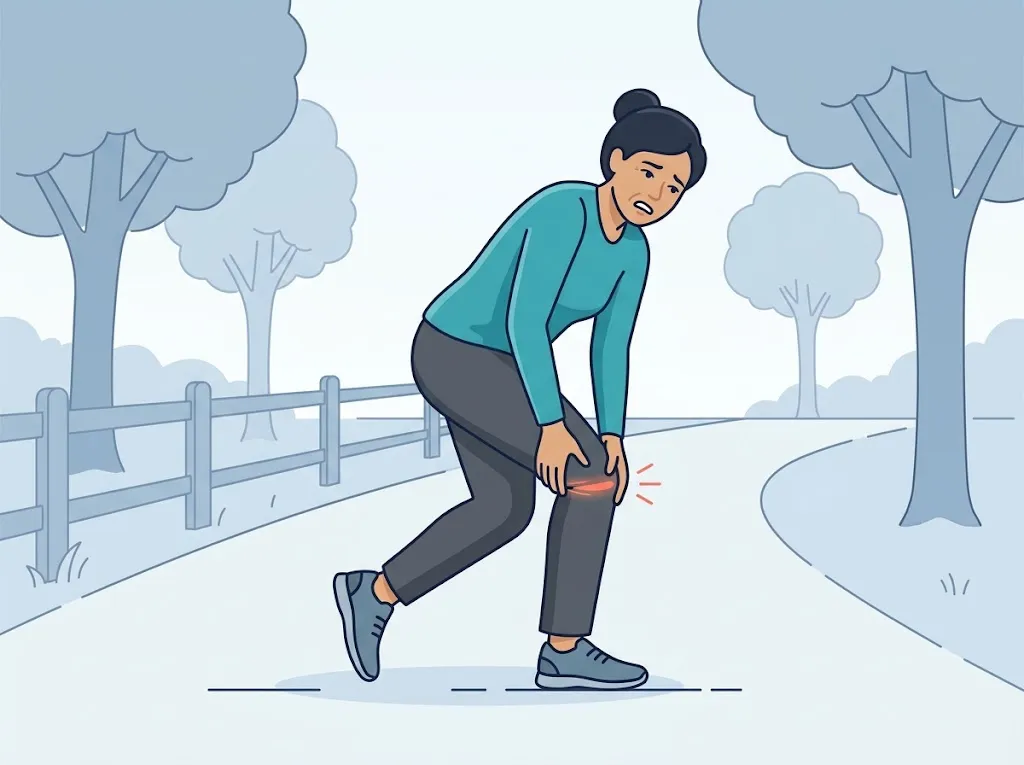
What it is
Each knee contains two Two C-shaped pads of cartilage between the thigh bone and shin bone that spread load across the joint and help keep it steady., one on the inner side and one on the outer, sitting between the end of the thigh bone and the top of the shin bone.
Their job is to spread the load from a small contact point over a wide area, so the joint cartilage is not crushed. They also help the knee stay steady and help lubricate it.
The meniscus has a blood supply only around the outer third. The rest has almost none — which is why some tears can heal and others cannot.
Symptoms
- Pain along the joint line, inner or outer, usually tender at one spot
- Swelling, typically over a day or two rather than immediately
- Catching, or a sense of something getting in the way when you bend or straighten
- Locking — the knee will not fully straighten or bend because a fragment is caught
- Worse squatting, kneeling, twisting, or on stairs
- Giving way in some people
In younger people the symptoms start straight after a twisting movement. In middle-aged and older people they build up gradually, sometimes starting after nothing more than standing up from a squat.
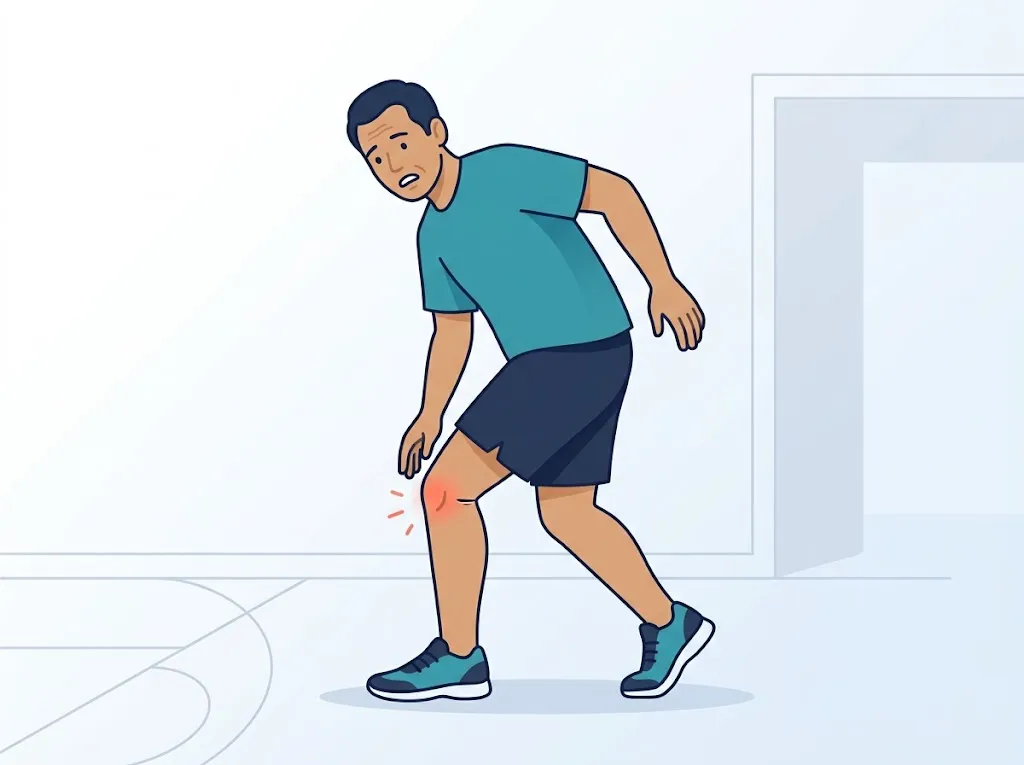
Causes and risk factors
There are two very different kinds of tear.
Traumatic tears occur in younger people and athletes, from twisting with the foot planted. They often occur alongside an ACL injury.
Degenerative tears occur in middle age and beyond. A meniscus that has thinned with age becomes brittle and can tear under very little force. They often go with early knee osteoarthritis.
Risk rises with age, extra weight, work involving squatting or kneeling, sports with cutting and turning, and previous knee injury.
When to see a doctor
Otherwise, see a doctor when the knee catches or gives way often, when it swells repeatedly, or when you are walking noticeably less than before.
How it is diagnosed
History and examination. Your doctor asks about the moment of injury, how quickly it swelled, and whether it locks or catches, then feels for tenderness along the joint line, checks the range of movement, and performs tests that gently twist the knee to see whether they reproduce your symptoms.
X-ray does not show the meniscus, but shows how much osteoarthritis is present alongside — which changes the decision considerably. It should be taken standing.
MRI shows the tear clearly, including its position, its pattern, and any other damage. It should always be read alongside the symptoms, because degenerative tears are found in many people who have none.
Treatment options
Non-surgical treatment
This is the first choice for most people, particularly degenerative tears and knees that do not lock.
- Adjust activity. Cut down squatting, kneeling and twisting while it is painful
- Control the swelling with ice and elevation early on
- Exercise and physiotherapy focused on the thigh and hip muscles, which is the treatment with the best evidence behind it
- Pain relief as advised by a doctor or pharmacist. Always ask before starting a medicine
- Lose weight if you are carrying extra, which directly reduces the load passing through the meniscus
Surgery
Your doctor considers surgery when:
- The knee genuinely locks — a fragment is folded into the joint and stopping it straightening, which should be dealt with promptly
- The tear is repairable, particularly in younger people with a tear near the well-supplied outer rim
- It is being done alongside an ACL reconstruction
- Symptoms still limit daily life after a proper trial of rehabilitation
There are two approaches: repair, which keeps the meniscus but needs longer protection afterwards, and trimming out the torn part, which recovers faster but leaves less meniscus. Ask your surgeon which they have chosen for you and why.
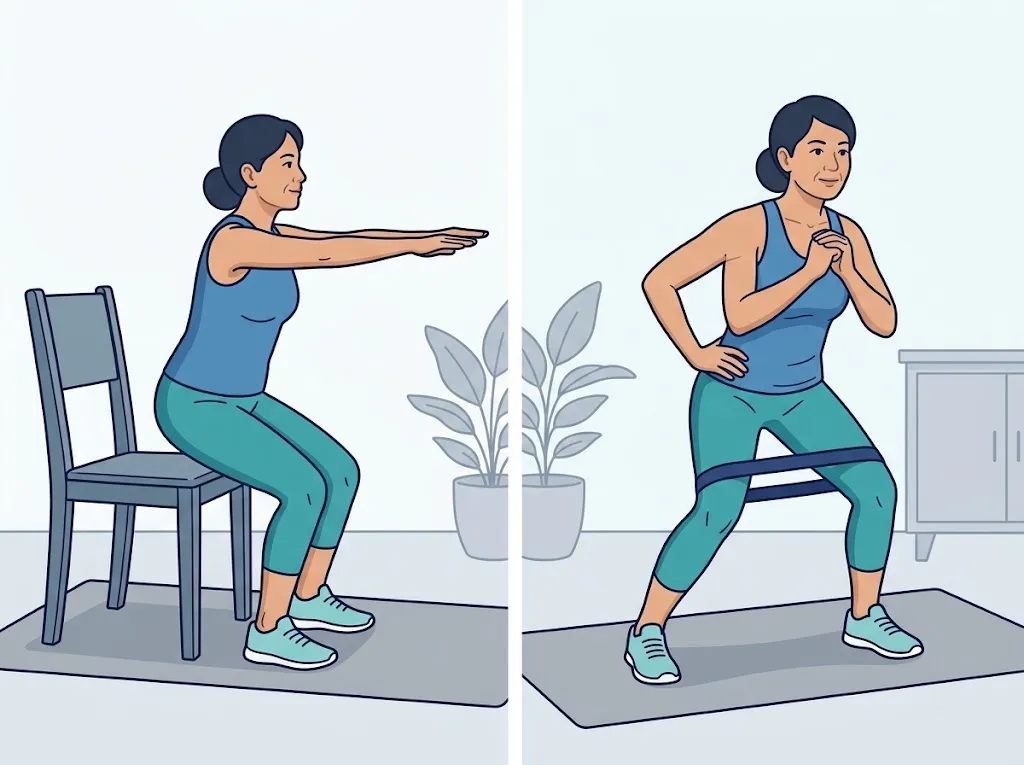
Recovery and rehabilitation
After a repair, follow your own surgeon’s instructions, because the limits on bending and weight bearing vary from person to person.
These exercises suit both non-surgical care and the recovery period once your surgeon allows them.
Quadriceps setting
2 rounds · 10 times · hold 5 seconds
Lie on your back with the leg straight. Press the back of the knee down into the floor while tightening the front of the thigh so the kneecap draws up slightly. Hold, then release.
Watch for — you can do this even with a swollen knee. It is the first one to start.
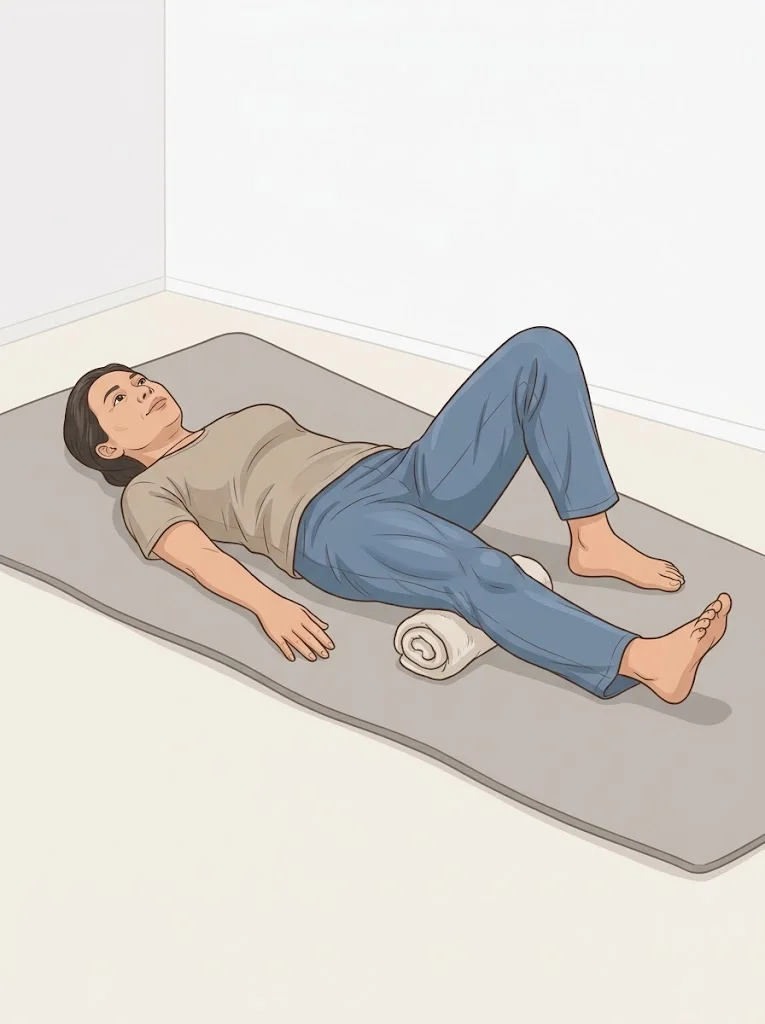
Straight leg raise
2 rounds · 10 times
Lie on your back with the other knee bent up. Keep the sore knee straight, tighten the thigh, and lift the leg about a hand’s width. Hold 3 seconds, then lower slowly.

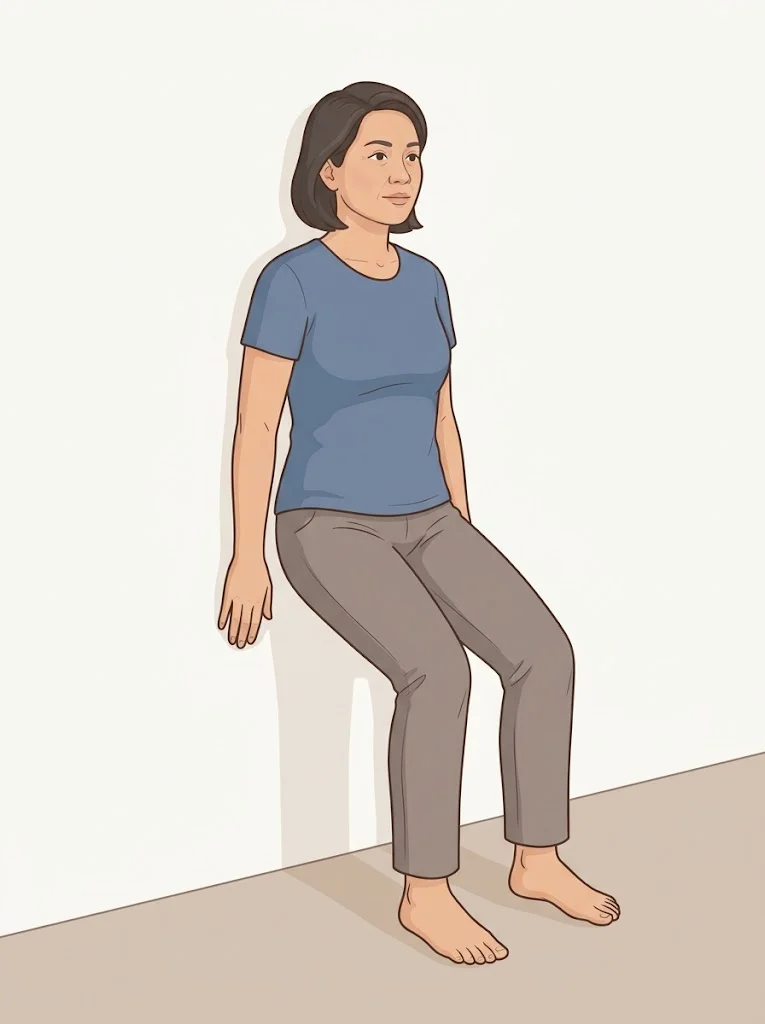
Wall slide to half depth
2 rounds · 10 times · hold 5 seconds
Stand with your back against a wall, feet about a foot’s length out from it. Slide down no more than 45 degrees of knee bend, hold, then push back up.
Watch for — do not go deep, especially if you have had a meniscus repaired.
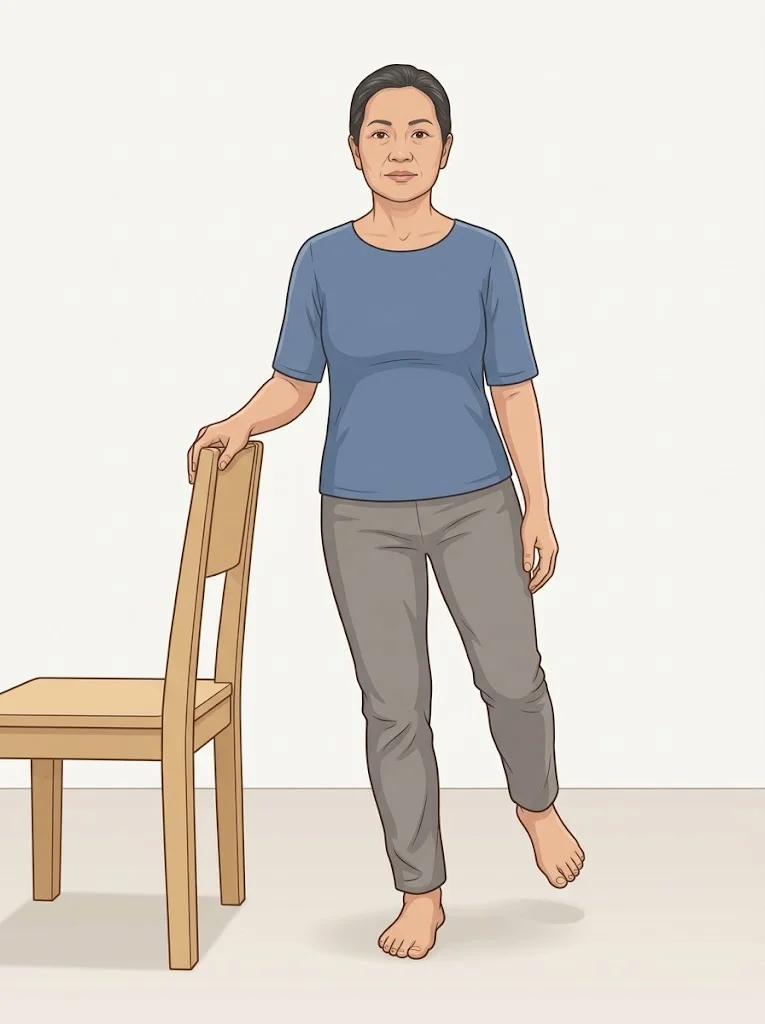
Single-leg stand
3 times · hold 20 seconds
Stand near a wall or chair you can hold if you wobble. Lift one foot slightly and balance on the other leg.
Watch for — the knee must track over the toes, not fall inward.
Prevention and self-care
- Keep your weight in a healthy range
- Strengthen thighs and hips two or three times a week
- Cut down prolonged squatting and kneeling. If you cannot avoid it, use a pad and change position often
- Warm up before sport, and practise turning technique
- Stand up from a squat slowly, using your hands for support if you need to
Questions to ask your doctor
- Is my tear traumatic or degenerative?
- Do I have osteoarthritis as well, and how does that affect the choice?
- In my case, should I try rehabilitation first or have surgery, and why?
- If I have surgery, will you repair the tear or trim it, and what is the difference?
- If it is repaired, how long must I limit bending and weight bearing?
Frequently asked questions
Does every meniscus tear need surgery?
No. In middle-aged and older adults whose tear came from wear, rehabilitation with exercise gives results similar to keyhole surgery over the longer term. Surgery has a clearer place when the knee genuinely locks, or in younger people whose tear can be repaired.
Why can some tears be stitched and others not?
The meniscus only has a blood supply around its outer rim. Tears near that rim can heal when they are repaired. Tears in the inner part, which has almost no blood supply, usually do not heal even if stitched.
My MRI shows a tear but I barely have pain.
That is common. Degenerative tears are found in a great many middle-aged people with no symptoms at all. Treatment is therefore decided by the symptoms and their effect on your life, not by the scan alone.
If it is repaired, how long do the restrictions last?
A repaired meniscus needs longer protection from deep bending than a trimmed one — usually about 6 weeks. Deep squatting, deep bending under load, and twisting are held back longer. Follow what your own surgeon sets.
References
- Giuffrida A et al. Conservative vs. surgical approach for degenerative meniscal injuries: a systematic review of clinical evidence. Eur Rev Med Pharmacol Sci. 2020
- Pujol N et al. The formal EU-US Meniscus Rehabilitation 2024 Consensus: An ESSKA-AOSSM-AASPT initiative. Part I. Knee Surg Sports Traumatol Arthrosc. 2025
Related educational reading
These pages explain tests, treatments and rehabilitation that often come up with this condition. They are general reading, not a treatment sequence arranged for you — that has to come from a doctor who has examined you.
Body basics
Related conditions


Written by Assoc. Prof. Sorawut Thamyongkit, M.D.