
ACL injury
An injury to the anterior cruciate ligament in the knee, usually from twisting or landing awkwardly in sport. The knee swells quickly and feels like it gives way. Treatment may or may not involve surgery.
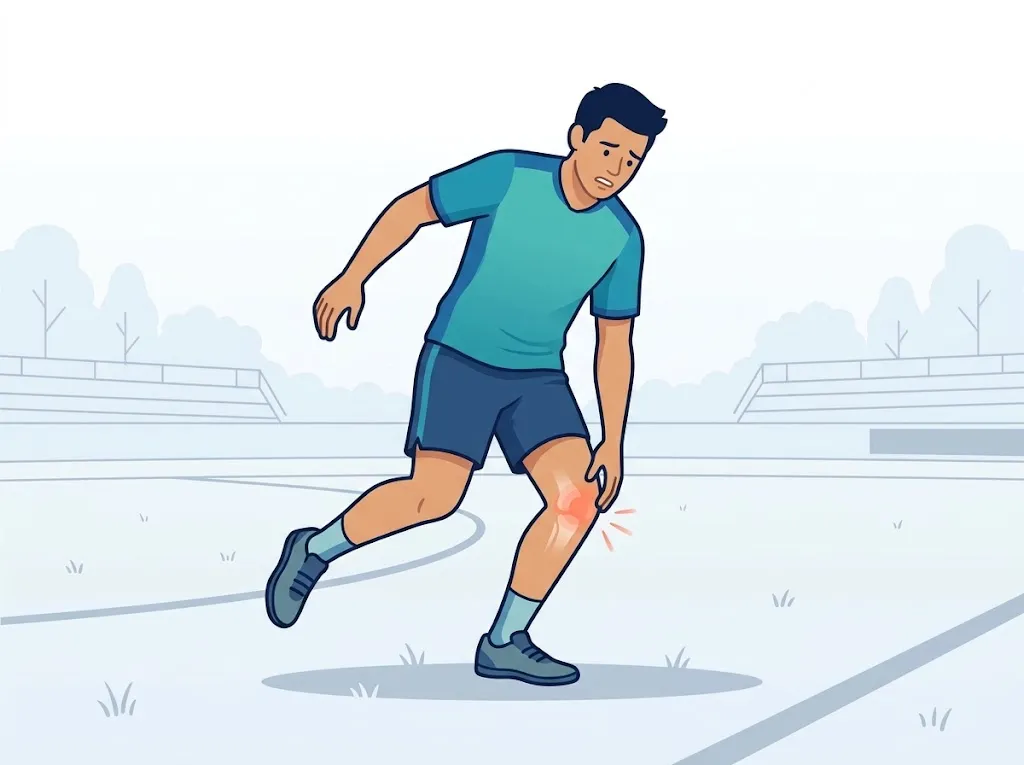
What it is
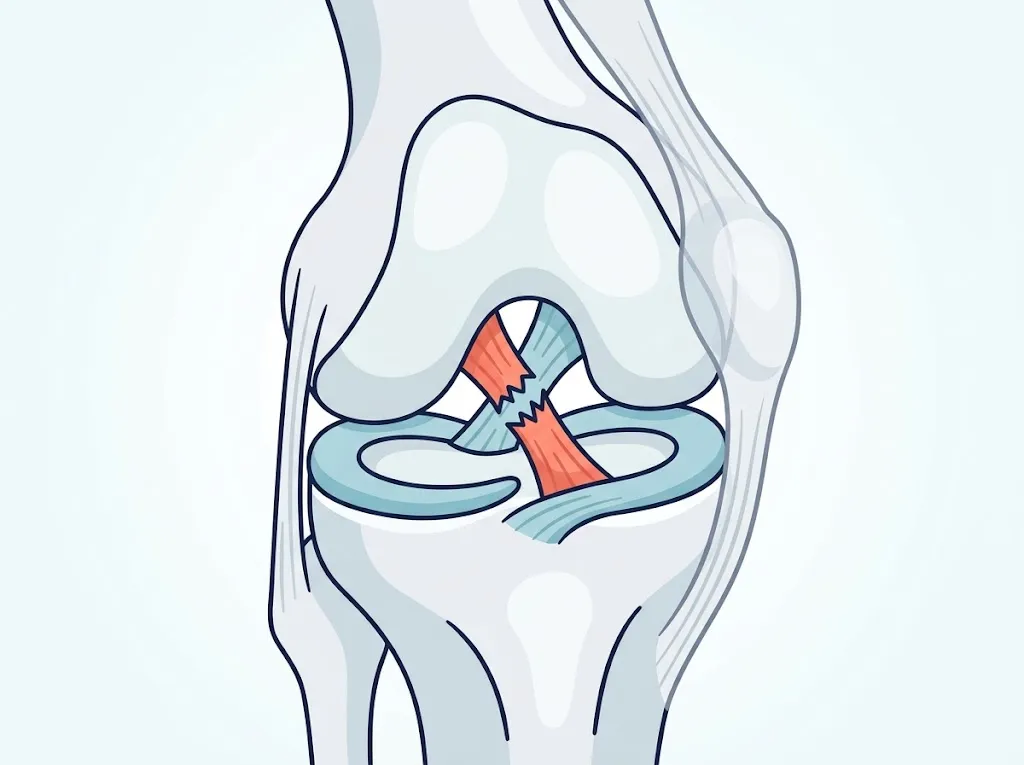
Four main ligaments hold your thigh bone and shin bone together. One of them is the A ligament in the centre of the knee that stops the shin bone sliding forward and limits how far the knee can twist. (ACL), which runs diagonally through the middle of the joint.
It does two things: it stops the shin bone sliding forward, and it controls rotation. When it tears, the knee will still walk in a straight line, but it feels unreliable when you turn, cut, or slow down suddenly.
A completely torn ACL does not usually heal back, because it sits in joint fluid and has a poor blood supply.
Symptoms
At the moment of injury
- A “pop” heard or felt inside the knee
- Immediate pain that stops you playing or walking
- The knee swells within 1–2 hours, because of bleeding inside the joint
Afterwards
- A tight, swollen knee that will not fully bend
- You can walk and bear weight, but the knee feels untrustworthy
- Giving way when you turn, change direction, or step down stairs — the clearest sign that the knee is unstable
In some people the swelling settles within two or three weeks and walking feels almost normal, so they assume it has healed. The giving way then shows up when they go back to sport.
Causes and risk factors
Most ACL injuries are not contact injuries — they happen in a single moment of your own movement.
- Landing from a jump with the knee falling inward
- Decelerating or stopping suddenly while running
- Turning to change direction with the foot planted
Things that raise the chance:
- Jumping and cutting sports — football, basketball, volleyball, badminton
- Being female, with a higher rate in the same sports
- A previous knee injury
- Hip and thigh muscles that do not control the knee well, particularly letting the knee fall inward on landing
- Fatigue, because movement control worsens as you tire
When to see a doctor
As a general rule, see a doctor whenever a knee swells within a couple of hours of an injury, because rapid swelling usually means bleeding inside the joint, and several causes have to be told apart.
How it is diagnosed
History and examination. Your doctor asks about the moment of injury, what you heard, and how quickly it swelled, then tests the stability of the knee by gently pulling and rotating it and comparing with the other side. This examination is very accurate once the swelling and muscle guarding have settled.
X-ray does not show the ligament, but rules out a fracture — particularly in children and teenagers whose growth plates are still open.
MRI is the test that shows the ACL clearly. Just as importantly, it shows whether a meniscus is torn, the joint surface is damaged, or another ligament is involved.
Treatment options
The decision does not rest on the MRI alone. It rests on three things together: whether your knee gives way, what you need to get back to, and what else was injured.
Non-surgical treatment
This suits people who live and work mostly in straight lines, who do not need to twist or change direction often, and whose knee does not give way.
Everyone starts here, whether or not surgery follows, because the early goals are the same:
- Settle the swelling with ice, elevation and paced rest
- Get the knee fully straight — the single most important thing early on
- Wake the quadriceps back up
- Walk without a limp
- Then build strength and single-leg control, including training the knee not to fall inward on landing
Surgery
Your doctor is likely to suggest surgery if your knee gives way, if you need to return to a twisting sport, or if a meniscus tear needs repairing at the same time.
The operation is ACL reconstruction — not a repair of the old ligament, but a new one built from tendon taken elsewhere. Hamstring tendon, patellar tendon and quadriceps tendon are all used, each with trade-offs. Ask your surgeon which they have chosen for you and why.
Recovery and rehabilitation
This section is for people who have had an ACL reconstruction. Your own surgeon’s instructions come first, especially if you also had a meniscus repair.
How the new graft heals
- Your new graft is strongest on the day it is fixed. Over the following months your body remodels it into a living ligament, and during that process it passes through a weaker phase.
- This is why the middle months feel deceptive: you feel well, the swelling has settled, and the graft is still maturing underneath.
- It is also why straight-line loading is encouraged early, while twisting, pivoting and contact are held back much longer.
- Muscle soreness after training is expected. Sharp pain, a giving-way sensation, or new swelling are not — report them.
- The knee that lets you down twice is usually the one that stopped training after returning to sport.
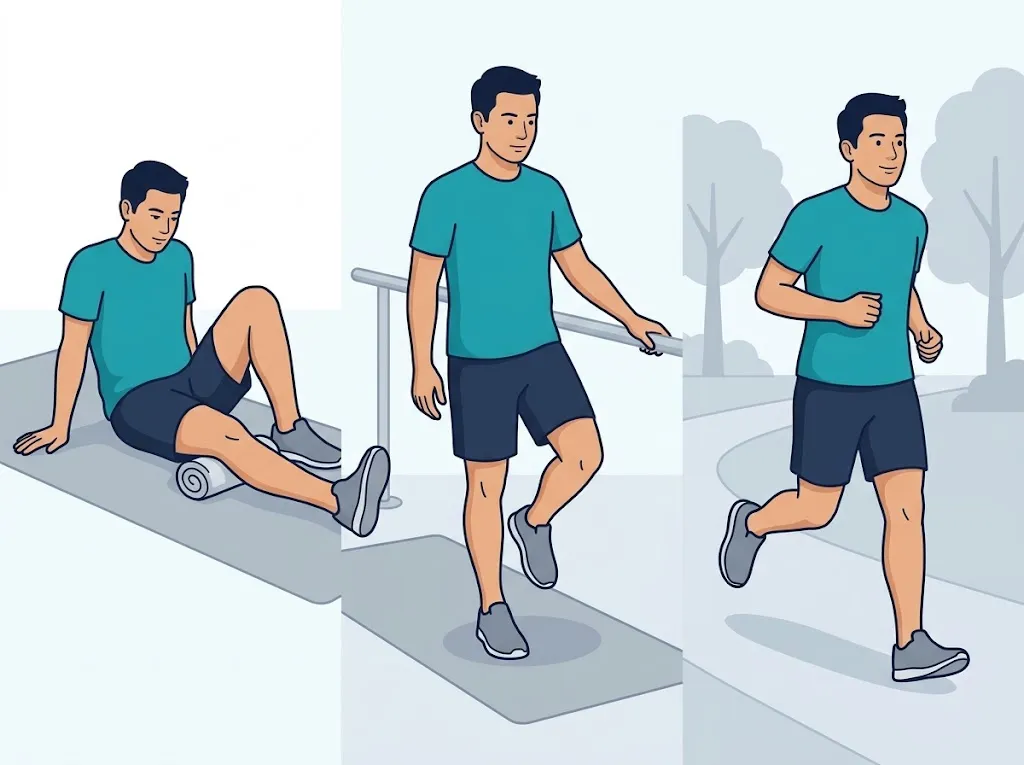
The phases
| Phase | When | Aim |
|---|---|---|
| Preoperative preparation | Before surgery | Settle the swelling, get the knee fully straight, and wake up your thigh muscle |
| Protect and recover | Weeks 0–2 | Control pain and swelling, get the knee fully straight, start switching the quadriceps back on |
| Move and activate | Weeks 2–6 | Normalise your walking, restore bending, and begin loading the leg again |
| Build strength | Weeks 6–12 | Full range of motion, single-leg control, and real strength — while the graft is remodelling |
| Run and control | Months 3–5 | Add running, jumping and landing once your knee passes the running checks |
| Train for sport | Months 5–9+ | Restore power, change of direction, and confidence, with graded exposure to your sport |
| Long-term knee health | After return to sport | Keep training. Re-injury risk stays higher for the first two years after returning |
The first weeks: get the knee fully straight
This is the single most important thing in the first weeks. A knee that does not fully straighten leads to a limp, thigh weakness, and pain at the front of the knee.
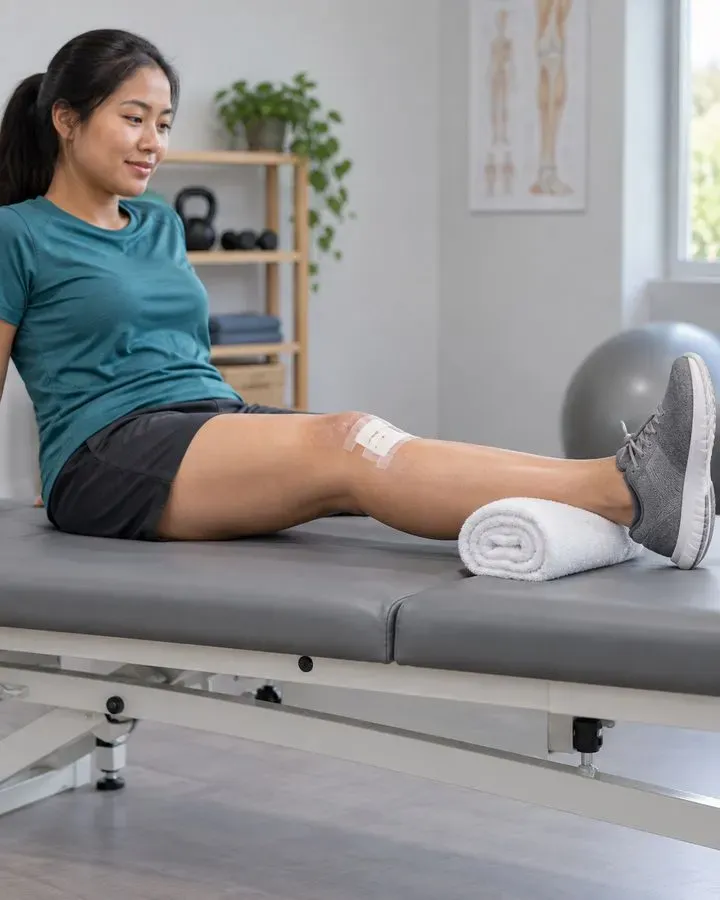
- Rest your heel on a rolled towel with nothing under the knee, and let the knee hang straight for 10 minutes at a time, several times a day
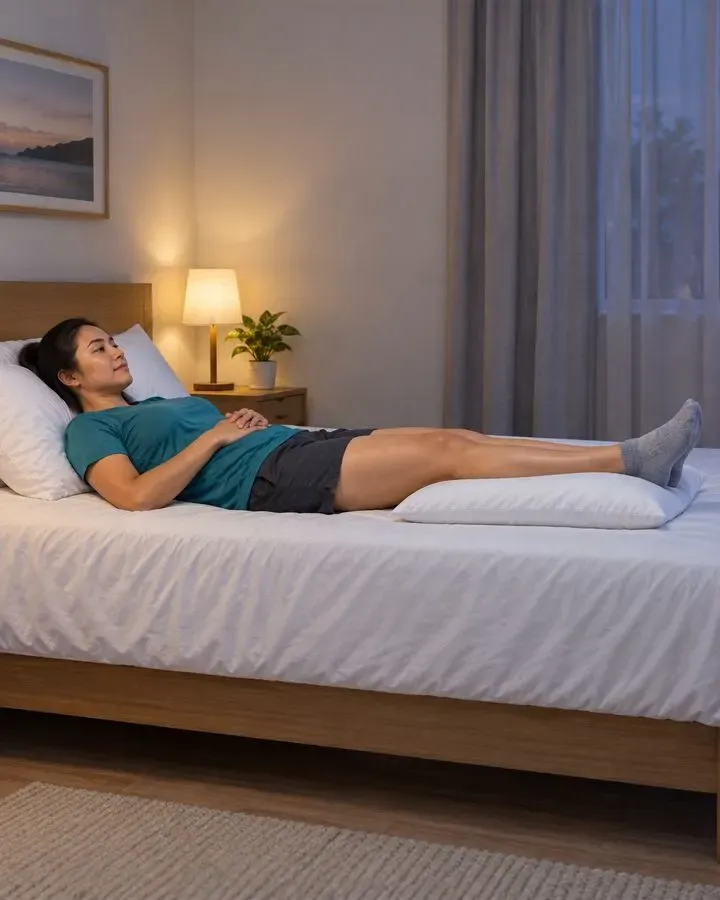
- Never sleep or rest with a pillow under the knee. Put the pillow under your heel instead
- Compare with your other leg regularly — that is your target, not just “nearly straight”
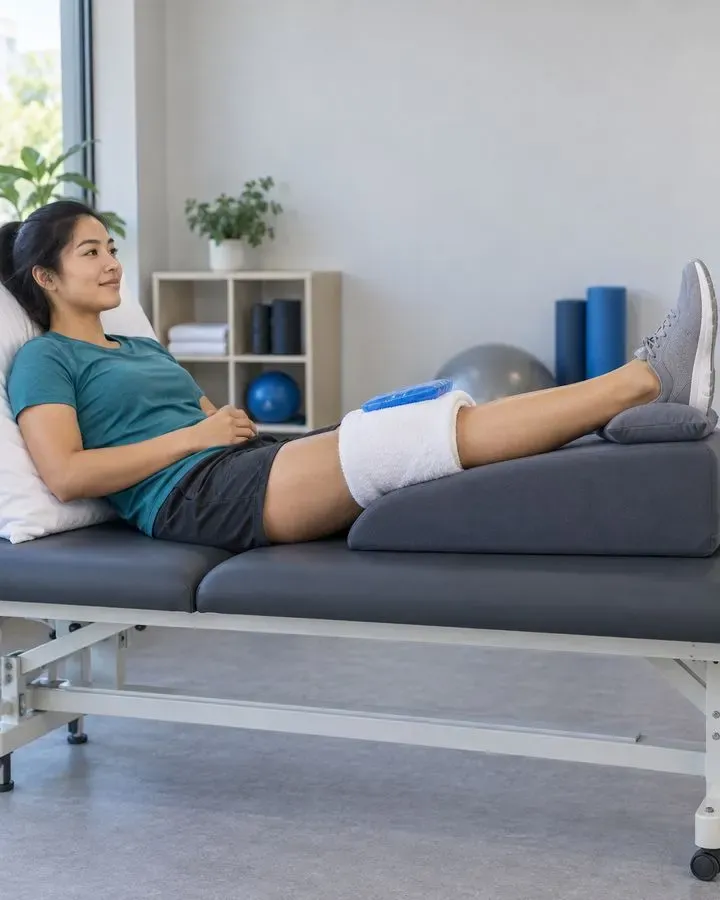
Swelling and ice
- Ice for 15–20 minutes with the leg raised above the level of your heart, several times a day in the first weeks
- Swelling inside the knee switches the thigh muscle off. Controlling it is not just about comfort — it is how you protect your strength
- A knee that is more swollen the morning after exercise is telling you the last session was too much
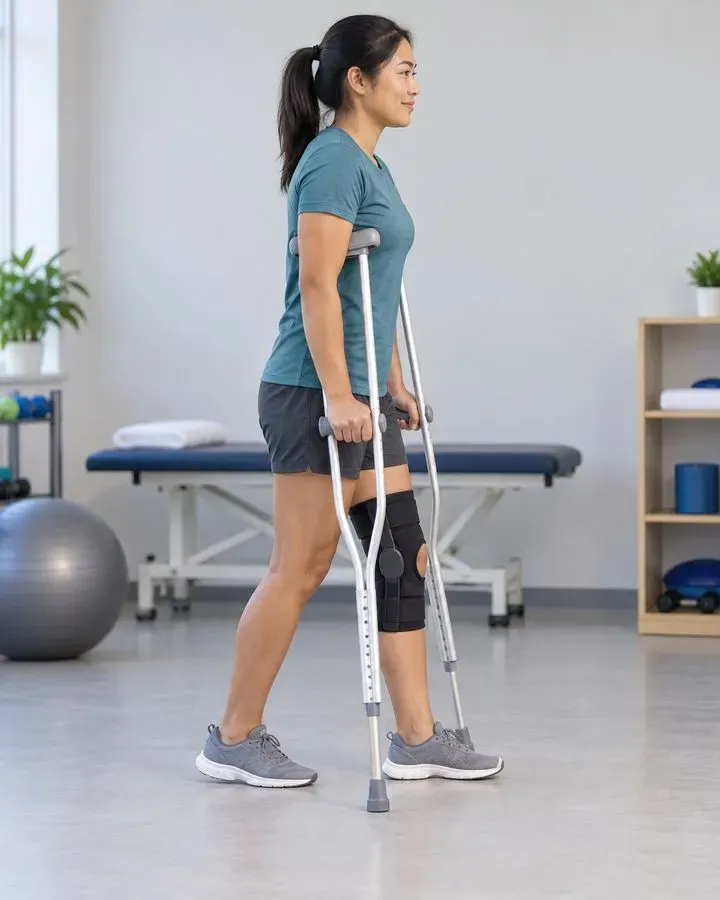
Crutches and weight bearing
- Follow the weight-bearing instruction your surgeon gave you. If you had a meniscus repair, this may be more restrictive than for an ACL alone
- Take even, unhurried steps and let the knee straighten fully as your heel lands
- Leave the crutches behind only when you can walk without a limp, not simply when the pain settles
- On stairs: good leg up first, operated leg down first
Your brace
- Wear the brace exactly as instructed, including the setting your surgeon chose. Do not change the range settings yourself
- Check the skin under the straps daily for redness or rubbing
- If the brace slips down repeatedly, it needs adjusting — ask your team rather than tightening it painfully
Wounds, showering and sleeping
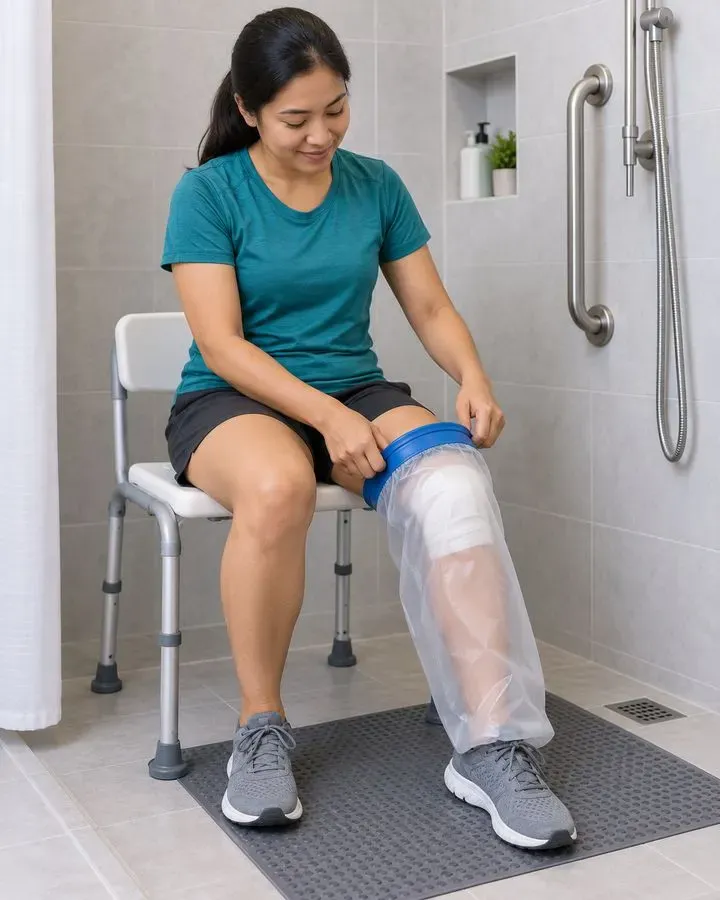
- Keep the wounds clean and dry, and leave the dressing in place until your follow-up unless told otherwise
- A little blood staining in the first 24–48 hours is normal
- Do not put lotion, cream or powder on the wounds unless instructed
- Showering is usually fine, but do not let water run directly onto the wounds until they have closed, and avoid baths, pools and the sea until your team confirms they have healed
- Stitches usually come out at 10–14 days
- Sleep with the knee straight, with the pillow under your heel rather than under the knee
- Move your ankle regularly and change position through the night to help the circulation
Blood clots, driving and smoking
- Pump your ankle up and down often through the day, and get up and move regularly rather than sitting for hours
- No driving while on crutches, while wearing a locked brace, or while taking prescription pain medication
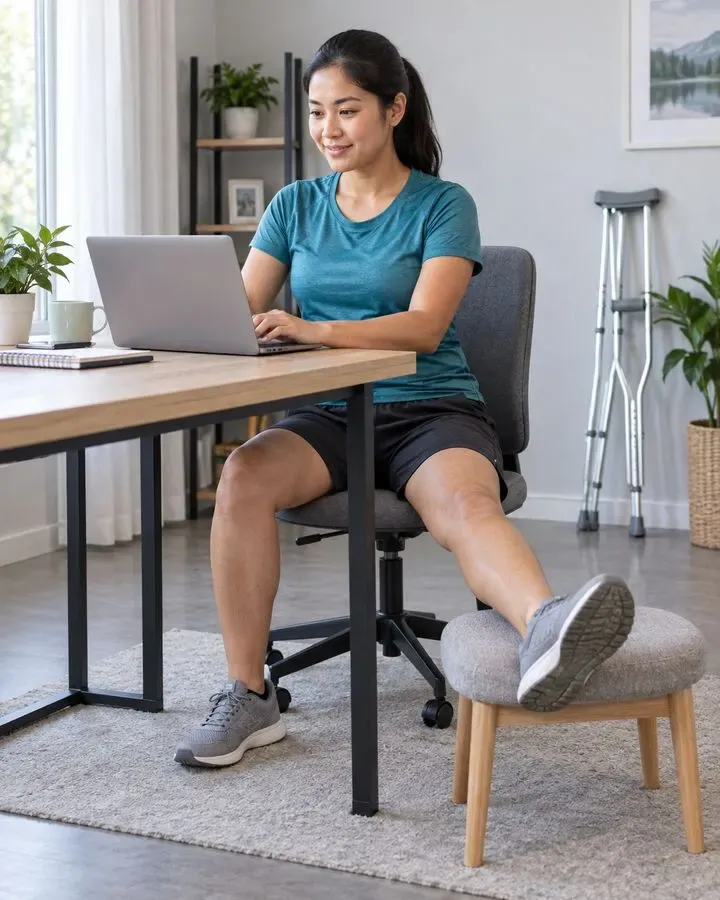
- Most people return to desk work within a few weeks; physical work takes considerably longer. Ask your surgeon about your own case
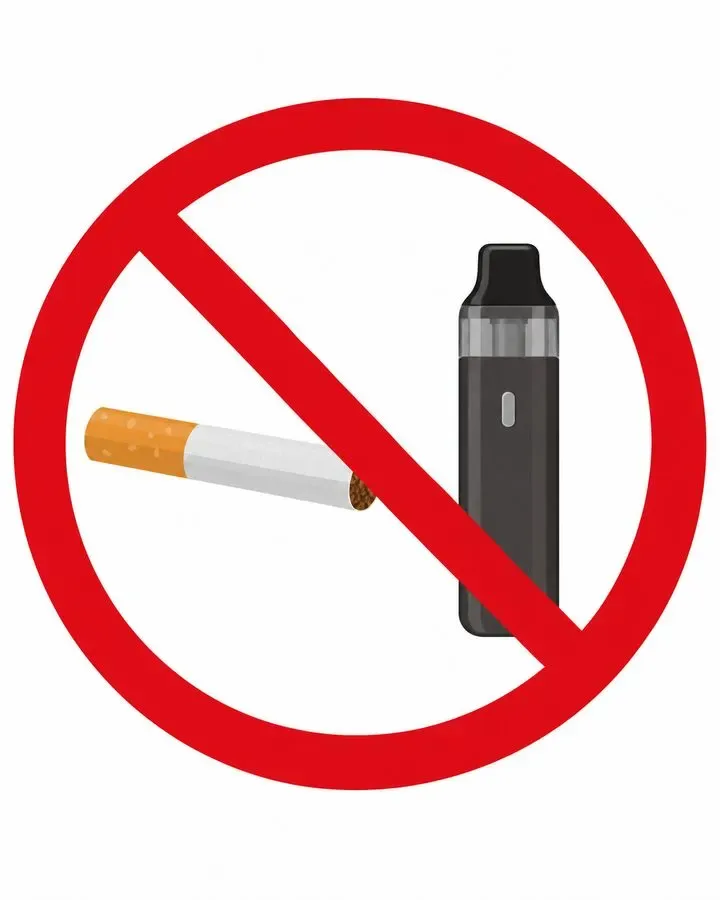
- Avoid smoking and nicotine products. They reduce blood supply to the healing graft
If you also had a meniscus repair
- A repaired meniscus needs longer protection of deep knee bending than an ACL reconstruction alone — usually 6 weeks
- Deep squatting, deep bending under load, and twisting are usually held back longer
- Where the ACL programme and your meniscus instructions disagree, follow the more protective one — and ask your surgeon
- Repeated catching, locking, or a knee that will not fully straighten needs to be assessed rather than pushed through
Ready to run?
Running is usually considered from about 3 months, but only once these are met.
- Knee straightens fully
- Bending at least 125°
- Thigh strength at least 80% of the other leg
- Hamstring strength at least 80% of the other leg
- No weight-bearing or bending restrictions left
- At least 12 weeks since surgery
Ready to return to sport?
- Thigh strength at least 90% of the other leg
- Hamstring strength at least 90% of the other leg
- Hop tests at least 90% of the other leg
- At least 9 months since surgery
- Cleared for running by your care team
What is normal, and what is not
Normal in the first days: moderate swelling, bruising that spreads down the calf or into the thigh, a mild temperature under 38.0°C, and numbness around the wounds or the outer part of the shin.
Prevention and self-care
Injury-prevention programmes for athletes have good evidence behind them and take only 15–20 minutes before training.
- Warm up properly — easy running, dynamic stretching, and muscle activation
- Train the knee not to fall inward when you squat, jump and land; keep it tracking over the toes
- Land softly, bending at the hip and knee rather than landing on a stiff leg
- Build hip and hamstring strength, not just the front of the thigh
- Practise single-leg balance
- Do not train to exhaustion, because movement control worsens as you tire and injuries cluster late in a session
- After returning to sport, keep training twice a week — re-injury risk stays higher for the first two years
Questions to ask your doctor
- Is my ACL fully or partly torn, and is the meniscus or joint surface damaged too?
- In my case, is not having surgery a reasonable option, and what would I give up?
- If I have surgery, which tendon will you use for the graft, and why?
- If a meniscus is repaired too, how will my restrictions differ?
- When should I start physiotherapy, and how often should I go?
Frequently asked questions
Will a torn ACL heal on its own?
A completely torn ACL does not usually heal back, because it sits in joint fluid and has a poor blood supply. Treatment is therefore either building a new ligament, or training the muscles around the knee to do the controlling job instead — which one depends on what you need the knee to do.
Does everybody need surgery?
No. People who live and work mostly in straight lines and whose knee does not give way can often do well with rehabilitation alone. People who twist, cut and change direction, or whose knee keeps giving way, usually benefit from surgery. It is a decision to make with your doctor.
Why do the middle months need extra care?
Your new graft is strongest on the day it is fixed. Over the following months your body remodels it into a living ligament, and during that process it passes through a weaker phase. This is why the middle months feel deceptive: you feel well, the swelling has settled, and the graft is still maturing underneath.
When can I run again?
Running is usually considered from about 3 months, but only once the checks are met — not on the calendar alone. Those are: the knee straightens fully, bends at least 125°, thigh and hamstring strength at least 80% of the other leg, no restrictions left, and at least 12 weeks since surgery.
When can I return to sport?
Usually not before 9 months, and only after strength and hop tests reach at least 90% of the other leg. Meeting these is the start of a graded return, not a green light for full competition.
Will it happen again?
Re-injury risk stays higher for the first two years after returning to sport. The knee that lets you down twice is usually the one that stopped training after returning to sport — so continuing to train twice a week is part of the treatment.
References
- van Melick N et al. Evidence-based clinical practice update: practice guidelines for anterior cruciate ligament rehabilitation based on a systematic review and multidisciplinary consensus. Br J Sports Med. 2016
- Wu J et al. Rehabilitation Principles to Consider for Anterior Cruciate Ligament Repair. Sports Health. 2021
A self-care app for this condition
Free, and made by the author of this article.
 ACL Reconstruction Recovery
A phase-by-phase recovery guide after ACL reconstruction, with the exercises and recovery goals for each stage.
Open the appRelated educational reading
These pages explain tests, treatments and rehabilitation that often come up with this condition. They are general reading, not a treatment sequence arranged for you — that has to come from a doctor who has examined you.
Treatment
Rehab
Related conditions
Written by Assoc. Prof. Sorawut Thamyongkit, M.D.