
Bone density scan (DXA)
A DXA scan measures bone density with a very low radiation dose in a few minutes, and reports a number called a T-score. This page explains what that number means, and what it does not.
What DXA is
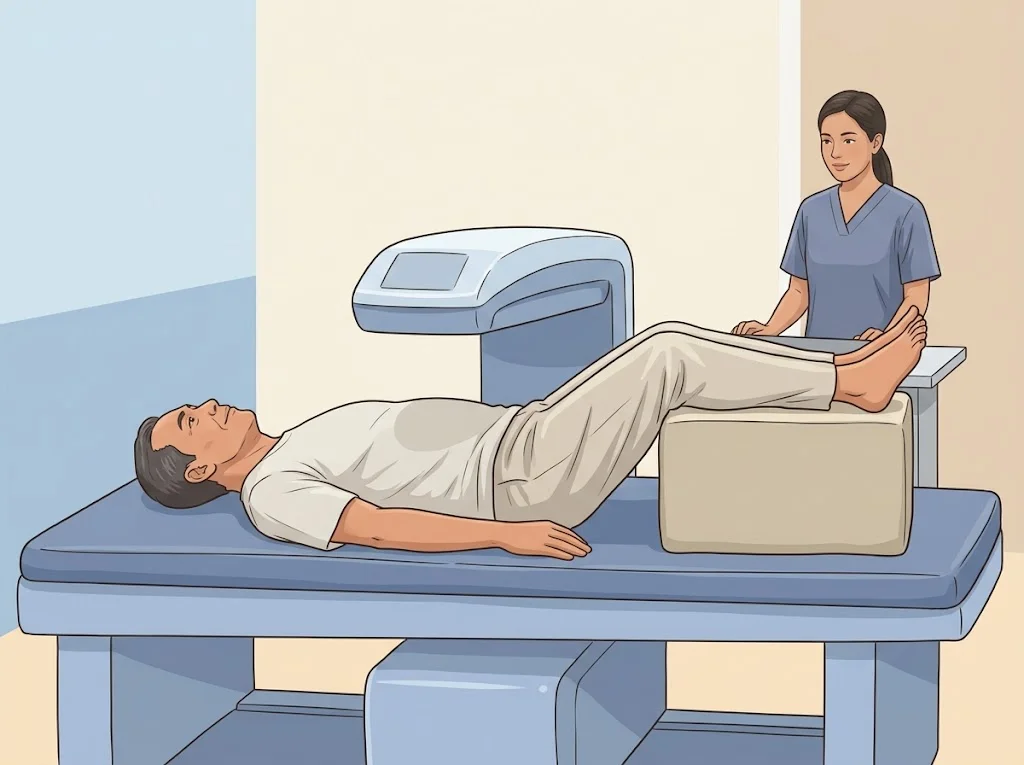
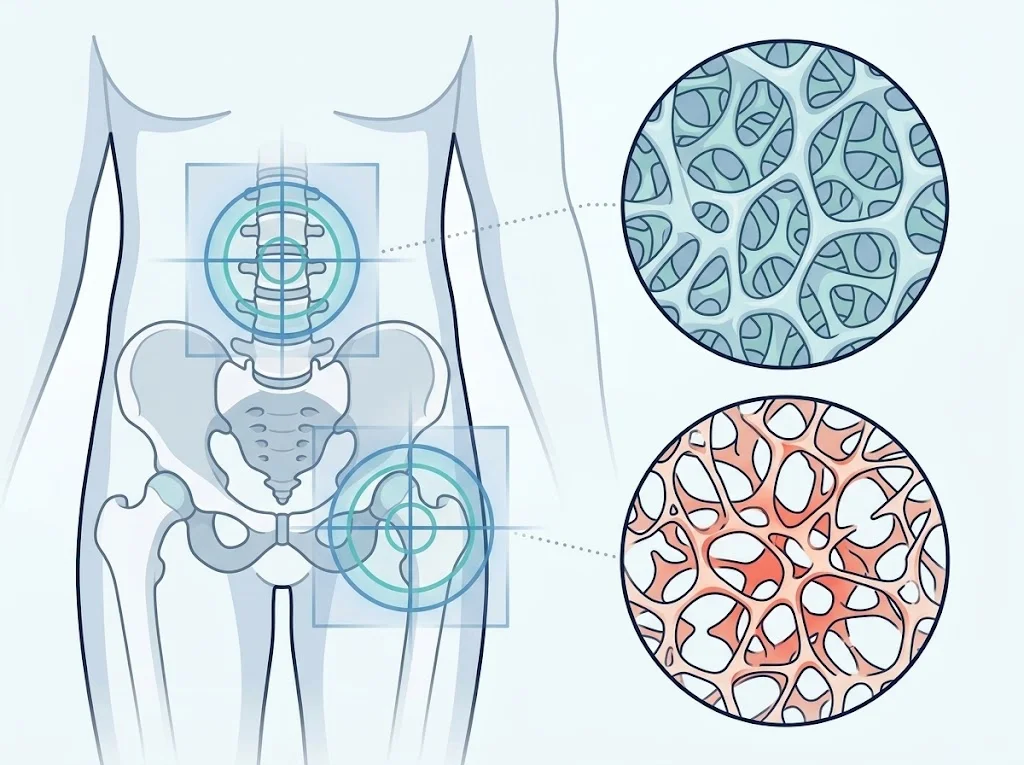
DXA stands for dual-energy X-ray absorptiometry. The machine sends X-rays at two energy levels through the bone and measures how much is absorbed. Denser bone absorbs more. From that it calculates the mineral density of the bone.
You lie on your back while an arm passes slowly over you. There is no tunnel, no loud noise and no long breath-holding.
T-score and Z-score
T-score compares your bone density with the average for healthy young adults, in units of standard deviation. This is the value used to diagnose osteoporosis in postmenopausal women and older men.
Z-score compares you with people of your own age and sex. It is used in younger adults, children and premenopausal women, where comparison with young adults would not be informative.
| T-score | Standard interpretation |
|---|---|
| −1.0 or above | bone density in the normal range |
| between −1.0 and −2.5 | low bone mass (osteopenia) |
| −2.5 or below | meets the criterion for osteoporosis |
Who should be scanned
That is a decision for you and your doctor. It is generally considered in people with risk factors — increasing age, postmenopausal women, a previous fracture from a fall that should not have broken a bone, a parent who fractured a hip, long-term steroid use, smoking, or very low body weight.
If you are not sure whether it applies to you, ask your doctor rather than deciding from what you read online.
Preparation and cautions
- Skip calcium supplements on the day of the scan; undissolved tablets can interfere with the image
- If you have recently had a test using contrast, such as a barium study or a CT scan, mention it — a gap may be needed
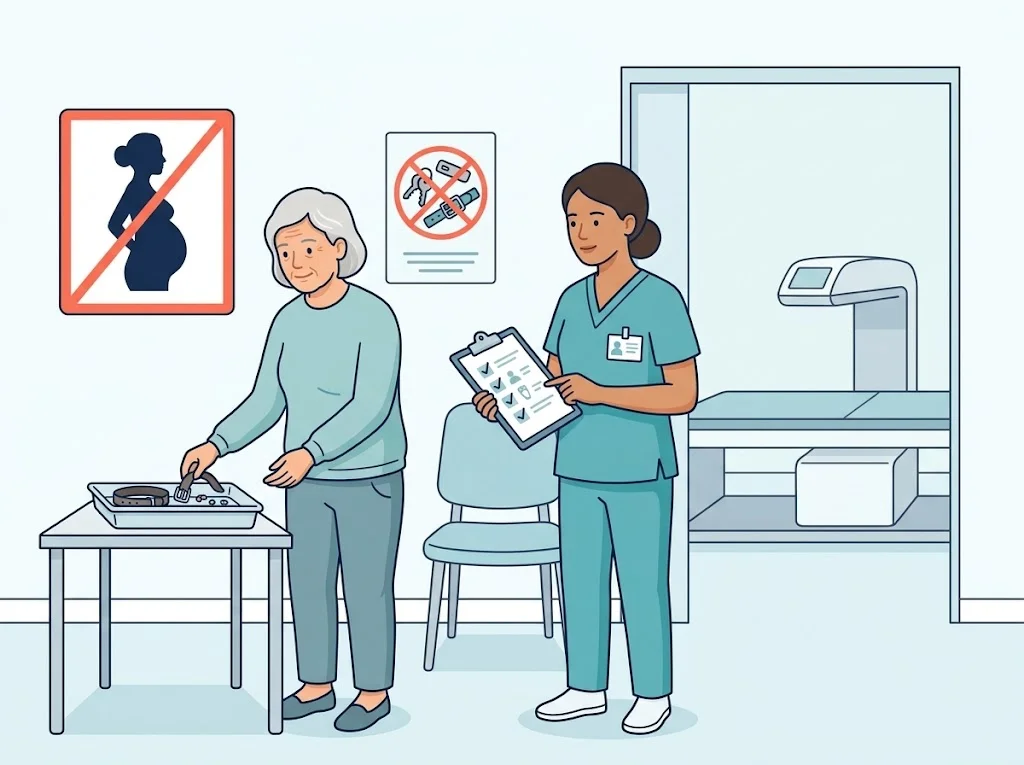
- Wear clothing without buttons, zips or metal hooks around the waist and hips
- Always say if you are or might be pregnant
- If you have been scanned before, use the same machine or centre if you can. Comparing across machines is much harder
Questions to ask your doctor
- What does my result mean, taken together with my age and history?
- Roughly what is my risk of fracture over the next ten years?
- Should I be starting medication, and if not, what should I be doing instead?
- How much calcium and vitamin D do I need, and from food or supplements?
- When should this be repeated?
Frequently asked questions
How often should it be repeated?
It depends on the first result and your own risk. Bone changes slowly, so scanning too often usually adds nothing. Your doctor will set the interval that suits you.
My T-score is negative. Is that bad?
A negative value simply means your density is below the average for healthy young adults. The more negative, the thinner the bone. But the number is one part of the picture — age, previous fractures and your risk of falling matter just as much.
Does it hurt, and is the radiation high?
It does not hurt; you lie still for 10 to 20 minutes. The dose is very low, less than a chest X-ray. Even so, tell the staff if you are or might be pregnant.
My result is normal. Does that mean I cannot break a bone?
No. Fractures from falls happen at normal bone density too. Preventing falls, getting enough calcium and vitamin D, and staying active all still matter.
References
Related conditions
Written by Assoc. Prof. Sorawut Thamyongkit, M.D.