
Rehabilitation for back pain
For chronic back pain, staying active works better than resting, and no single form of exercise has been shown to be clearly better than the rest. What works is doing something regularly that you can actually keep up.
Starting from the right idea
The belief that back pain means bed rest is one that modern guidelines have moved away from. The systematic review of high-quality guidelines for musculoskeletal pain distilled eleven agreed recommendations, which include educating patients, promoting movement and exercise, and trying to keep people at work.
Your back is more robust than many people assume, and pain does not always equal damage. That understanding matters for recovery in itself, because fear of movement leads to moving less, which weakens muscle and tends to mean more pain in the long run.
Which form works
A systematic review with network meta-analysis pooled 75 randomised trials with 5,254 participants, comparing 20 forms of exercise for chronic low back pain.
Tai Chi, yoga, Pilates and sling exercise improved pain more than conventional rehabilitation; yoga and core or stabilisation exercises improved physical function more.
The authors’ own conclusion, however, was that given the quality and quantity of the available trials, no single form can yet be definitively recommended over the others. Larger, higher-quality trials are needed.
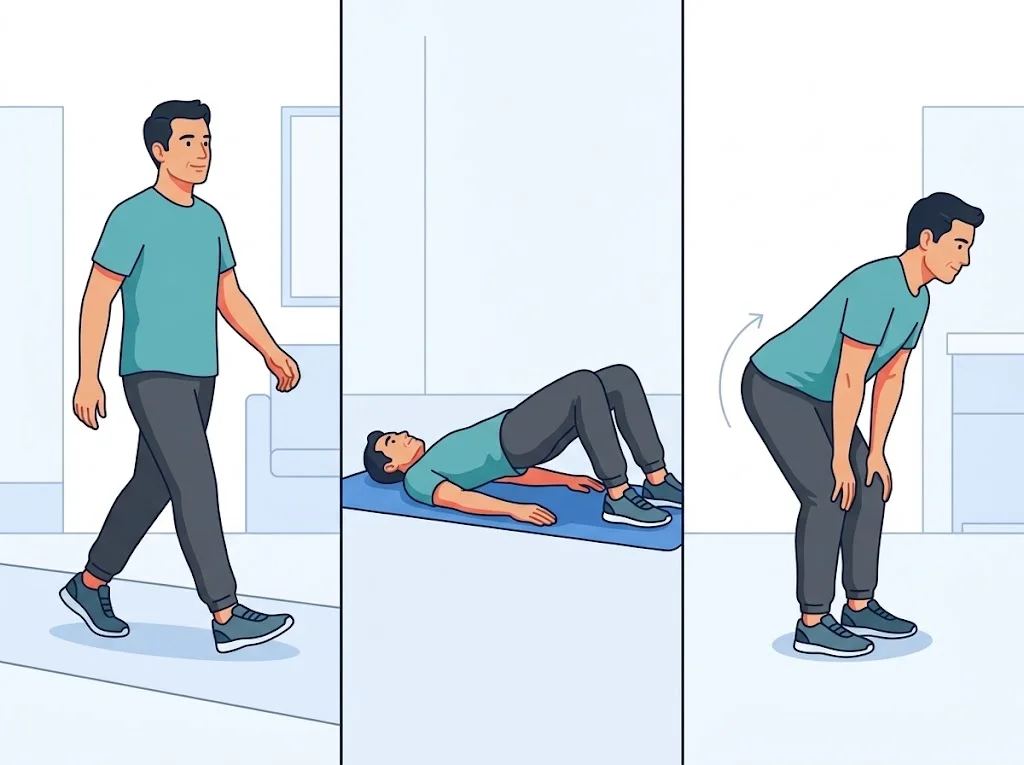
Through the stages
While pain is bad. Reduce what causes sharp pain but keep walking and moving. Change position often; do not sit or stand in one posture for long. If you need pain relief, ask your doctor or pharmacist which class suits you.
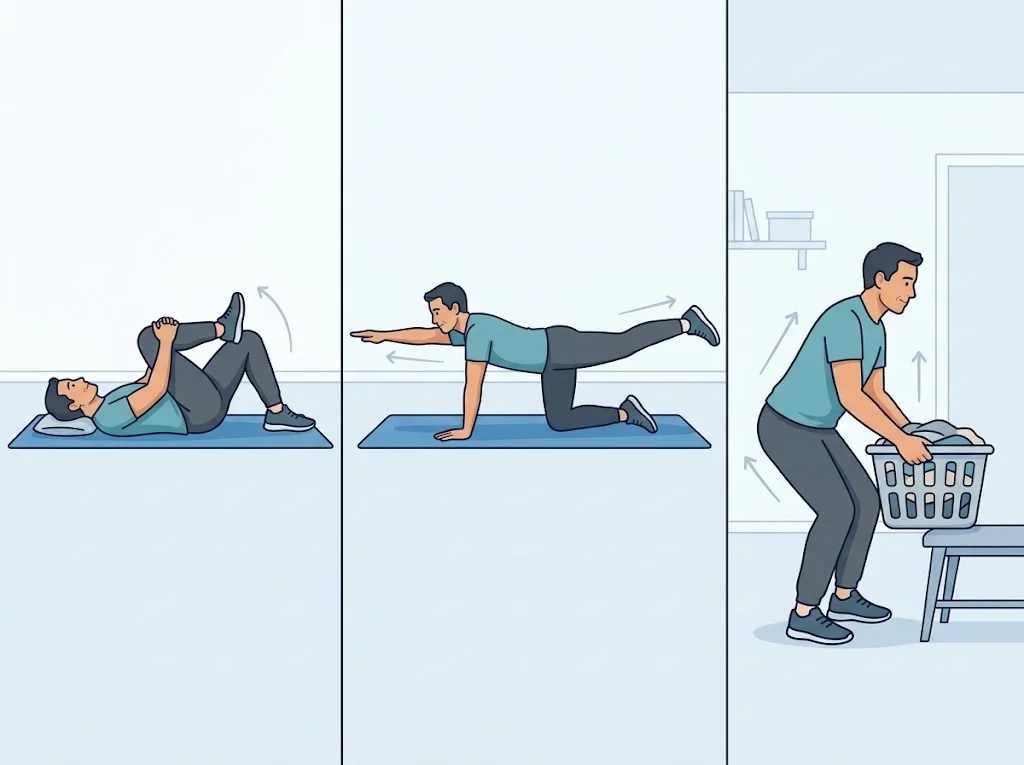
In between. Begin exercises that move the back gently through its range, and start strengthening the muscles around the trunk and hips.
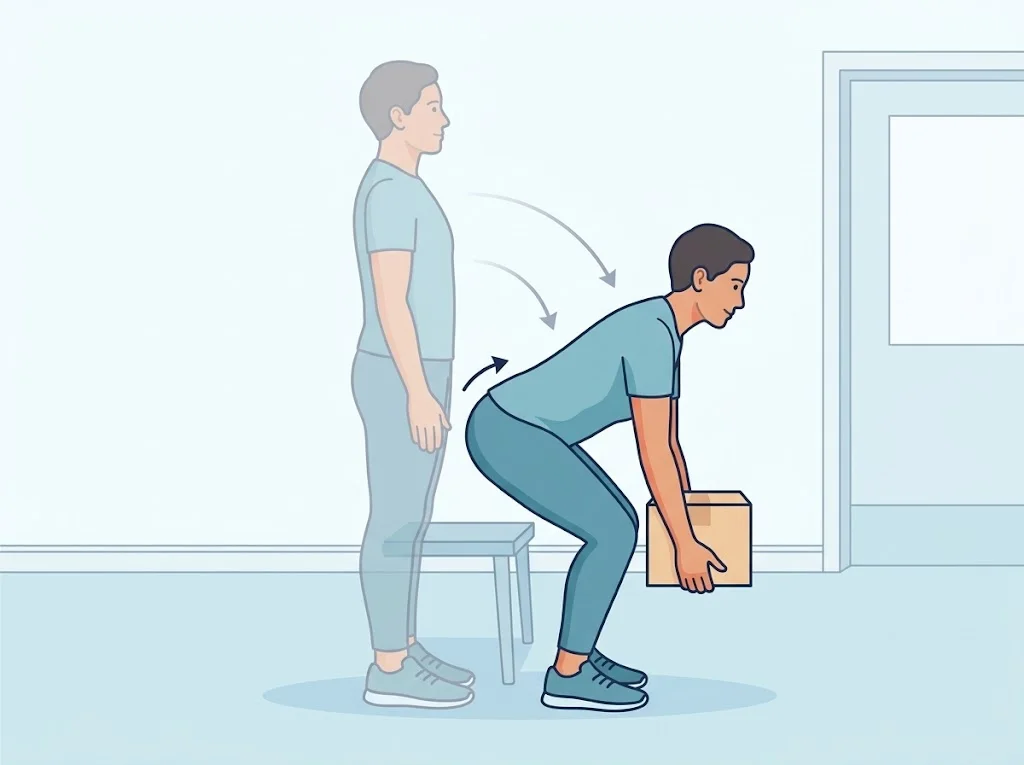
Returning to normal. Practise what you actually need to do, particularly lifting. Train controlled lifting and add weight gradually, rather than avoiding lifting for good.
Getting back to work
One of the eleven agreed recommendations across high-quality guidelines is to try to keep patients at work. Long absences do not generally speed recovery, and make returning harder.
If your job involves heavy lifting or long static postures, talk to your doctor about temporary changes — lighter loads, or alternating tasks so you can change position — rather than stopping altogether.
When to see a doctor
Questions to ask your doctor or physiotherapist
- What is likely causing my symptoms, and is there anything specific to be careful about?
- Which form should I start with, and how many times a week?
- What should I reduce for now, and when can I return to it?
- How do I tell an ordinary increase in symptoms from a warning sign?
- How should I adjust my work or my working posture?
Frequently asked questions
Should I rest in bed?
Prolonged bed rest does not help and usually slows recovery. Current guidelines recommend staying as active as you can manage. You may reduce heavy activity while pain is severe, but do not stay still for days.
Which exercise is best for back pain?
A network meta-analysis found several forms better than doing nothing, including Tai Chi, yoga, Pilates and core stabilisation work — but no form has been shown clearly to beat all the others. The best one is the one you keep doing.
Should I wear a back support?
A support may help some people feel more confident while lifting, but it should not be worn constantly in place of strengthening. If you feel you cannot manage without it, discuss that with your doctor.
References
- Li Y et al. Exercise intervention for patients with chronic low back pain: a systematic review and network meta-analysis. Front Public Health. 2023
- Lin I et al. What does best practice care for musculoskeletal pain look like? Eleven consistent recommendations from high-quality clinical practice guidelines: systematic review. Br J Sports Med. 2019
Related conditions
Written by Assoc. Prof. Sorawut Thamyongkit, M.D.