
Balance training and preventing falls
When bone is thin, what breaks it is a fall. Training balance and strength consistently is among the best-supported ways to prevent that, and walking alone is not enough.
Why falls matter more than people think
Osteoporosis usually causes no symptoms at all until a bone breaks, and in real life the event that breaks it is almost always a fall. A fall from standing height rarely breaks a healthy bone; in thinner bone, the same force can be enough.
So looking after bone always has two halves: making the bone as strong as it can be, and reducing the chance that you fall. Doing only the first is doing half the job.
What the evidence shows
A large systematic review and network meta-analysis of fall prevention in older adults living in the community pooled 219 randomised trials with more than 167,000 participants, and gives usable answers.
Interventions with moderate-certainty evidence of benefit over one to two years included:
- Supervised balance and resistance training lasting longer than three months
- Group Tai Chi
- Comprehensive risk assessment with a targeted plan, combined with a home-hazard assessment
And the reviewers state it plainly: none of the interventions with moderate-certainty benefit was focused on walking.
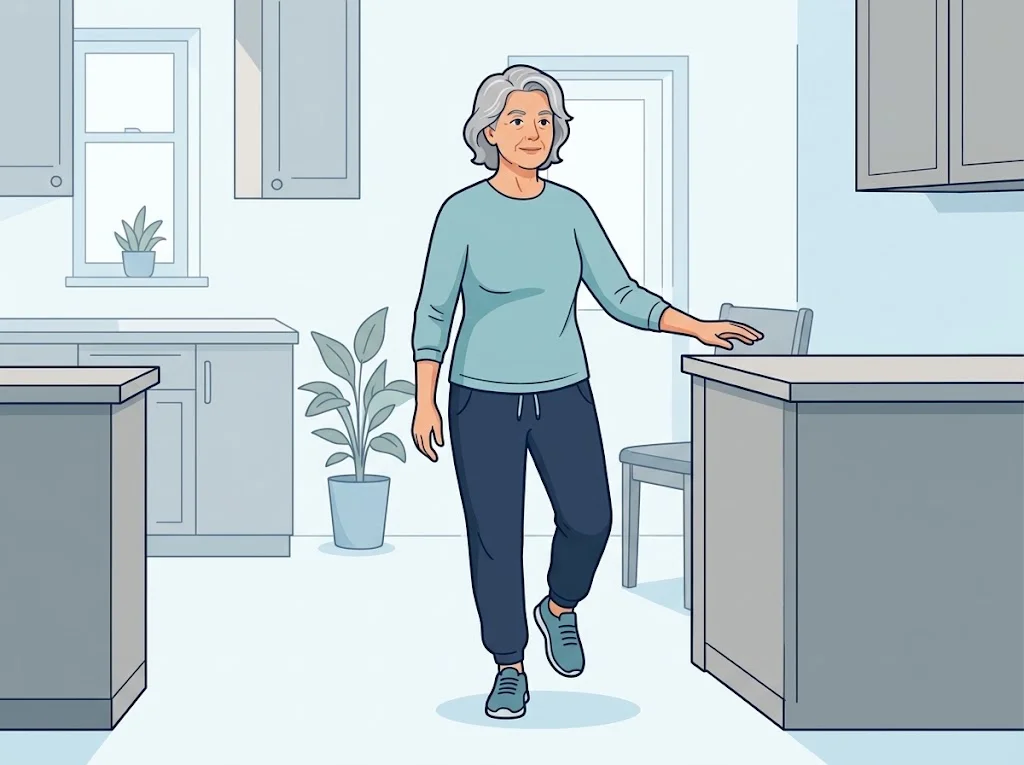
What the training involves
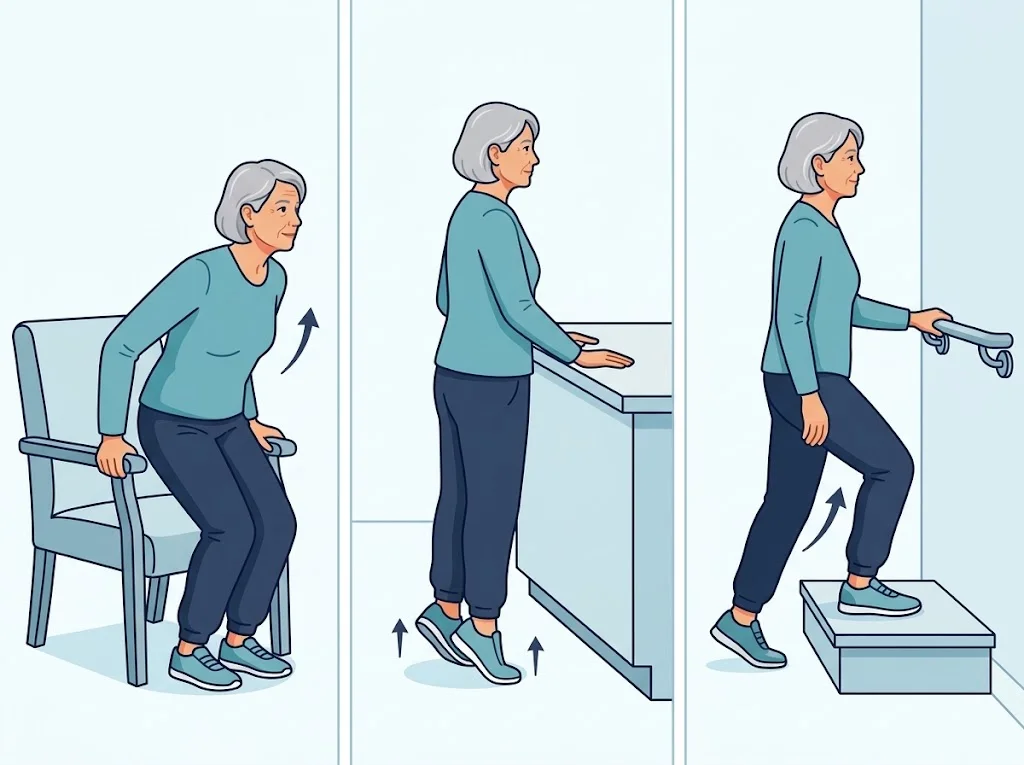
Leg strength. Standing up from a chair without using your hands is both an exercise and a test in itself.
Static balance. Standing with the feet in a line, or on one leg — always with something solid within reach.
Balance while moving. Shifting weight side to side, marching on the spot, stepping over imagined obstacles.
Back strength and posture. Particularly important for anyone with spinal compression fractures.
The osteoporosis article has illustrated exercises taken from the author’s osteoporosis care app.
Beyond exercise
- Review your medicines with your doctor or pharmacist. Some cause drowsiness, dizziness, or a drop in blood pressure on standing.
- Have your eyes checked. Multifocal glasses can make it hard to judge the edge of a step.
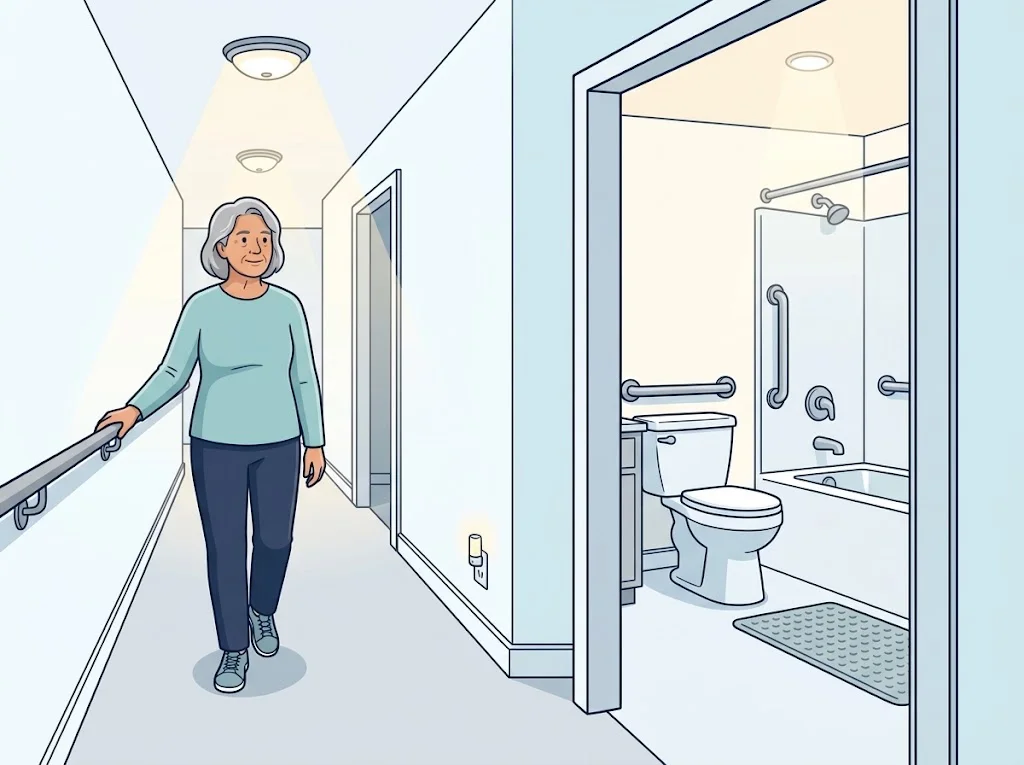
- Change the house. Clear cables, loose mats and clutter from the floor. Put a light on the route to the bathroom. Fit grab rails where they help.
- Footwear. Low heels, non-slip soles and a fastening that holds the foot, rather than slip-on sandals.
- Calcium and vitamin D as advised by your doctor, which form part of osteoporosis care guidelines.
When to see a doctor
Questions to ask your doctor
- How high is my risk of falling, and what is driving it?
- Do any of my medicines increase that risk?
- What kind of programme should I start, and should it be supervised?
- Should I have a bone density scan, and when?
- What should I change at home first?
Frequently asked questions
How often should I train?
The strongest evidence comes from supervised programmes lasting longer than three months that combine balance and resistance work. Consistency matters more than intensity. The plan that suits you should come from your doctor or physiotherapist.
Is walking for exercise enough?
Walking is good for general health, but in a large network meta-analysis of fall prevention, none of the interventions with moderate-certainty evidence of benefit was walking-focused. What worked was balance and resistance training.
I am so afraid of falling that I stay in. What should I do?
Fear of falling is common and has real consequences, because moving less weakens muscle and raises the risk further. Tell your doctor plainly — there is help, from supervised training to changes at home.
References
- Pillay J et al. Falls prevention interventions for community-dwelling older adults: systematic review and meta-analysis of benefits, harms, and patient values and preferences. Syst Rev. 2024
- Camacho PM et al. American Association of Clinical Endocrinologists/American College of Endocrinology Clinical Practice Guidelines for the Diagnosis and Treatment of Postmenopausal Osteoporosis — 2020 Update. Endocr Pract. 2020
Related conditions
Written by Assoc. Prof. Sorawut Thamyongkit, M.D.