
Demonstration videos
Short silent clips of exercises and everyday care. Each one opens in the article that explains its cautions.
38 clips in all
Nothing here matches your search and filters.
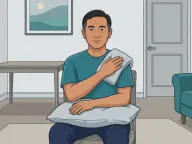
Ice or heat
The compress is used at rest, always with a cloth between it and the skin.
Frozen shoulder · Treatment options
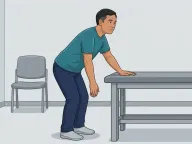
Pendulum swing
Leaning forward with one hand on a table, the person lets the sore arm hang and swing gently in small circles, then stands up.
Frozen shoulder · Recovery and rehabilitation

Finger walk up the wall — 5 slow reps
Face the wall and walk your fingers upward until you feel a stretch. Hold, then walk back down. Stop at a stretch, not at a sting.
Frozen shoulder · Recovery and rehabilitation
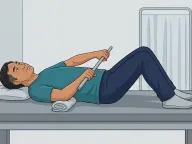
Assisted outward rotation
Lying on the back with the sore elbow tucked at the side on a folded towel, the person holds a stick in both hands and uses the good arm to push the sore forearm slowly outwards, then back.
Frozen shoulder · Recovery and rehabilitation
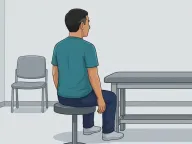
Shoulder-blade setting — 10 reps
Gently draw the shoulder blades back and down. Small movement, no shrugging. Your neck should stay relaxed.
Frozen shoulder · Recovery and rehabilitation
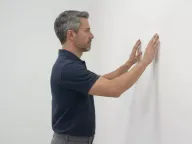
Wall slide — 8 reps
Forearm on the wall, slide it upward as far as is comfortable. Note the highest point you reach — it is the clearest sign of progress.
Frozen shoulder · Recovery and rehabilitation
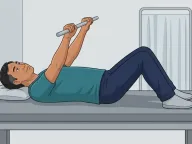
Assisted overhead reach
Lying on the back with the knees bent, the person holds a stick in both hands and raises it slowly overhead, the good arm doing the lifting, then lowers it to the chest.
Frozen shoulder · Recovery and rehabilitation
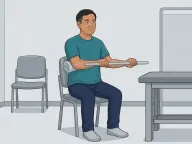
Outward rotation stretch
Sitting on a chair with the sore elbow at the side, the person holds a stick in both hands and pushes the sore forearm outwards with the good arm, holds, then returns.
Frozen shoulder · Recovery and rehabilitation
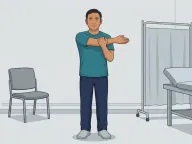
Cross-body stretch — 5 reps, hold 20 seconds
Bring the arm across your chest, supporting it with the other hand above the elbow. Pull at the upper arm, never at the wrist.
Frozen shoulder · Recovery and rehabilitation
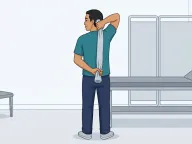
Towel stretch behind the back
Standing, the person holds a towel over one shoulder with the top hand and its lower end behind the back with the other hand, pulls upwards so the lower hand slides up the back, then lets it down.
Frozen shoulder · Recovery and rehabilitation
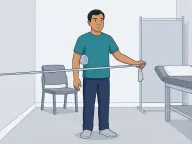
Band outward rotation
Standing side-on to a band fixed at waist height, with a rolled towel under the sore elbow, the person turns the forearm outwards against the band and slowly back.
Frozen shoulder · Recovery and rehabilitation
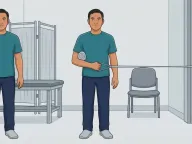
Band inward rotation
Standing side-on to a band fixed at waist height, elbow at the side, the person pulls the band in across the front of the body towards the stomach and slowly back.
Frozen shoulder · Recovery and rehabilitation
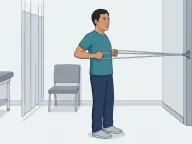
Band row
Facing a band fixed in front at chest height, the person pulls both handles back towards the body, drawing the shoulder blades together, then lets the arms forward slowly.
Frozen shoulder · Recovery and rehabilitation
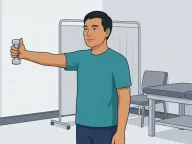
Light forward raise
Standing, the person holds a small weight at the side, lifts the straight arm forward to shoulder height, and lowers it slowly.
Frozen shoulder · Recovery and rehabilitation
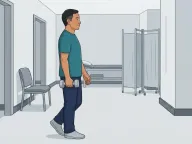
Loaded carry
The person walks tall across a room holding a weight at the side in one hand, shoulders level, then stops.
Frozen shoulder · Recovery and rehabilitation

On your back, arm supported
Lie on your back with a pillow under the affected forearm so the arm is not hanging or dropping backwards.
Frozen shoulder · Recovery and rehabilitation

On the good side, hugging a pillow
Lie on the unaffected side and rest the sore arm forward on a pillow at chest height.
Frozen shoulder · Recovery and rehabilitation

Propped up
A recliner or a wedge of pillows often hurts less than lying flat in the painful stage.
Frozen shoulder · Recovery and rehabilitation

If stiffness wakes you
Do a few gentle pendulum swings or slow movements rather than lying still and waiting it out.
Frozen shoulder · Recovery and rehabilitation

Getting dressed
Injured arm first when dressing, injured arm last when undressing. Loose tops, button-up shirts, and slip-on shoes make this easier.
Frozen shoulder · Prevention and self-care

Showering
Wash and rinse with your good arm and let the injured one hang relaxed. A long-handled sponge reaches your back; pat dry rather than rubbing.
Frozen shoulder · Prevention and self-care
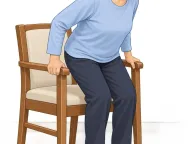
Sit-to-stand with support
Close up on a chair with armrests: the person pushes down on both armrests to stand up, then lowers back to sitting with the hands still on them.
Osteoporosis · Recovery and rehabilitation

Side-to-side weight shifts
Seen from behind, the person holds the back of a chair and slowly shifts the weight from one foot to the other.
Osteoporosis · Recovery and rehabilitation
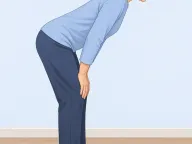
Hip hinge — bend at the hips, not the back
Seen from the side, the person bends forward from the hips with the back kept straight and the hands sliding towards the knees, then stands tall again.
Osteoporosis · Recovery and rehabilitation
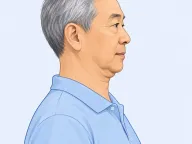
Chin tuck
Seen from the side, the person draws the head straight back so the chin tucks in without tipping down, holds, then relaxes.
Osteoporosis · Recovery and rehabilitation

Shoulder blade squeeze
Seen from behind, the person draws both shoulder blades together and down, holds, then lets them go.
Osteoporosis · Recovery and rehabilitation
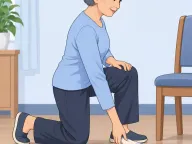
How to pick things up safely
Beside a chair, the person goes down on one knee with the back straight, picks a cloth up from the floor, and rises to standing holding it.
Osteoporosis · Recovery and rehabilitation

Dressing with a sling
Lean forward to let the surgical arm hang. Insert the surgical arm into the sleeve first, then wrap the shirt around and put the unaffected arm into the other sleeve.
Rotator cuff tear · Recovery and rehabilitation
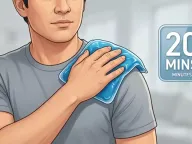
Icing the shoulder
15–20 minutes every 1–2 hours for the first few days, then as needed.
Rotator cuff tear · Recovery and rehabilitation
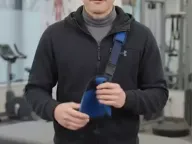
How to wear your sling correctly
Remove it only for hygiene, icing, or approved exercises, and clean and dry the skin under the strap daily.
Rotator cuff tear · Recovery and rehabilitation
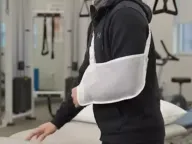
Pendulum (Codman) swings
Lean forward and let the arm hang, swinging gently in small circles. Momentum does the work, not the shoulder.
Rotator cuff tear · Recovery and rehabilitation
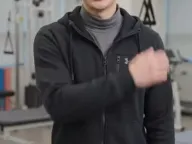
Wrist and elbow exercises
Bend your wrist back and forth, and bend and straighten your elbow slowly — the joints below must not stiffen with the shoulder.
Rotator cuff tear · Recovery and rehabilitation
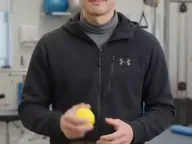
Grip pump and ball squeeze
Open and close your hand, or gently squeeze a soft ball — it keeps the circulation moving and the hand from swelling.
Rotator cuff tear · Recovery and rehabilitation
Passive forward elevation
Therapist-assisted or with a pulley — do not lift the arm yourself.
Rotator cuff tear · Recovery and rehabilitation

Wand/stick elevation and external rotation
Lying on the back with the knees bent, the person holds a stick in both hands and raises it slowly overhead, the good arm doing the lifting, then lowers it to the chest.
Rotator cuff tear · Recovery and rehabilitation
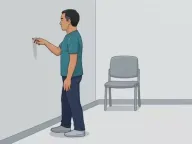
Wall crawl
One of the movements named above. Your physiotherapist decides when it starts.
Rotator cuff tear · Recovery and rehabilitation

Scapular squeezes
One of the movements named above. Your physiotherapist decides when it starts.
Rotator cuff tear · Recovery and rehabilitation
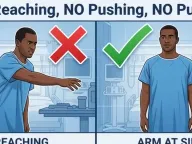
Activity precautions
No driving while wearing the sling or taking prescription pain medication, and no lifting, pushing, or pulling with the operated arm.
Rotator cuff tear · Recovery and rehabilitation