
Rotator cuff tear
A tear in the group of tendons that wrap the shoulder and let you lift the arm. It causes pain on the outside of the shoulder, pain at night, and difficulty lifting. Many people improve without surgery.
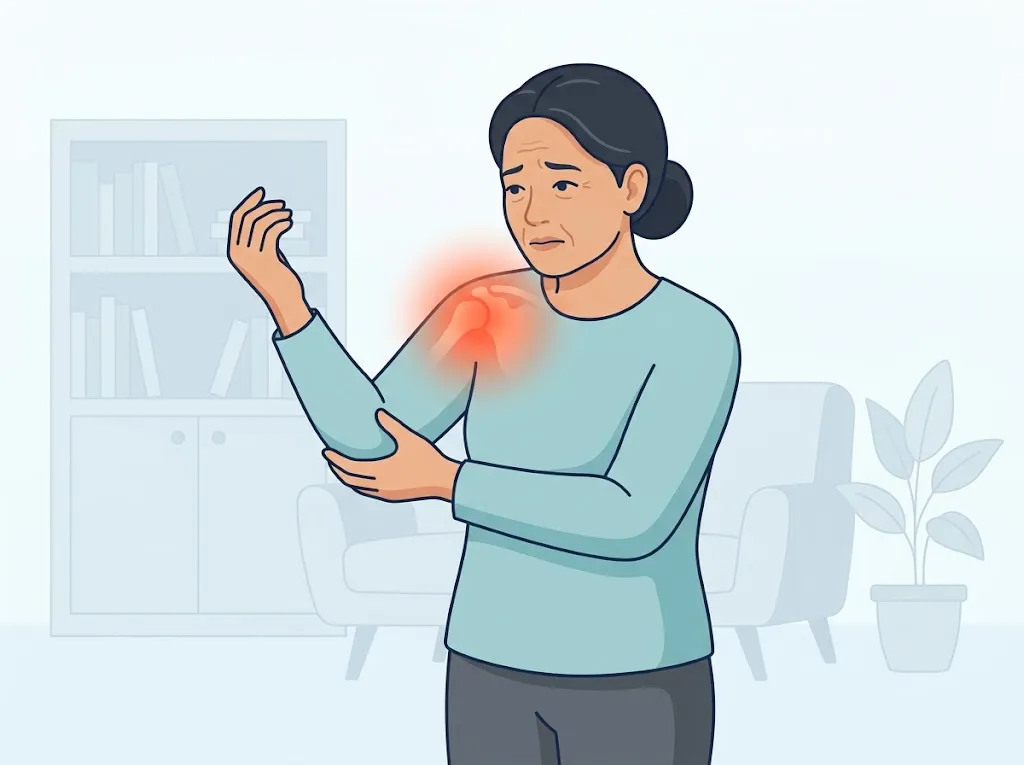
What it is
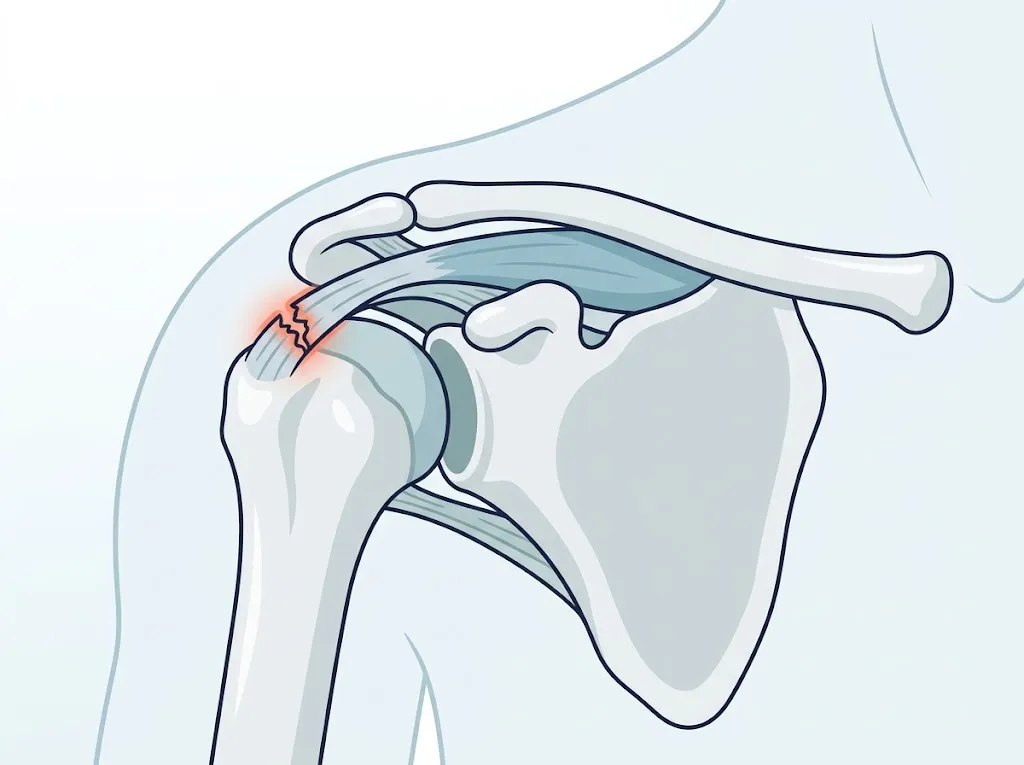
Four muscles wrap around the top of your upper arm bone, ending in tendons that form a cuff over it. Together they are the Four muscles and their tendons that wrap the top of the shoulder. They lift and rotate the arm and hold the ball of the joint centred in its socket.. They do two jobs at once: they lift and rotate the arm, and they hold the ball of the joint centred in its socket while the bigger muscles pull.
When these tendons tear, the shoulder hurts and loses power. There are two kinds of tear:
- Partial-thickness — the tendon is thinned or frayed but still continuous
- Full-thickness — the tendon is torn all the way through, from a small hole to a wide tear that pulls back
The size of the tear and the amount of pain do not track each other. Some people have a wide tear and barely notice it; others have a small one and are in a lot of pain.
Symptoms
- Pain over the outer shoulder and upper arm, especially reaching overhead or behind your back
- Pain at night, particularly lying on that side — this is what brings most people to a doctor
- Weakness — lifting onto a high shelf, or combing and washing hair, becomes harder
- Catching or a grinding sensation when lifting the arm
- After an injury, sometimes no lifting at all straight after a fall or a sudden pull on the arm
Causes and risk factors
Tears arise in two ways.
Gradual wear is the commonest. The tendon thins with age and repeated use until it gives way, sometimes with no preceding event at all.
A single injury — falling onto an outstretched hand, having the arm yanked, or lifting something far too heavy suddenly.
Things that raise the chance:
- Age, particularly after 50
- Work or sport with repeated overhead reaching — painters, electricians, throwers, swimmers
- Smoking, which reduces the blood supply to the tendon
- Diabetes and high blood lipids
- The shape of some shoulder blades, which pinches the tendon more than usual
When to see a doctor
Otherwise, see a doctor when:
- Shoulder pain lasts more than two or three weeks without improving
- Night pain keeps you awake several nights running
- Weakness starts to affect your work or daily tasks
How it is diagnosed
History and examination. Your doctor asks where it hurts, what brings it on, and when it started, then tests the strength of each cuff muscle with specific positions, and compares how far the arm goes when you move it against how far it goes when they move it.
X-ray does not show the tendon, but it shows arthritis, calcium in a tendon, or the head of the arm bone riding higher than it should — an indirect sign of a long-standing tear.
Ultrasound shows the tendons well, is quick and inexpensive, and can watch the shoulder move. Its accuracy depends on the experience of the person scanning.
MRI gives the most detail: the size of the tear, where it is, how far the tendon has pulled back, and the state of the muscle. It is usually used when surgery is being considered.
Treatment options
Non-surgical treatment
Many people — particularly those whose tear came from wear and whose symptoms built up gradually — do well without an operation. The aim is to reduce pain and to get the surrounding muscles doing the work of the part that has gone.
Exercise and physiotherapy is the mainstay. It focuses on three things: restoring the range of movement, teaching the shoulder blade to move in rhythm with the arm, and gradually strengthening what remains of the cuff. Clinical guidelines broadly recommend exercise as the foundation of care for shoulder pain.
Adjusting what you do. Cut back overhead work while it is painful, then build back gradually.
Pain relief. Your doctor or pharmacist may suggest paracetamol or a non-steroidal anti-inflammatory so you can do the rehabilitation and sleep. Always ask a doctor or pharmacist first, particularly if you have stomach, kidney or bleeding problems or take blood thinners.
Injection. Your doctor may consider a steroid injection into the space under the shoulder blade bone when pain is what is blocking rehabilitation. It is their decision, and it is not something to repeat indefinitely.
Surgery
Your doctor is more likely to suggest surgery when:
- The tear came from an injury in someone who uses the shoulder heavily, especially if the arm could not be lifted straight afterwards
- Non-surgical care has been tried properly for several months and pain or weakness still limits daily life
The usual operation is keyhole repair — reattaching the tendon to bone with anchors set into it.
Worth asking before you decide: the size of the tear, the state of the muscle, the likelihood that it will heal, how long the sling stays on, and how long you will be off work.
Recovery and rehabilitation
This section is written for people who have had a rotator cuff repair. Your own surgeon’s instructions come first, because tear sizes and repair techniques differ.
The phases
| Phase | When | Aim |
|---|---|---|
| Preoperative preparation | Before surgery | Prepare your body, home, and mindset before surgery for the smoothest possible recovery |
| Passive protection | Weeks 0–6 | Maintain distal mobility and passive shoulder relaxation while your repair heals |
| Active-assisted and active motion | Weeks 6–12 | Restore active range of motion and re-establish normal scapular rhythm |
| Progressive resistance | Months 3–6 | Build rotator cuff endurance and light strength with scapular stabilization |
| Advanced conditioning | Months 6–12 | Functional strength, dynamic stability, and return to sport or heavy work |
Before surgery
- Follow your pre-op checklist from your surgical team — fasting instructions, medications to pause, what to bring
- Arrange for someone to assist you for the first few days after surgery
- Set aside button-up or zip-front shirts you can wear one-armed
- Set up a wedge pillow or recliner for sleeping, and stage daily essentials — phone, water, remote, snacks — within reach at waist height before you go in
- Your nerve block will numb the arm for several hours after surgery — plan your first dose of oral pain medication before the block fully wears off
A short clip with no sound. Nothing downloads until you press play.
Weeks 0–6 — protect the repair
- Wear your sling as instructed — even while sleeping, unless told otherwise
- Ice the shoulder 15–20 minutes every 1–2 hours for the first few days, then as needed
- Take pain medication before pain becomes severe, not after
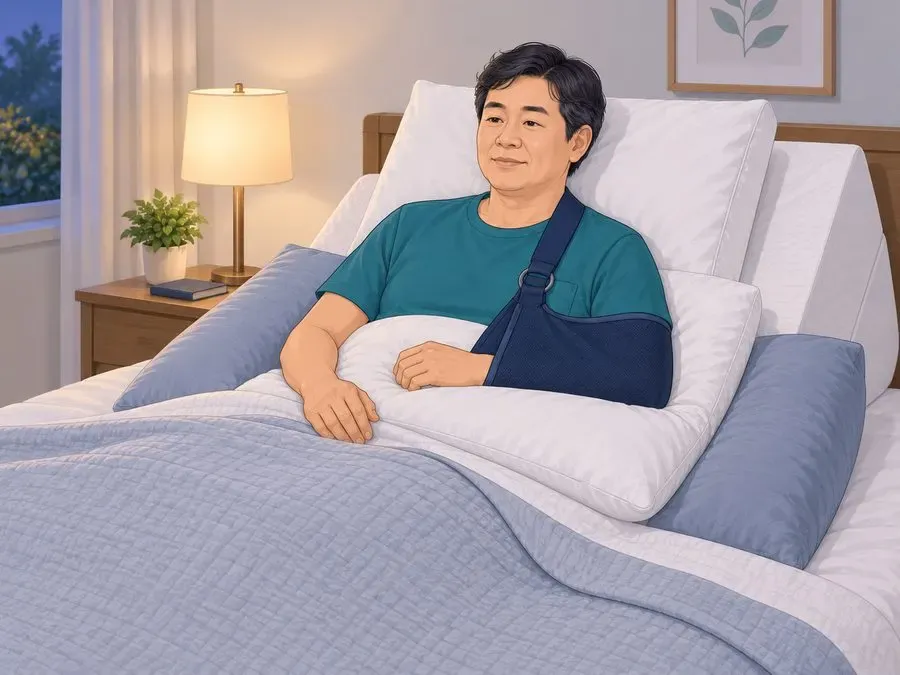
- Rest with the arm supported on pillows to help reduce swelling
A short clip with no sound. Nothing downloads until you press play.
A short clip with no sound. Nothing downloads until you press play.
A short clip with no sound. Nothing downloads until you press play.
A short clip with no sound. Nothing downloads until you press play.
A short clip with no sound. Nothing downloads until you press play.
A short clip with no sound. Nothing downloads until you press play.
Weeks 6–12 — starting to move it yourself
- Continue wearing the sling as it is gradually weaned, per your therapist’s guidance
- Focus on active-assisted motion and avoid shrugging
- No lifting objects over 1–2 lbs
- Stop motion at the point of sharp pain or pinching
Wand/stick elevation and external rotation
Use a wand or stick to help raise and rotate the arm. The good arm supplies the effort; the operated arm goes along for the ride.
A short clip with no sound. Nothing downloads until you press play.
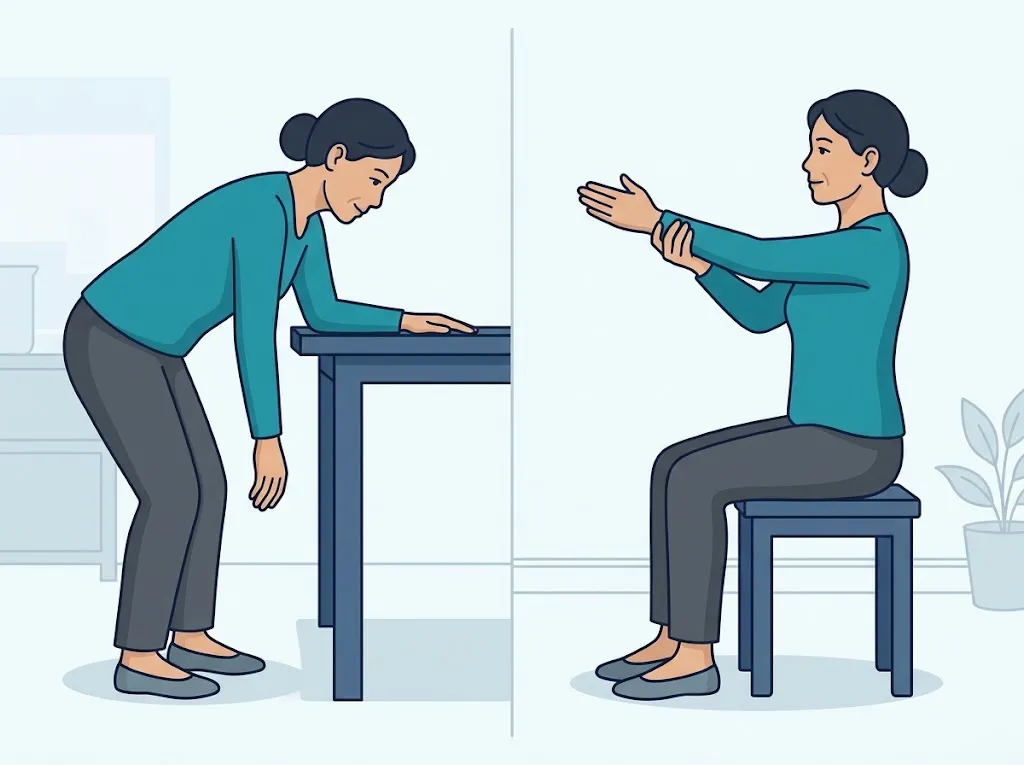
Other movements your physiotherapist will usually add in this phase are wall crawls with your fingers, supine active arm raises within comfort, and scapular squeezes that retract and depress the shoulder blades.
A short clip with no sound. Nothing downloads until you press play.
A short clip with no sound. Nothing downloads until you press play.
A short clip with no sound. Nothing downloads until you press play.
Months 3–6 and beyond
- Keep resistance light and repetitions high, around 15–20
- Avoid heavy overhead resistance or explosive movements
- Muscle soreness after exercise is normal; sharp pain is not
- Warm up thoroughly before loading, and confirm scapular control before increasing resistance or speed
- Gradually resume sport- or job-specific tasks under guidance
Once fully recovered, a simple home maintenance routine helps keep your rotator cuff balanced and lowers the risk of re-injury long-term.
Wound care and showering
- Keep the dressing clean, dry, and in place until your follow-up visit, unless told otherwise
- A small amount of blood-tinged drainage in the first 24–48 hours is normal
- Do not apply lotion, ointment, or powder near the incision unless instructed
- Showering is allowed, but do not let water run directly onto the incision. To wash underarms, lean forward and let the arm hang naturally
- Avoid submerging the incision in water
- Stitches are removed at 7–10 days and replaced with white Steri-Strips, which peel off naturally over 1–3 weeks
Sleep
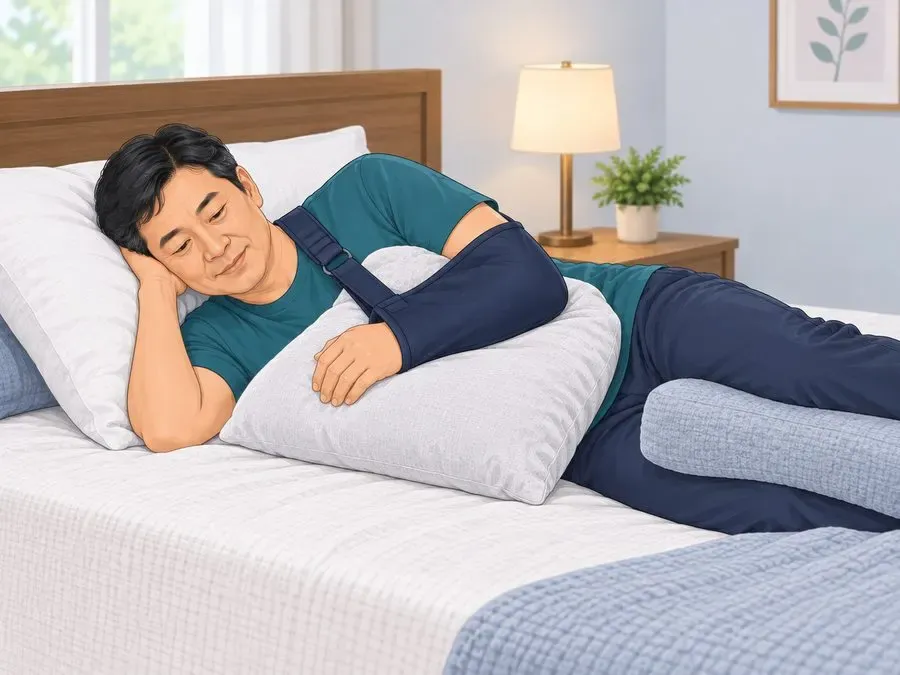
- Semi-reclined — many patients sleep more comfortably semi-reclined, in a recliner or propped up on several pillows, for the first 1–2 weeks
- Back sleeping — support your elbow and forearm on a pillow, with your hand resting on your stomach
- Side sleeping, unaffected side only — hug a pillow with your arm fully resting on it, elbow slightly forward of your shoulder
- Never lie directly on the operated shoulder
What is normal, and what is not
Normal in the first 48 hours: moderate local swelling, bruising extending down the arm or chest, mild temperature under 38.0°C, and temporary numbness from your nerve block.
Prevention and self-care
- Do not smoke or use nicotine products — they slow tendon and bone healing and make a repair less likely to hold
- Warm up before heavy shoulder work, particularly anything overhead
- Strengthen the muscles around the shoulder blade, because a shoulder blade that moves well takes pressure off the tendon
- Break work into spells rather than reaching overhead continuously
- Keep everyday items between waist and shoulder height so you are not reaching high every day
- Look after diabetes and blood lipids, which affect tendon health
Questions to ask your doctor
- Is my tear partial or full-thickness, and how big is it?
- Should I try treatment without surgery first, and how long before we know if it is working?
- If I do not have surgery, will it get worse over time?
- If I do, how likely is the tendon to heal in my case?
- How long would the sling be on, and how long off work?
Frequently asked questions
Will a torn tendon heal back on its own?
A full-thickness tear does not usually reattach itself. That does not mean everyone needs surgery — many people do very well by strengthening the surrounding muscles and adjusting how they use the arm, and get on with normal life with the tear still there.
Why is it so much worse at night?
Lying directly on the affected shoulder is the commonest reason, and the shoulder sits in a position at night that squeezes the tendon more. Try lying on your back with a pillow under the elbow, or on the good side hugging a pillow.
If I have surgery, how long is the sling on for?
Usually about 4 to 6 weeks, and it varies from person to person depending on the size of the tear and how it was repaired. Follow what your own surgeon sets, not what someone else was told.
Why can I not lift the arm myself in the early weeks after surgery?
Your tendon needs time to anchor back onto bone — this is why movement is strictly limited in the first weeks, even though the incision itself heals faster. Lifting too early can pull the repair apart.
How long is the full recovery?
After surgery it usually takes about 6 to 12 months to get back to heavy use. Driving, light chores, and desk work are typically reintroduced around months 3–6, once your surgeon confirms you are ready.
Does smoking matter?
Yes, clearly. Avoid smoking or nicotine products — they slow tendon and bone healing. If stopping is hard, ask your doctor about help.
References
- Lowry V et al. A Systematic Review of Clinical Practice Guidelines on the Diagnosis and Management of Various Shoulder Disorders. Arch Phys Med Rehabil. 2024
- Longo UG et al. Conservative versus accelerated rehabilitation after rotator cuff repair: a systematic review and meta-analysis. BMC Musculoskelet Disord. 2021
- Nikolaidou O et al. Rehabilitation after Rotator Cuff Repair. Open Orthop J. 2017
A self-care app for this condition
Free, and made by the author of this article.
 Rotator Cuff Repair Recovery
A phase-by-phase recovery guide after rotator cuff repair, with the exercises for each phase, how to wear the sling, and what to avoid.
Open the appRelated educational reading
These pages explain tests, treatments and rehabilitation that often come up with this condition. They are general reading, not a treatment sequence arranged for you — that has to come from a doctor who has examined you.
Related conditions
Written by Assoc. Prof. Sorawut Thamyongkit, M.D.