
Knee rehabilitation
Strong thigh and hip muscles are what help a knee most, whether the problem is osteoarthritis, pain at the front, or recovery from injury. This page covers the order of work and how to tell when it is too much.
What a knee needs
The knee carries more load than almost any other joint, and takes force from above and below. What helps most is therefore not resting it, but making the muscles around it strong enough to take that force instead.
Three groups matter most:
- The quadriceps at the front of the thigh, which straighten the knee and control your weight coming down stairs
- The hamstrings at the back, which add stability and work alongside the ACL
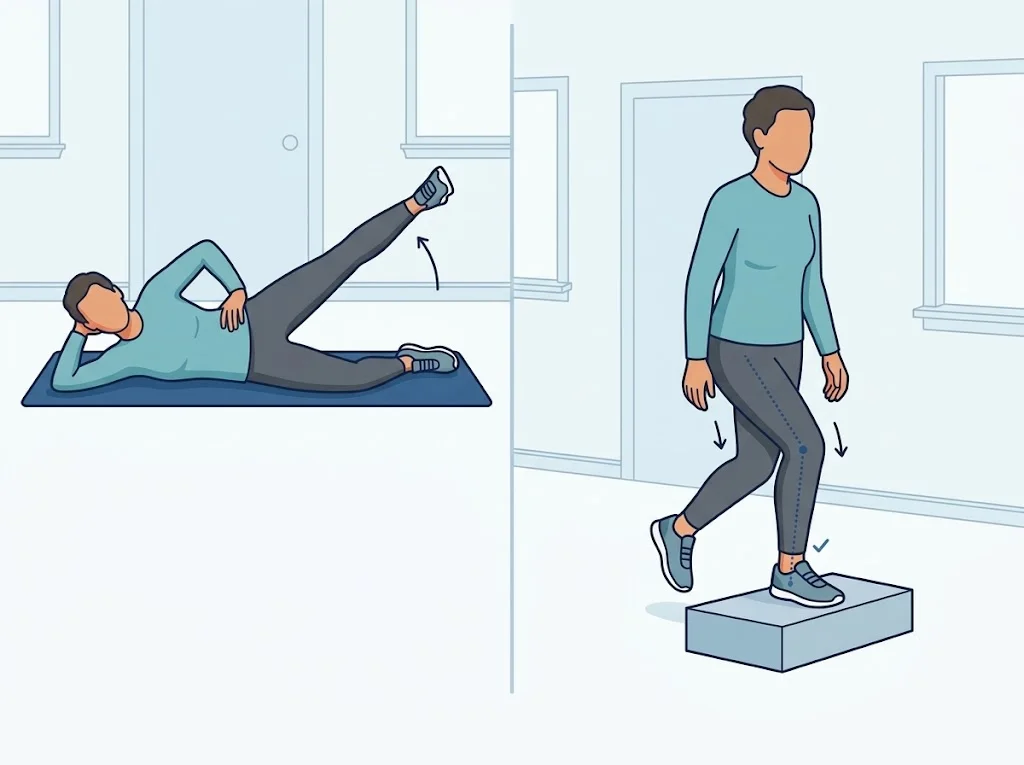
- The hip muscles, particularly those that move the leg out to the side, which stop the knee collapsing inwards under load
That third group is the one most often overlooked, and the clinical practice guideline for patellofemoral pain is explicit about training the hip alongside the knee.
What the evidence says
The Cochrane review of exercise for knee osteoarthritis pooled 139 randomised trials with 12,468 participants. Compared with no treatment or usual care, exercise improved pain and physical function in the short term.
The reviewers were also straightforward about the limits: measured against thresholds for a difference patients actually notice, the size of the benefit is uncertain, and most trials could not blind participants.
One finding is directly useful: no difference was found between types of exercise, and no relationship between the total number of sessions prescribed and the result. The practical conclusion is that an exercise you will actually keep doing beats the theoretically optimal one you abandon in a fortnight.
The order of work
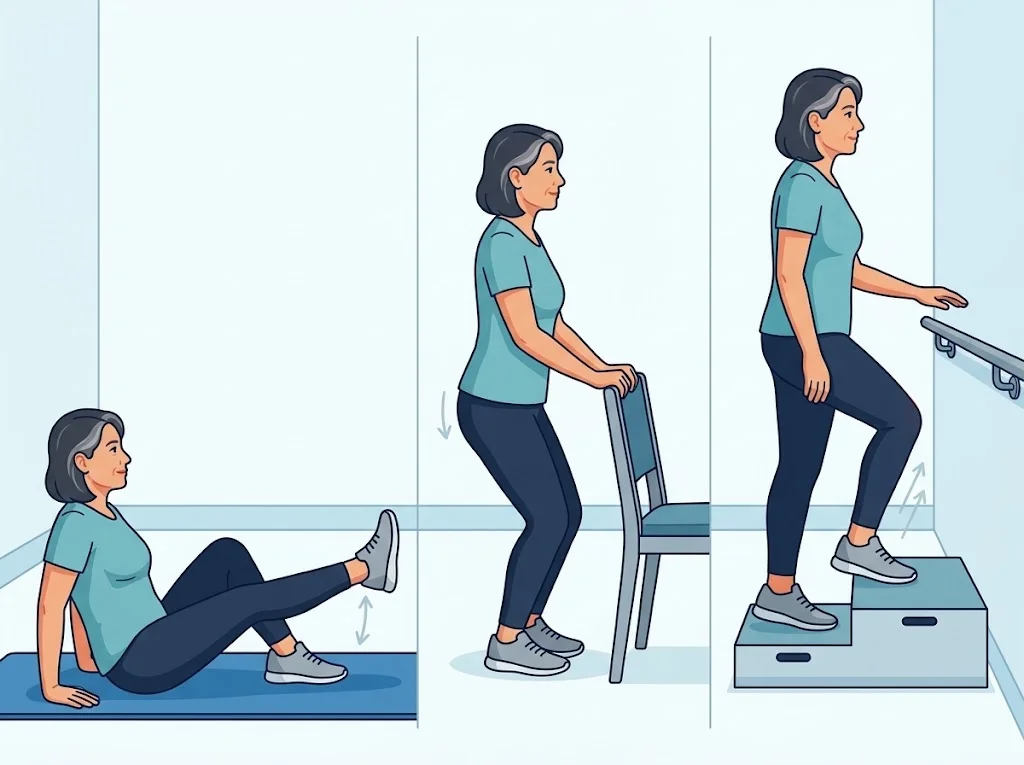
First — wake the muscle up. Start with work that does not load the joint much, such as tensing the thigh lying down, or straight-leg raises. The goal is to get the muscle firing again, particularly after swelling or a period of rest.
Second — work in the range that does not hurt. Knee extension in sitting through a comfortable arc, or shallow squats with the depth controlled.
Third — add resistance and train the hip. Increase load or band resistance, and add work for the muscles on the outside of the hip.
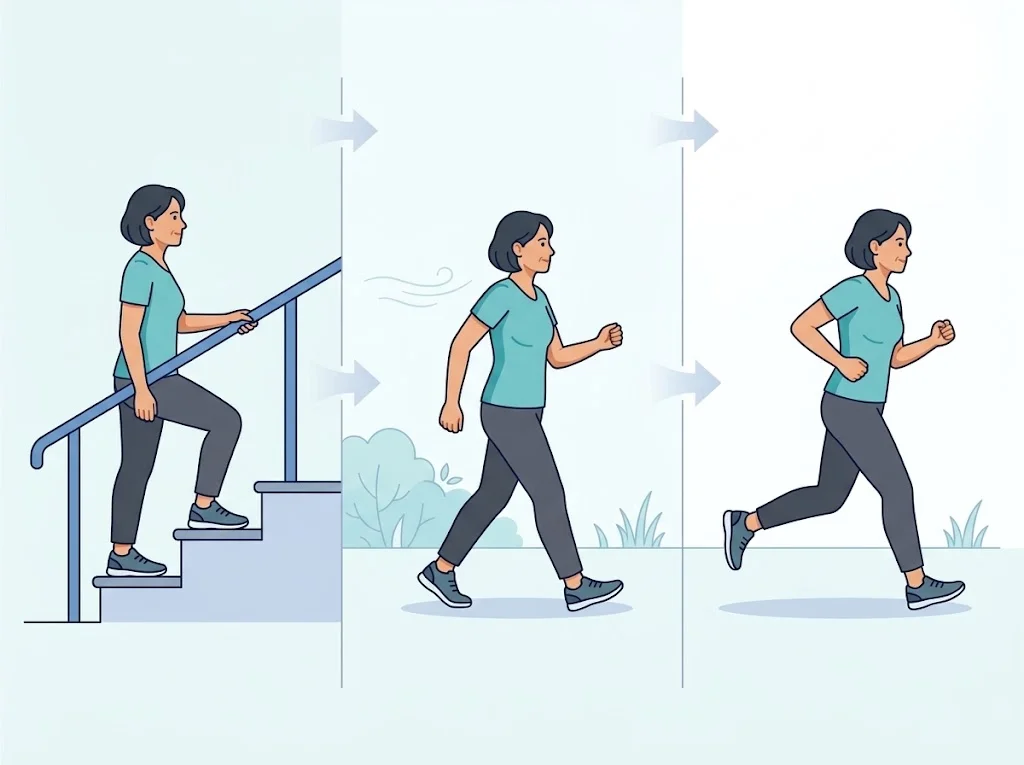
Fourth — practise what you need. Stairs, standing up from a low chair, walking uphill, or returning to sport as permitted.
When to see a doctor
After knee surgery
If you have had an ACL reconstruction, a meniscal repair or a knee replacement, your programme is set by your surgeon and comes with specific weekly limits — how far the knee may bend, how much weight may go through it. Follow that. This page is an overview, not your post-operative protocol.
The ACL injury article covers the period after reconstruction in more detail.
Questions to ask your doctor or physiotherapist
- Which of my muscles are weakest, and which exercises should I focus on?
- How far may I bend the knee at this stage?
- Should I use a brace or a walking aid, and for how long?
- How should I manage stairs safely for now?
- When can I return to walking for exercise, or to sport?
Frequently asked questions
Can I still exercise with knee osteoarthritis?
Yes, and every international guideline recommends it as core treatment. Exercise does not wear the joint out faster. Stronger muscle takes load that the joint would otherwise carry, which usually means less pain and better function.
Walking or swimming?
Both have a place. Walking and weight-bearing activity help bone and balance; swimming or cycling reduce load on the joint and suit painful periods. What matters is that strengthening work happens as well, not movement alone.
Can I squat or kneel?
It depends on the cause and the stage. Deep knee bend puts high load through the kneecap joint, so many people find it more painful early on — but that does not mean avoiding it forever. Ask your clinician what applies in your case.
References
Related conditions
Written by Assoc. Prof. Sorawut Thamyongkit, M.D.