
Pain at the front of the knee
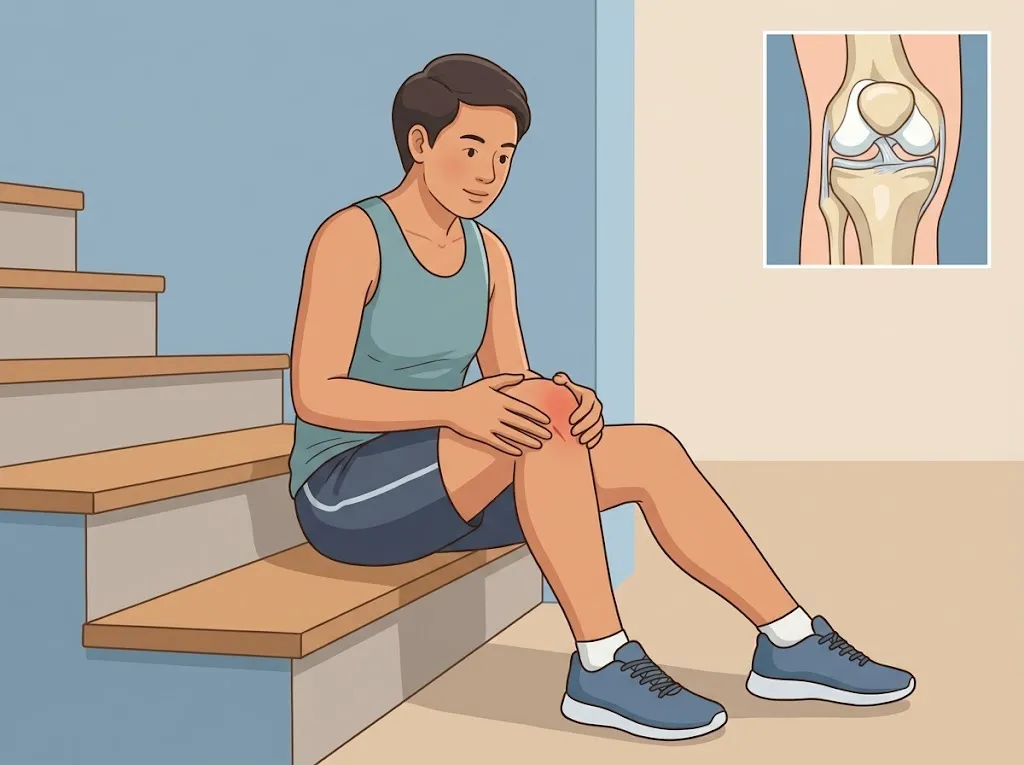
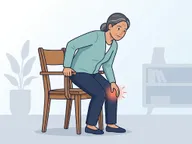
Pain around and behind the kneecap, typically worse on stairs, sitting with the knee bent, or standing up. Common in teenagers and in people who exercise.
What it is
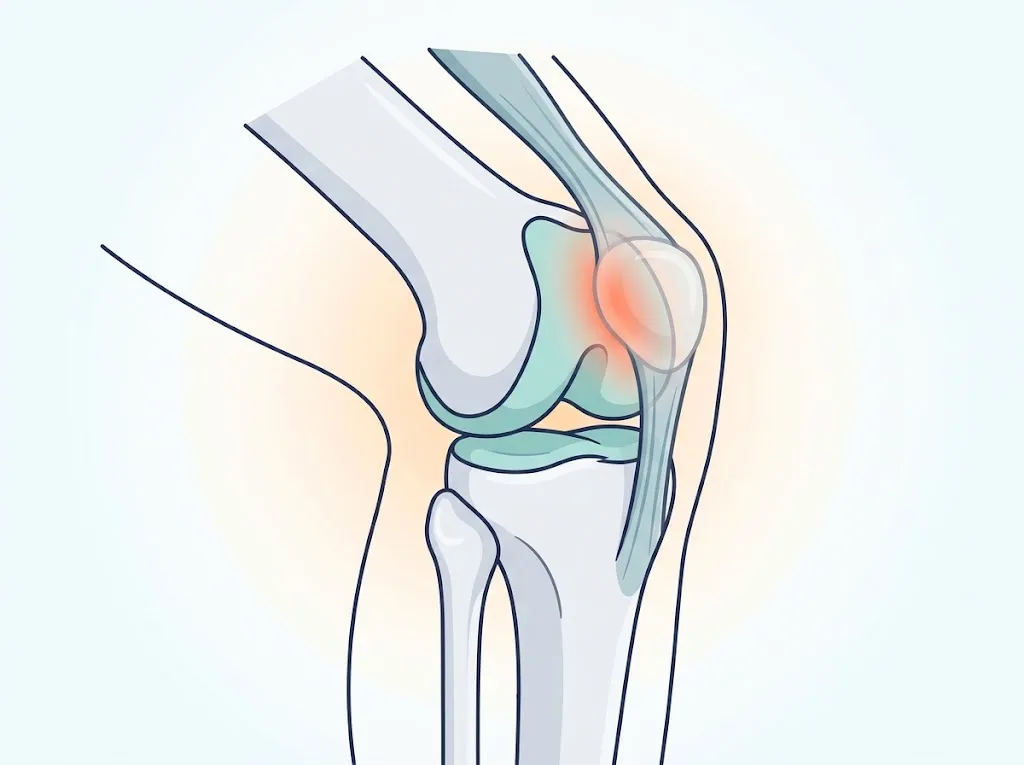
The kneecap is a triangular bone embedded in the tendon of the thigh muscle. It slides up and down a groove at the end of the thigh bone every time you bend and straighten the knee. The joint between the kneecap and the thigh bone is called the patellofemoral joint.
The further the knee bends, the harder the kneecap is pressed into its groove. That is why stairs, squatting, and sitting with the knee bent for a long time provoke it most.
Most front-of-knee pain comes from more load going through that joint than it can currently tolerate — not from something permanently damaged.
Symptoms
- A dull ache around or behind the kneecap, often hard to point to precisely
- Worse going up or, especially, down stairs
- Worse sitting with the knee bent, and better when you straighten it
- Worse squatting, kneeling, or standing up from a chair
- Grinding or a creaking sensation when you bend and straighten
- A feeling that the knee might give way in some moments, usually because the thigh muscle briefly falters rather than any ligament failing
It usually starts gradually, with no injury, and often after an increase in running or exercise.
Causes and risk factors
- Increasing exercise too quickly — the commonest reason of all
- Hip and buttock muscles that are not strong enough, letting the knee fall inward on landing
- Weak thigh muscles
- Tight muscles and tendons around the knee, particularly the hamstrings and calves
- The shape of the groove and where the kneecap sits, so it does not track centrally
- Flat feet or the way you land
- Common in teenagers, runners, and women
When to see a doctor
Otherwise, see a doctor when the pain has not improved after roughly six weeks of adjusting activity and strengthening, when the knee swells repeatedly, or when it stops you exercising or working.
How it is diagnosed
Diagnosis rests mainly on the history and examination. Your doctor asks what brings it on and whether it started after a change in your routine or training, then examines:
- Walking, a single-leg squat, and stepping up onto a box, to see whether the knee falls inward
- The strength of the hip and thigh muscles
- Tightness in the muscles around the knee
- Where the kneecap sits and how it moves, and tender spots around its edges
X-ray and MRI are not needed in most people. Your doctor will consider them if another cause is suspected, if there is a history of the kneecap dislocating, or if things are not improving as expected.
Treatment options
Non-surgical treatment
Strengthening plus adjusting activity is the mainstay, and it has the clearest evidence behind it.
Adjust how much you do — not stopping altogether. Reduce it to a level where the pain stays tolerable and has settled by the next day, then build back up by no more than about a tenth a week.
Strengthen the hips and thighs. This is the core of the programme, and the hip and buttock work matters just as much as the front of the thigh.
Stretch what is tight, particularly the front of the thigh, the hamstrings, and the calves.
Pain relief for a short period so that you can start exercising. Always ask a doctor or pharmacist first.
Taping or a knee strap helps some people in the short term. Use it alongside the exercise, not instead of it.
Insoles may help people with markedly flat feet.
Surgery
There is almost no place for surgery in ordinary front-of-knee pain. Your doctor considers it only for a clear structural problem — a kneecap that keeps dislocating, or an alignment abnormality severe enough that nothing else works.
Recovery and rehabilitation
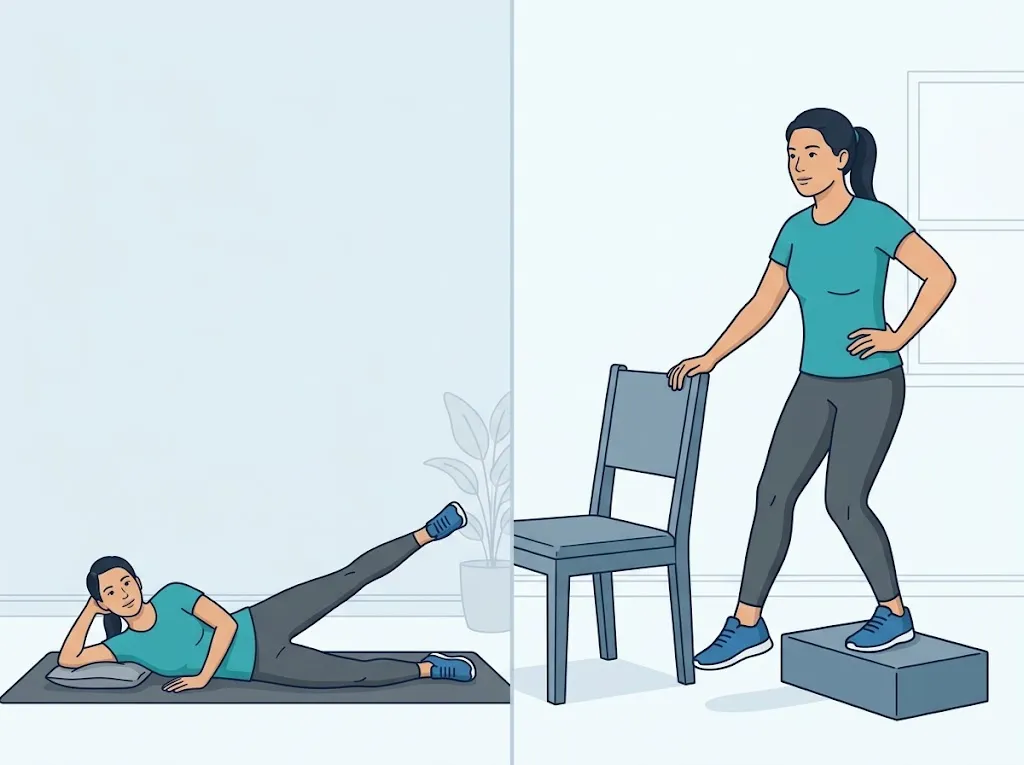
Do these at least three times a week, and give it six to twelve weeks before judging. Mild pain during the exercise that settles by the next day is acceptable. Sharp pain, or pain that lingers into the next day, means it was too much.
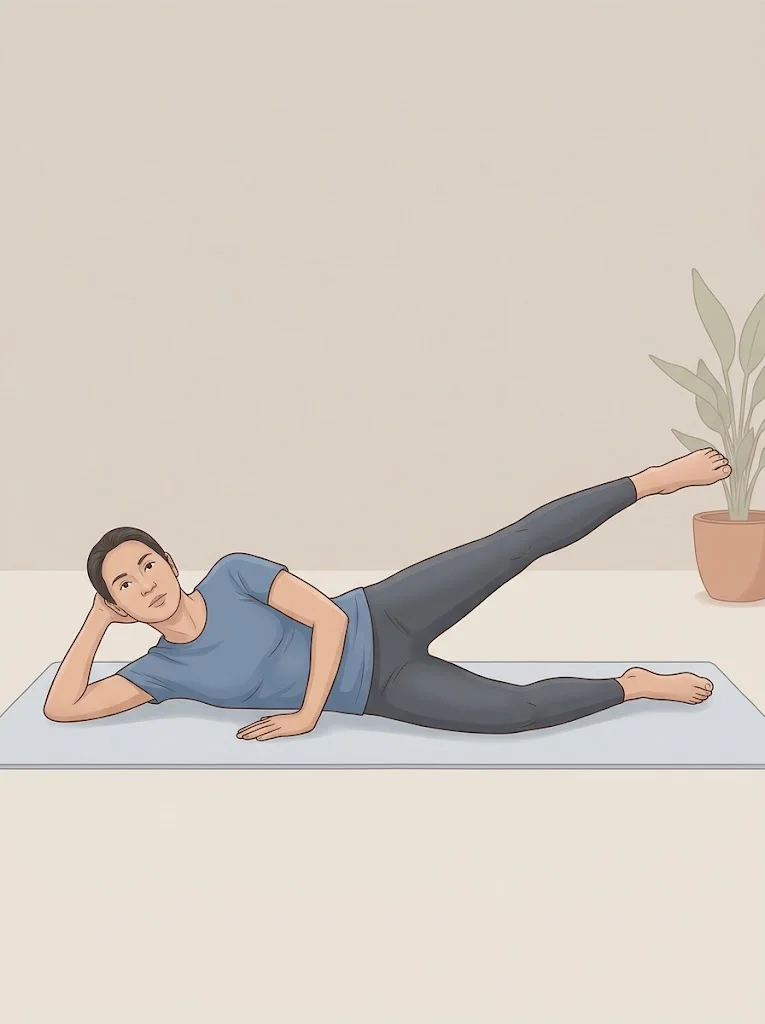
Side-lying hip abduction
3 rounds · 12 times
Lie on your side with the lower knee bent for balance. Keep the top leg straight and lift it, taking it very slightly behind you. Hold 2 seconds, then lower slowly.
Watch for — do not let your body roll backwards. The work comes from the hip, not from rocking.
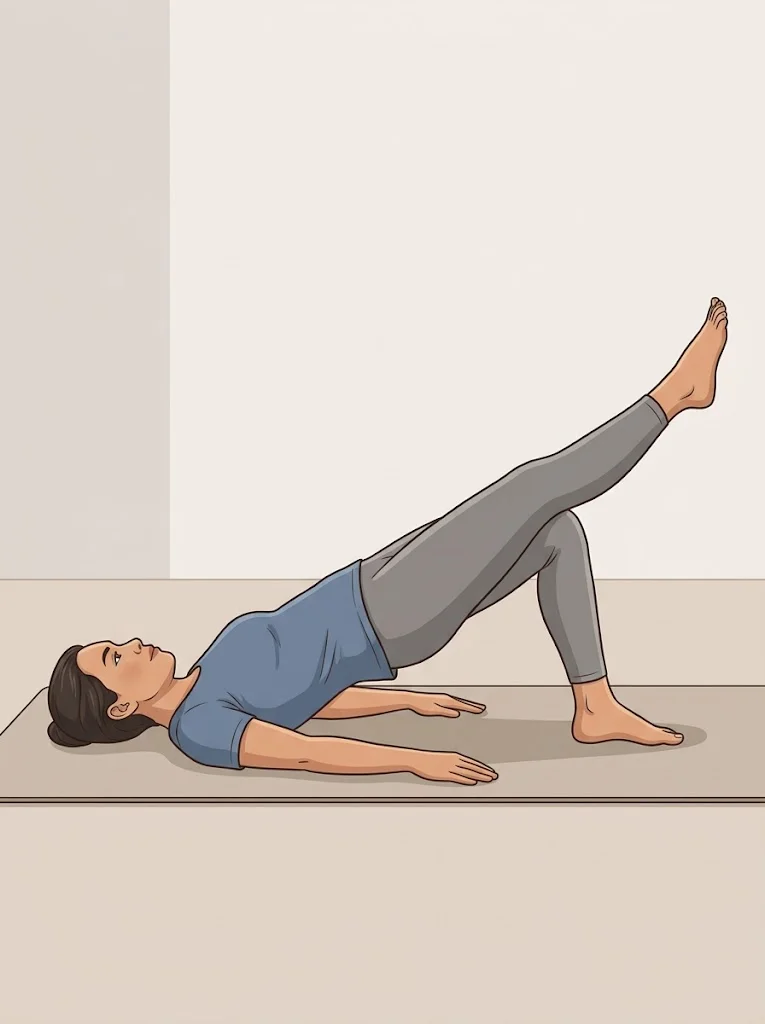
Single-leg bridge
3 rounds · 10 times
Lie on your back with one knee bent and the other leg straight and lifted. Squeeze your buttocks and lift the hips until body and thigh are in a straight line. Hold 3 seconds, then lower.
Watch for — keep both hips level; do not let one drop.
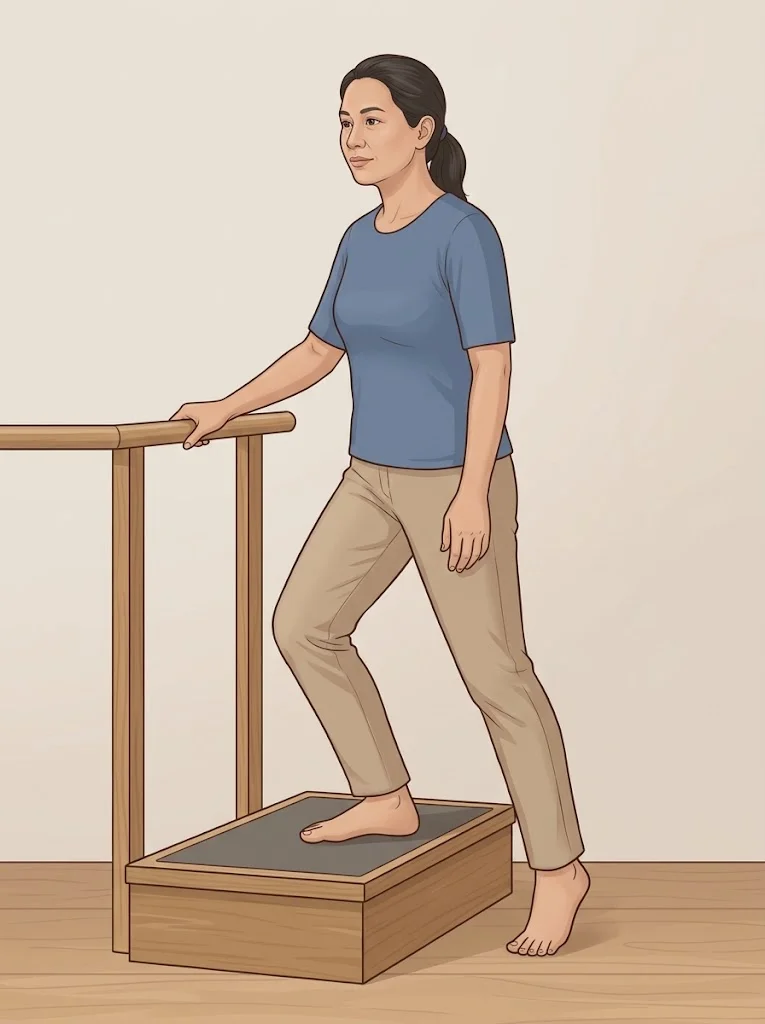
Slow step-down
3 rounds · 10 times
Stand on a low box or step. Slowly lower the other foot to touch the floor, controlling the movement with the standing leg, then push back up.
Watch for — the standing knee must track over the toes and not fall inward. Use a height you can control.
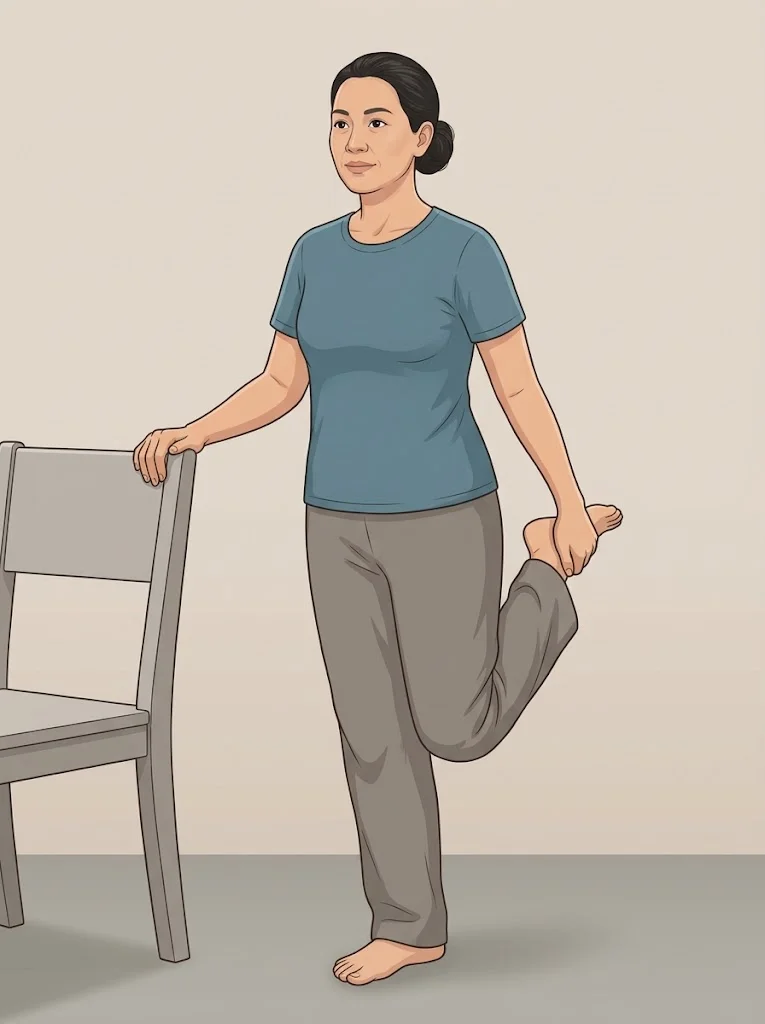
Quadriceps stretch
3 each side · hold 30 seconds
Stand holding a wall. Bend one knee behind you and hold the ankle, drawing the heel towards your buttock until you feel a stretch at the front of the thigh. Hold, then swap sides.
Watch for — keep the knees together and do not arch your back.
Prevention and self-care
- Increase running or exercise gradually, by no more than about a tenth a week
- Train hips and buttocks alongside the thighs, always
- Practise keeping the knee over the toes when you squat, jump and land
- Vary the type of exercise — alternate running with cycling or swimming
- Get up and change position when you have to sit with the knee bent for a long time
- Choose shoes that fit and replace them when the soles wear
Questions to ask your doctor
- What is causing my front-of-knee pain, and is there a structural problem as well?
- How much should I cut back, and what should I avoid?
- Which muscles should I strengthen first, and how often?
- Should I see a physiotherapist?
- Would a knee strap or insoles help me?
Frequently asked questions
Does pain at the front of the knee mean the cartilage is worn?
Not usually. In teenagers and younger adults most front-of-knee pain is not from worn cartilage but from too much load going through the kneecap joint for what it can currently tolerate — which is something you can change with strengthening and by adjusting how much you do.
Should I stop exercising?
Not entirely. Reduce it to a level where the pain stays tolerable and settles by the next day, then build back gradually. Stopping completely weakens the muscles, and the pain usually returns when you start again.
Do a knee strap or taping help?
They reduce pain for some people in the short term and can make it easier to exercise, but they are not the main treatment. Use them alongside a strengthening programme, not instead of one.
Will I need surgery?
Almost never. Most front-of-knee pain improves with strengthening and adjusting activity. Surgery is considered only for a clear structural problem, such as a kneecap that keeps dislocating.
References
Related educational reading
These pages explain tests, treatments and rehabilitation that often come up with this condition. They are general reading, not a treatment sequence arranged for you — that has to come from a doctor who has examined you.
Rehab
Related conditions
Written by Assoc. Prof. Sorawut Thamyongkit, M.D.