
Knee pain
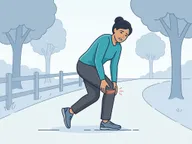
Knee pain has many causes. Where it hurts and when it hurts usually point to which one. This page covers the common causes and what to do first.
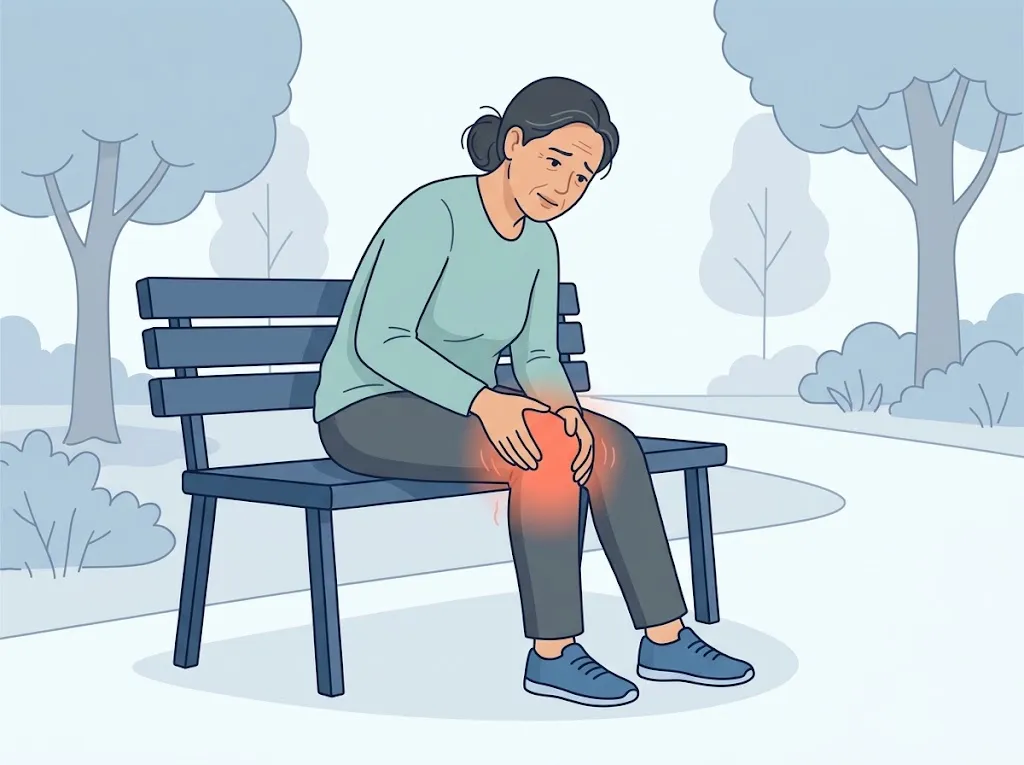
What it is
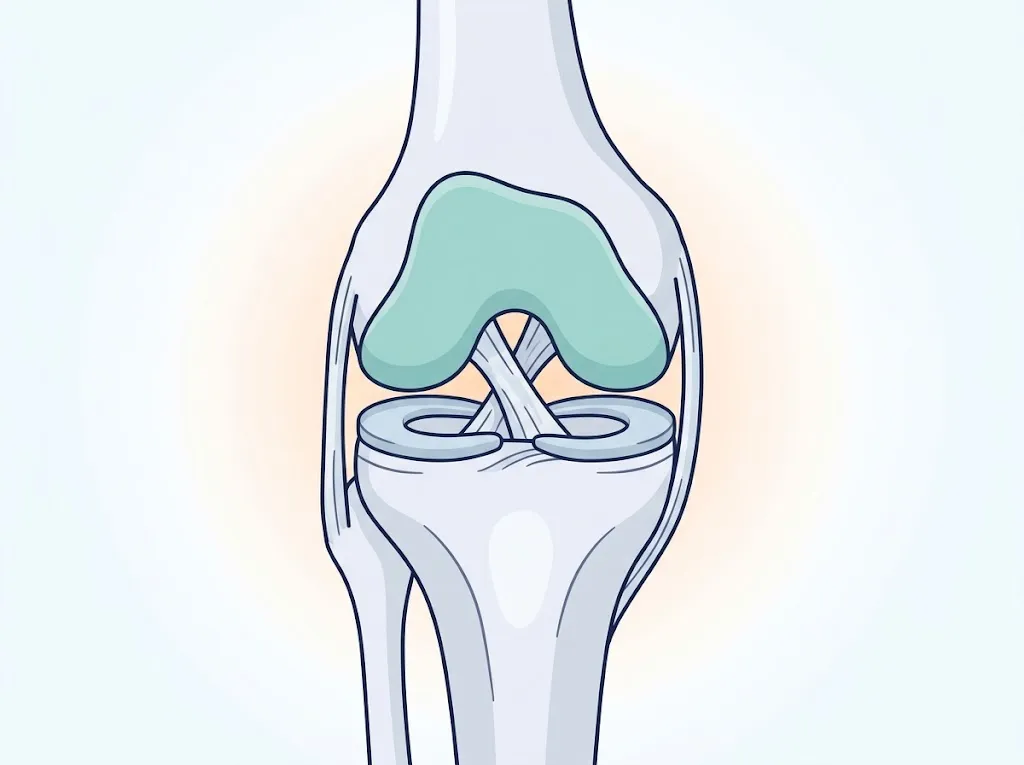
The knee carries more load than almost any other joint. It is made of the end of the thigh bone, the top of the shin bone and the kneecap, with The smooth surface covering the ends of the bones inside a joint, which lets it glide and absorbs shock. covering the bone ends, two menisci spreading the load, and several ligaments holding it steady.
This page is an overview. Each of the common causes has its own article.
Symptoms
What the location tells you
| Where and when it hurts | May be related to |
|---|---|
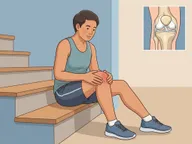
| Around or under the kneecap, on stairs, sitting with a bent knee, or standing up | Pain at the front of the knee |
| Along the joint line inside or outside, with catching or occasional locking | A meniscus tear |
| A dull ache all over, stiff for under half an hour in the morning, worse after walking far | Knee osteoarthritis |
| Giving way when turning or changing direction, after a sports injury | An ACL injury |
| Pain behind the knee with a feeling of fullness | A cyst behind the knee |
| Pain in a growing child or teenager, over the bump below the kneecap | A growth-plate tendon problem |
How fast it swells also tells you something
- Swelling within 1–2 hours of an injury usually means bleeding inside the joint — a torn ACL, a broken piece of cartilage, or a dislocated kneecap. See a doctor
- Swelling over 1–2 days is usually fluid from irritation — a meniscus tear, or a flare of osteoarthritis
- Hot, red and swollen with a fever may be an infection or gout, and needs to be seen the same day
Causes and risk factors
- Getting older, which thins the joint cartilage and the menisci
- Carrying extra weight, which adds load at every step, and the factor most clearly within your control
- A previous knee injury, particularly to the ACL or a meniscus
- Weak thigh and hip muscles
- Work involving squatting, kneeling, or a lot of stairs
- Increasing running or exercise too quickly
When to see a doctor
Otherwise, see a doctor when knee pain lasts more than two or three weeks without improving, when the knee swells repeatedly, when it gives way or catches often, or when you are walking noticeably less than you used to.
How it is diagnosed
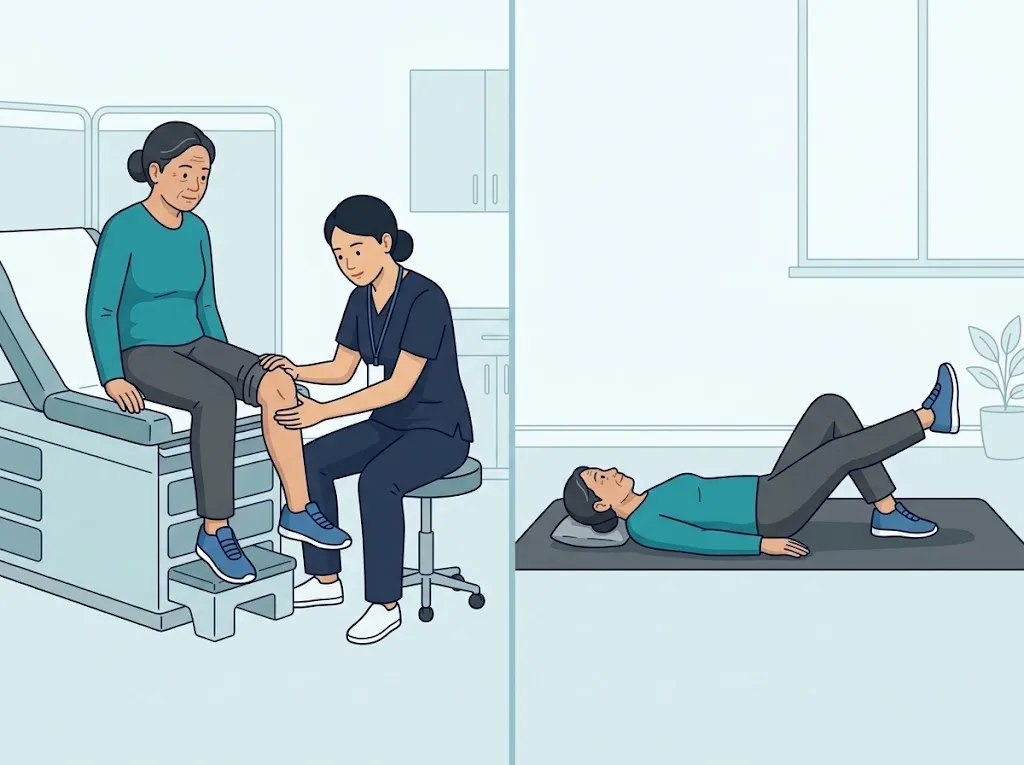
Your doctor asks where it hurts, what brings it on, when it started, how fast it swelled, and whether it locks or gives way. Then examines: how you walk, the range of movement, tender spots, the stability of the ligaments — and the hip and back too, because some knee pain comes from the hip.
X-ray is the first test in adults when osteoarthritis is suspected, and should be taken standing, because the narrowing of the joint space shows far more clearly with weight on it.
MRI is used when a meniscus tear, a torn ligament, or cartilage damage is suspected. It is not needed in someone whose X-ray already shows clear osteoarthritis.
Joint aspiration is done when infection, gout, or another inflammatory arthritis is suspected.
Treatment options
Non-surgical treatment
Almost every cause of knee pain begins with the same three things.
- Settle the pain and swelling by adjusting activity, icing early on, and using pain relief as your doctor or pharmacist advises. Always ask before starting a medicine, particularly with stomach, kidney or bleeding problems or blood thinners
- Rebuild thigh and hip strength, which is what helps the knee most whatever the underlying cause
- Adjust weight and activity. Even a modest weight loss reduces the load on the knee more than people expect
Surgery
Surgery has a clear place in some conditions — a torn ACL in someone whose knee keeps giving way, a meniscus tear that locks the knee, or advanced osteoarthritis when everything else has been tried. It is not the answer to every kind of knee pain. Ask what the operation would fix, and what happens if you do not have it.
Recovery and rehabilitation
These three are safe for most knee pain. Do them daily or every other day, as you can manage. Stop if you get sharp pain, or if the knee is more swollen the next morning.
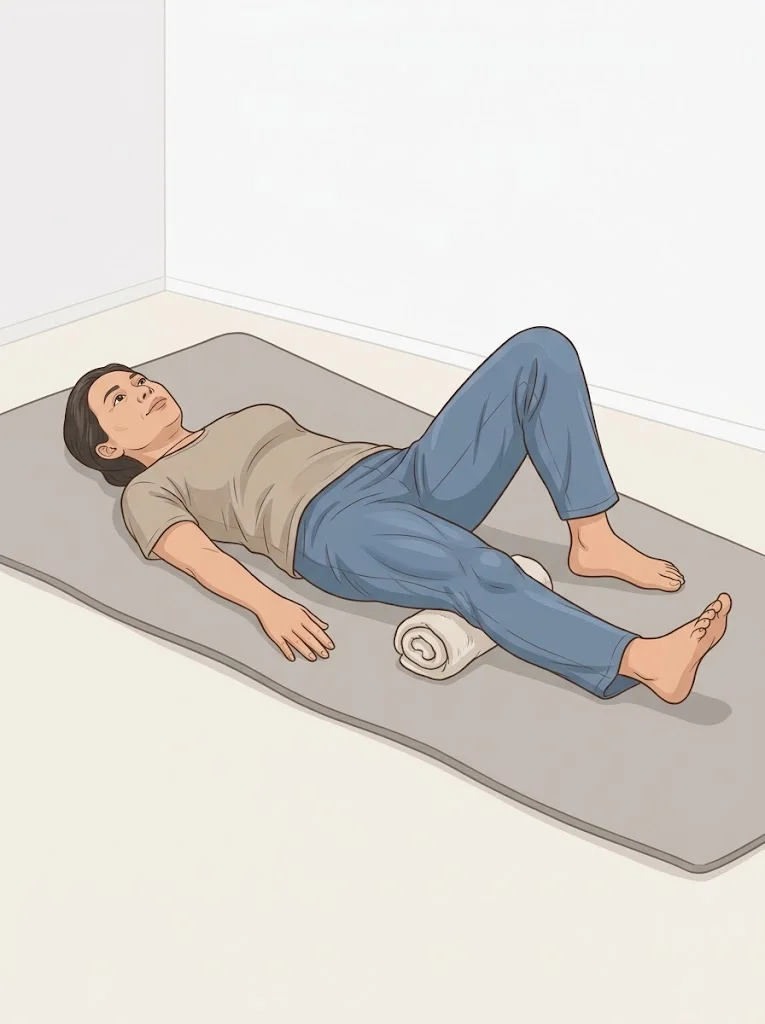
Quadriceps setting
2 rounds · 10 times · hold 5 seconds
Lie on your back with the leg straight. Press the back of the knee down into the floor while tightening the front of your thigh so the kneecap draws up slightly. Hold, then release.
Watch for — you can do this even with a swollen knee. It is the first exercise to start.
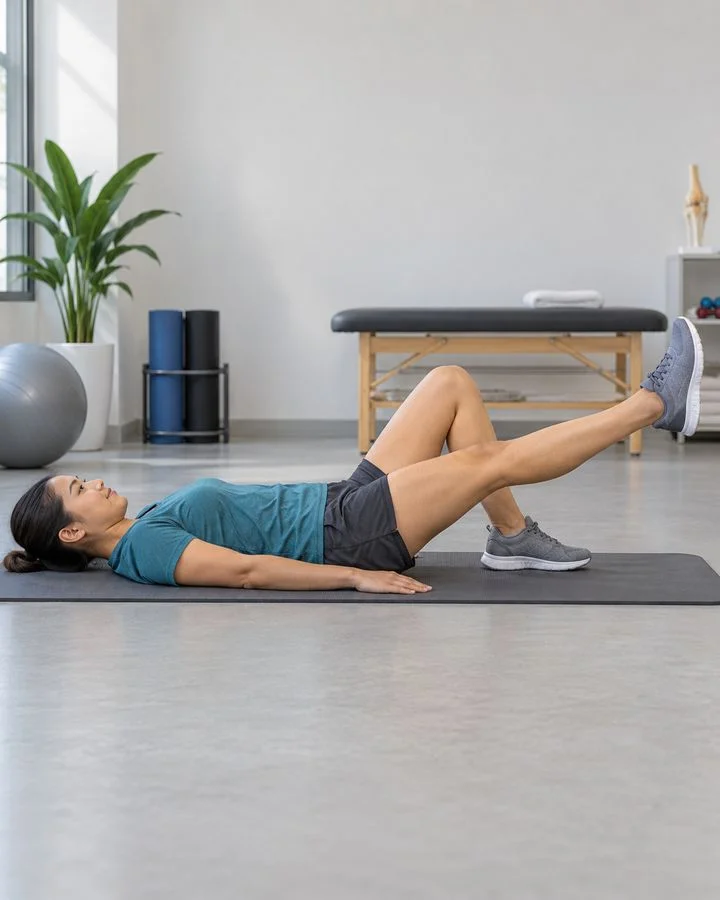
Straight leg raise
2 rounds · 10 times
Lie on your back with the other knee bent up. Keep the sore knee straight, tighten the thigh, and lift the leg about a hand’s width. Hold 3 seconds, then lower slowly.
Watch for — the knee must stay straight throughout. If it bends, the thigh is not tight enough.
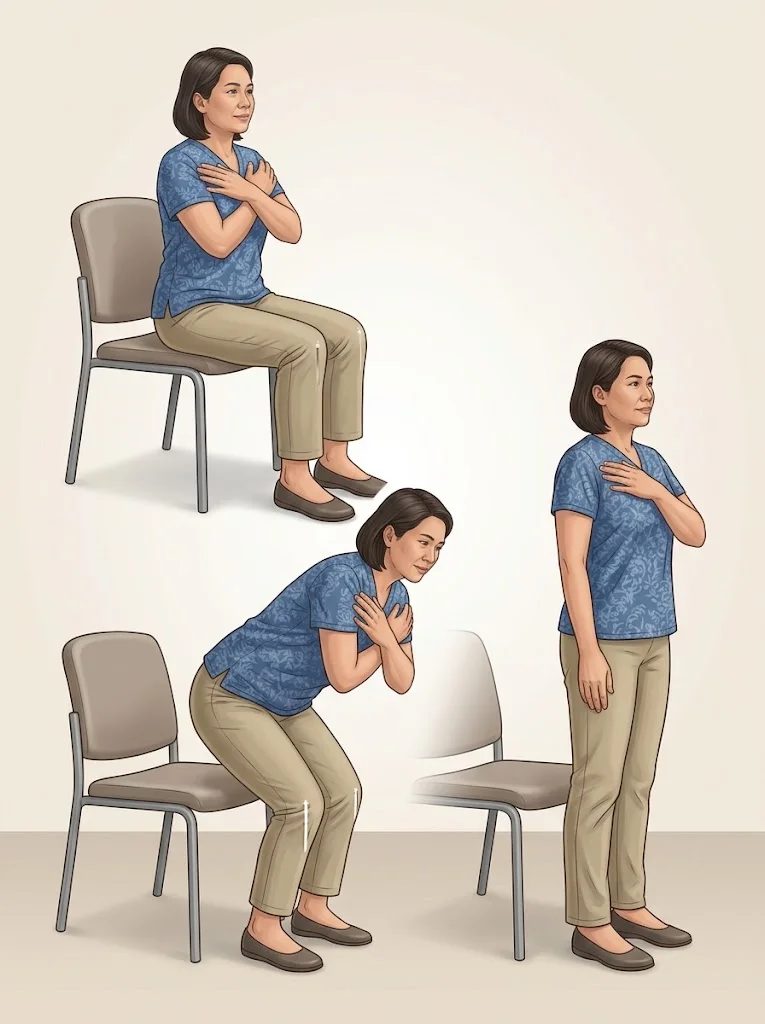
Sit-to-stand
2 rounds · 10 times
Sit at the front of a chair, feet hip-width apart. Stand up slowly, then sit back down under control. Push off the armrests if you need to.
Watch for — the knee must track over the toes, not fall inward.
Prevention and self-care
- Keep your weight in a healthy range — the biggest long-term favour you can do your knees
- Strengthen thighs and hips two or three times a week
- Increase exercise gradually, by no more than about a tenth a week
- Choose shoes that cushion well and fit properly
- Cut down prolonged squatting and kneeling. If you cannot avoid it, use a pad and change position often
- Warm up before exercise, and practise landing softly in jumping sports
Questions to ask your doctor
- What is my knee pain most likely coming from?
- Do I need an X-ray or an MRI, and would it change the treatment?
- Which exercises should I do, and what should I avoid?
- Are the medicines you suggest safe alongside my other conditions?
- How many weeks before I should expect improvement, and when should I come back?
Frequently asked questions
My knee clicks and grinds. Is that bad?
Noises without pain are usually not a problem, and are common in perfectly healthy knees. What matters is pain, swelling, or the knee giving way — not the sound.
Should I rest a painful knee or keep walking?
Keep moving as much as you can. Complete rest weakens the thigh muscles very quickly, and the knee usually hurts more when you start again. Cut back what causes sharp pain, but keep walking and doing gentle exercise.
Should I wear a knee support?
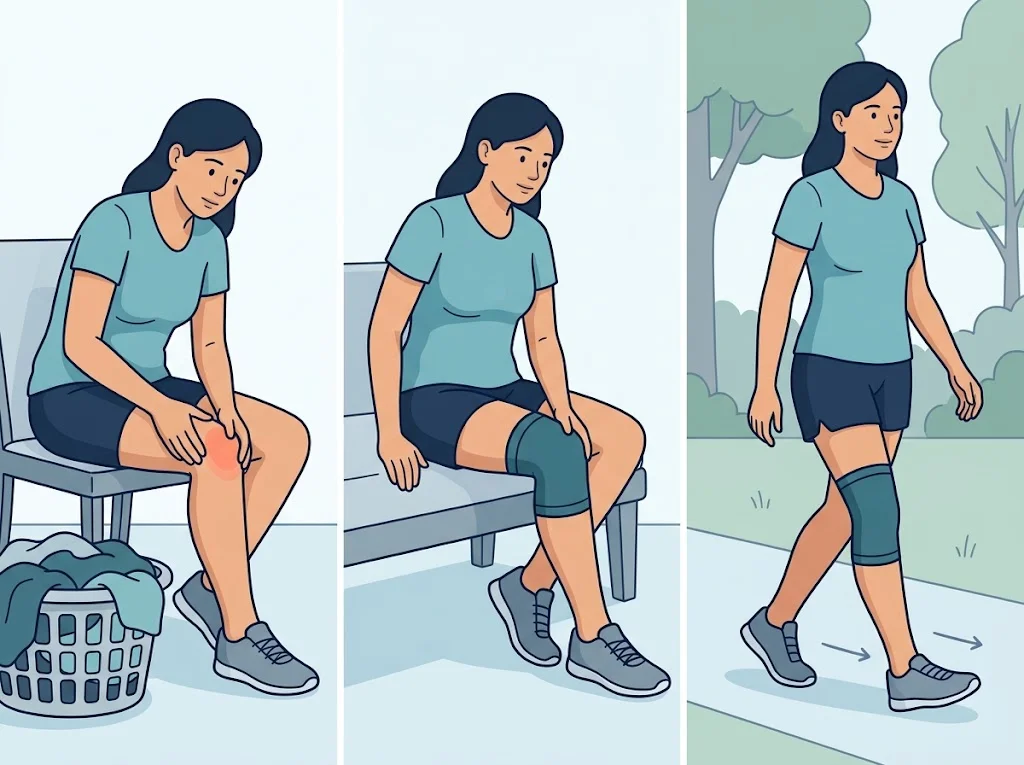
An elastic support helps some people feel more confident and hurt less during activity, but it does not treat the cause and should not be worn all the time instead of strengthening. If you cannot walk without it, see your doctor.
Does fluid on the knee need draining?
Not always. Your doctor decides case by case — sometimes to send it for testing when infection or gout is suspected, sometimes for comfort. It is their decision.
References
Related educational reading
These pages explain tests, treatments and rehabilitation that often come up with this condition. They are general reading, not a treatment sequence arranged for you — that has to come from a doctor who has examined you.
Treatment
Rehab
Related conditions
Written by Assoc. Prof. Sorawut Thamyongkit, M.D.