
Frozen shoulder
The capsule around the shoulder joint thickens and tightens, so the shoulder gradually moves less and hurts more. It runs in stages over many months, and most people regain a great deal.
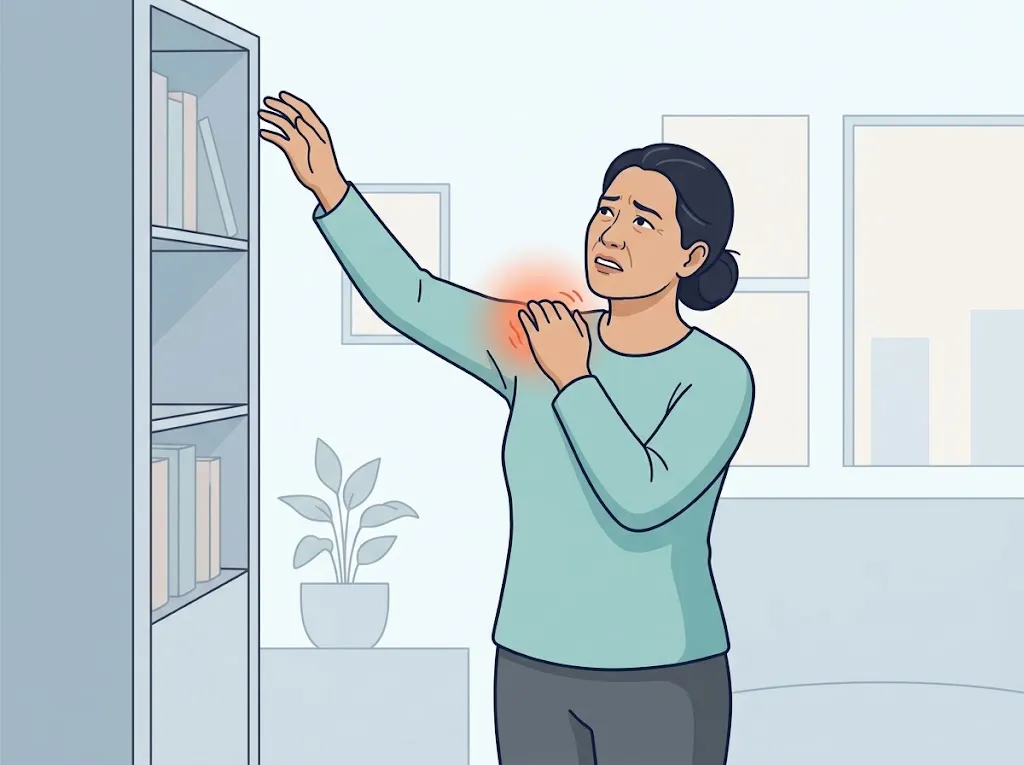
What it is
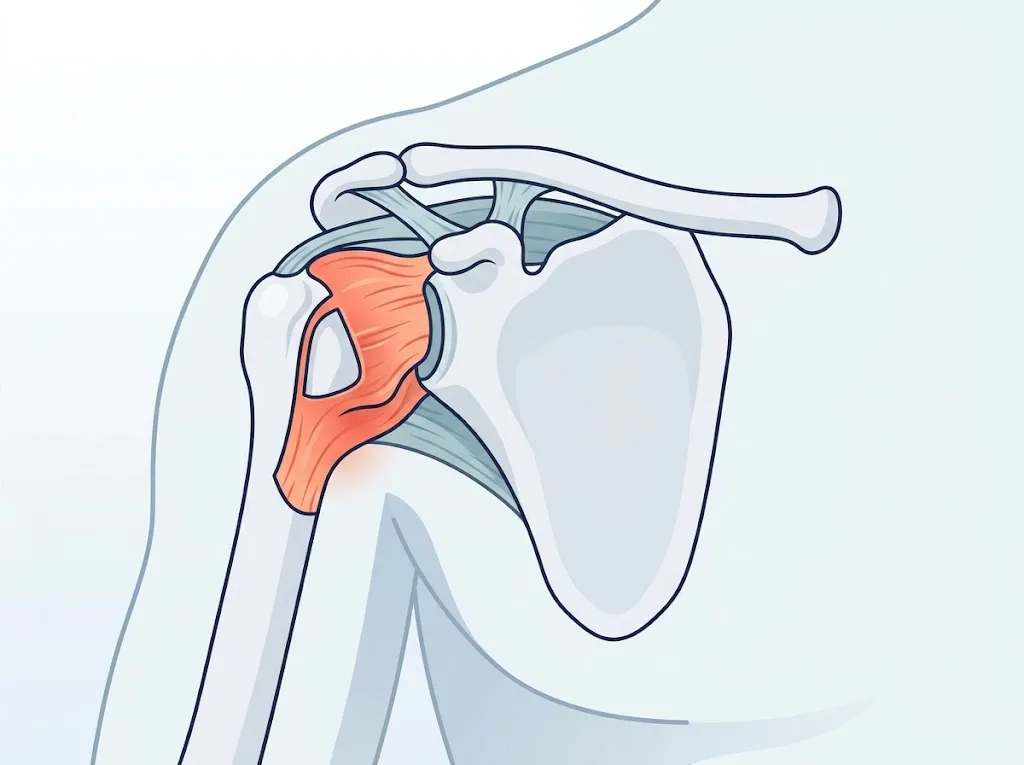
Your shoulder joint is wrapped in a thin sleeve of tissue called the The sleeve of tissue that wraps around a joint. Normally loose and elastic, which is what lets the joint move through a wide range.. Normally it is loose and elastic, which is what lets you lift your arm overhead and reach behind your back.
In frozen shoulder that capsule becomes inflamed, thickens, and contracts until it grips the joint. The shoulder moves less and less. The medical name is adhesive capsulitis.
What separates it from ordinary shoulder pain is that the movement is limited both ways — when you lift the arm yourself, and when someone else moves it for you while you stay completely relaxed. If a sore muscle stops you lifting but someone else can move the arm through its full range, that is usually something else.
Symptoms
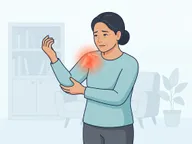
There are two symptoms, and they arrive together: pain and loss of movement. The pain usually comes first, and the stiffness follows.
What people describe is:
- A deep ache in the shoulder and upper arm, sometimes down to the elbow
- Pain that is worse at night, waking you when you roll onto that side
- Difficulty reaching a high shelf, putting on a seatbelt, or reaching behind your back for a wallet
- Trouble putting on a shirt, fastening a bra, or combing your hair
- A sharp catch when you move the arm quickly without thinking
The condition runs in stages
Frozen shoulder usually follows a recognisable course. Knowing which stage you are in tells you what is worth working on now.
Stage 1 — Pre-freezing (typically months 1–3) The shoulder is sore, achy and a little stiff. Pain is mild to moderate and often worse at night or reaching in certain directions. Range of motion is still mostly normal, but the shoulder feels touchy. Moving it gently and often now is the best thing you can do.
Stage 2 — Freezing (typically months 4–9) The capsule around the joint is inflamed and beginning to thicken. Pain is much more severe, especially on movement and at night, and stiffness is increasing quickly. Do not try to force the shoulder. Control the pain first, and keep the movement you have.
Stage 3 — Frozen (typically months 10–14) The inflammation is quietening down but the capsule is now tight, and the joint feels stuck. Pain often eases and is felt mainly when you push to the limit. Stiffness is at its worst, particularly reaching out, up, and behind your back. This is the stage where patient, regular stretching earns its keep.
Stage 4 — Thawing (typically months 15–24) The capsule is starting to loosen. Movement and flexibility come back gradually and pain continues to fade. Most people regain a great deal, though some keep a little stiffness or occasional ache. Regular practice is what turns range you have borrowed into range you keep.
Causes and risk factors
In many people it simply happens, with no clear trigger; this is called primary frozen shoulder. In others it follows something that kept the shoulder still for a while — surgery, a broken arm, or a long spell in a sling.
Things known to be associated with it:
- Age 40–60, the commonest window
- Being female — it is more common in women
- Diabetes, the clearest association of all. It is more common, and usually takes longer, in people with diabetes
- Thyroid disease, both over- and under-active
- A period when the shoulder did not move — after breast surgery, heart surgery, or an arm injury
When to see a doctor
Frozen shoulder is painful and slow, but it is not dangerous. The signs below are not part of the usual pattern — they mean something else may be going on.
Apart from those, see a doctor when:
- The shoulder has been aching and stiffening for more than two or three weeks without improving
- Night pain is disturbing your sleep several nights in a row
- You are starting to avoid using that arm in everyday tasks
Going early, while the range is still good, is the easiest stage to manage — range is easier to keep than to win back.
How it is diagnosed
Most of the time the history and the physical examination are enough. Special tests are not always needed.
Examination. Your doctor measures how far you can lift and rotate the arm yourself, then measures again while moving the arm for you as you stay relaxed. When both are limited in the same way, and outward rotation especially so, that pattern may be a sign of frozen shoulder.
X-ray is often done to look for another cause underneath — shoulder arthritis, calcium in a tendon, an old fracture. In true frozen shoulder the X-ray usually looks normal.
Ultrasound or MRI is not needed in most people. Your doctor may consider it when something else is suspected alongside, such as a rotator cuff tear, or when the picture does not follow the expected pattern.
Blood tests. Your doctor may check blood sugar or thyroid function, because both are linked to this condition and both matter for the longer-term plan.
Treatment options
The goals, in order: get the pain under control, keep the range you still have, then win back the range you have lost.
Non-surgical treatment
Most people get better without surgery.
Moving and stretching yourself is the core of it. Little and often beats one long session. The exercises in the next section are grouped by stage.
Physiotherapy. A physiotherapist can match the programme to the stage you are in and check that you are doing the movements correctly. The research cannot yet say which form or frequency works best, but clinical guidelines broadly recommend exercise as the foundation of care for shoulder pain of any kind.
Pain relief. Your doctor or pharmacist may suggest paracetamol or a non-steroidal anti-inflammatory so that you can move and sleep. Each group has its own cautions, particularly if you have stomach, kidney or bleeding problems, or take blood thinners. Always ask a doctor or pharmacist before starting any medicine.
Ice or heat. An ice pack or a warm pad wrapped in a towel, up to 20 minutes, eases aching muscles — use whichever feels better for you.
A short clip with no sound. Nothing downloads until you press play.
What your doctor might add — decisions for your doctor, not choices made from this page:
- An injection into the joint, when pain is the thing blocking rehabilitation
- Injection combined with physiotherapy rather than either on its own
- Other injectable options where a steroid is not suitable
Surgery
Most people do not need it. Your doctor may consider it when stiffness still limits daily life significantly after a proper trial of everything else.
The options are:
- Manipulation under anaesthesia — your doctor moves the shoulder through its full range while you are asleep, to release the tight capsule
- Arthroscopic capsular release — a small camera goes into the joint and the tightest part of the capsule is cut
The thing to understand is that surgery does not end in the operating theatre. The range gained on the day only stays if rehabilitation continues afterwards. Ask your doctor about the benefits, the drawbacks and what you will have to do afterwards before deciding.
Recovery and rehabilitation
The exercises below are grouped by stage. Do the ones for the stage you are in now — not all of them.
Stage 1 — keep the range you still have
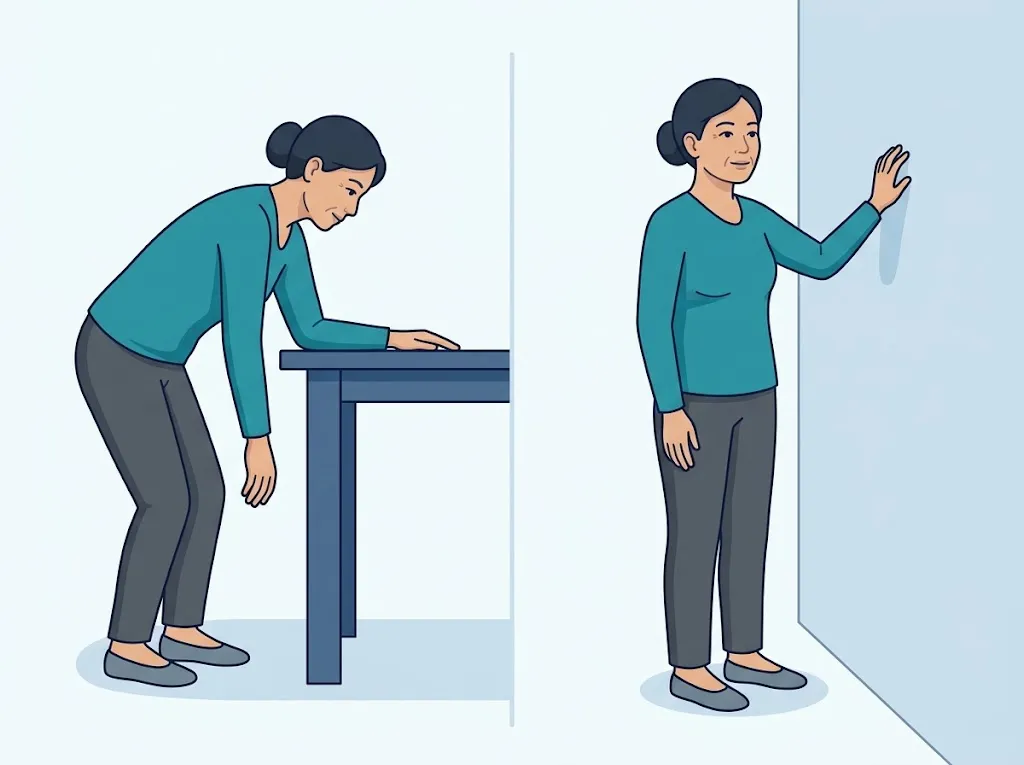
Pendulum swing
10 each direction
Lean forward and let the arm hang completely loose. Small circles, then small forward-and-back swings.
Watch for — if your shoulder is working, you are doing it too big.
A short clip with no sound. Nothing downloads until you press play.
A short clip with no sound. Nothing downloads until you press play.
Assisted outward rotation
8 reps · hold 5 seconds
Elbow tucked at your side and bent to 90°. Use a stick or your other hand to turn the forearm outward.
Watch for — the elbow stays against your ribs the whole time.
A short clip with no sound. Nothing downloads until you press play.
A short clip with no sound. Nothing downloads until you press play.
Stage 2 — control the pain, protect the movement
A short clip with no sound. Nothing downloads until you press play.
Assisted overhead reach
8 reps · hold 10 seconds
Hold a stick with both hands and use the good arm to push the stiff arm upward.
Watch for — breathe out as you move into the stretch.
A short clip with no sound. Nothing downloads until you press play.
Outward rotation stretch
5 reps · hold 20 seconds
Elbow supported at your side, rotate outward and hold at the end of the comfortable range.
Watch for — this is the movement that stays stuck longest. Be patient with it.
A short clip with no sound. Nothing downloads until you press play.
A short clip with no sound. Nothing downloads until you press play.
Towel stretch behind the back
6 reps · hold 10 seconds
Towel over the good shoulder. Grip the low end with the stiff arm and gently pull it upward.
Watch for — this is what gets you back into a jacket.
A short clip with no sound. Nothing downloads until you press play.
Stage 3 — start building strength
Band outward rotation
2 sets · 12 reps each
Band anchored at waist height, elbow at your side, rotate the forearm outward against the band.
Watch for — slow on the way back is where the strength comes from.
A short clip with no sound. Nothing downloads until you press play.
Band inward rotation
2 sets · 12 reps each
Same setup, rotating the forearm in toward your stomach.
Watch for — keep a rolled towel under the elbow if it drifts.
A short clip with no sound. Nothing downloads until you press play.
Band row
2 sets · 12 reps each
Pull both elbows back past your ribs, squeezing the shoulder blades together.
Watch for — lead with the elbows, not the hands.
A short clip with no sound. Nothing downloads until you press play.
Light forward raise
2 sets · 10 reps each
Light weight or no weight. Raise the arm forward to shoulder height and lower slowly.
Watch for — add weight only once this is easy without a shrug.
A short clip with no sound. Nothing downloads until you press play.
Loaded carry
3 times · 30 seconds each
Carry a bag or weight at your side, walking tall.
Watch for — the most useful strength exercise there is.
A short clip with no sound. Nothing downloads until you press play.
Stage 4 — back to your life
This stage is not measured in repetitions but in what you can do. Work up one level at a time.
- Self-care — put on a shirt, wash your face, comb your hair, without planning around the shoulder. Daily.
- Everyday reach — reach a shelf, put on a seatbelt, reach behind your back.
- Load — carry a full bag, lift overhead, do resistance work. Three times a week.
- Your life — back to the gym, the sport, or the specific thing your job asks of your shoulder.
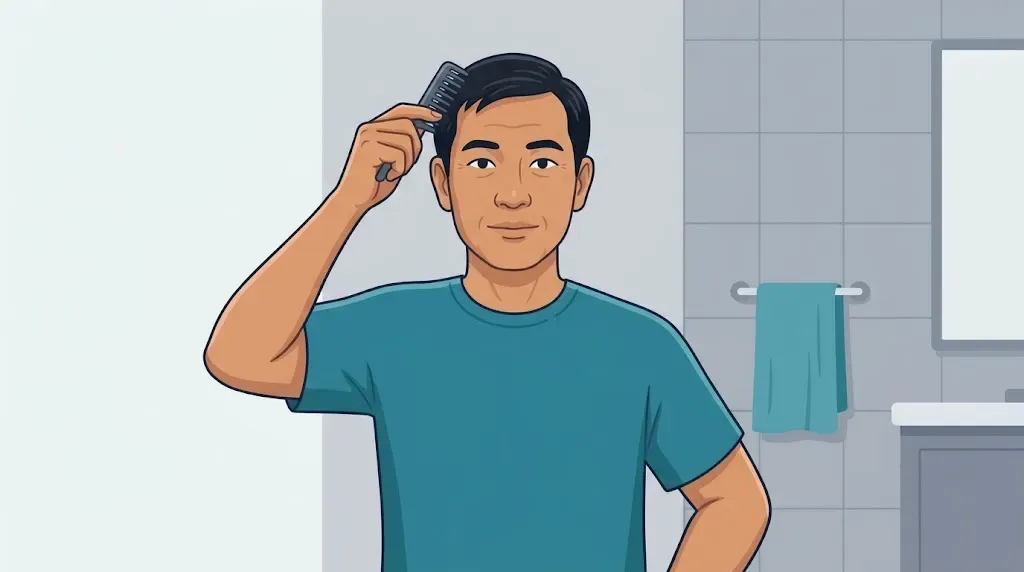
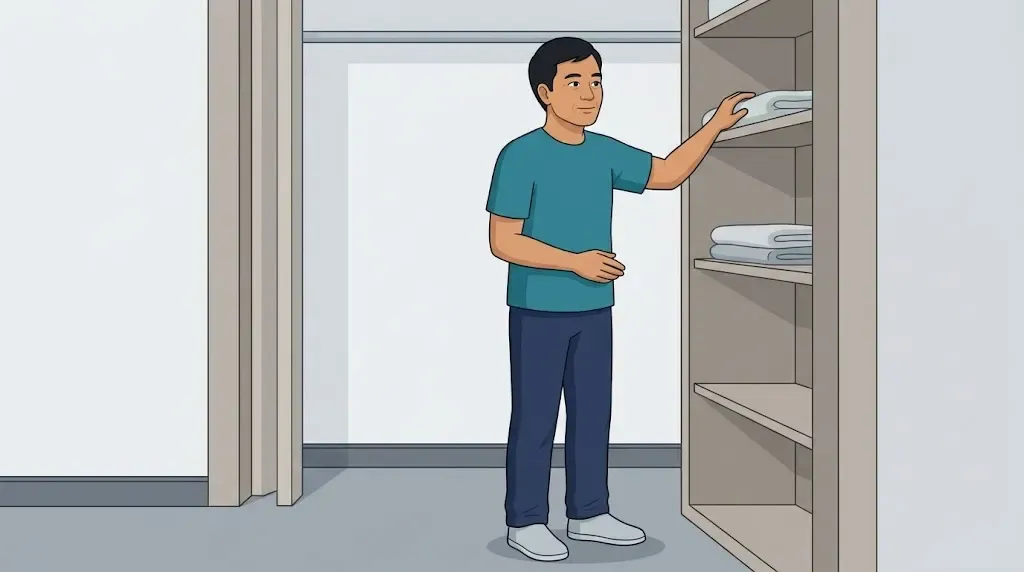
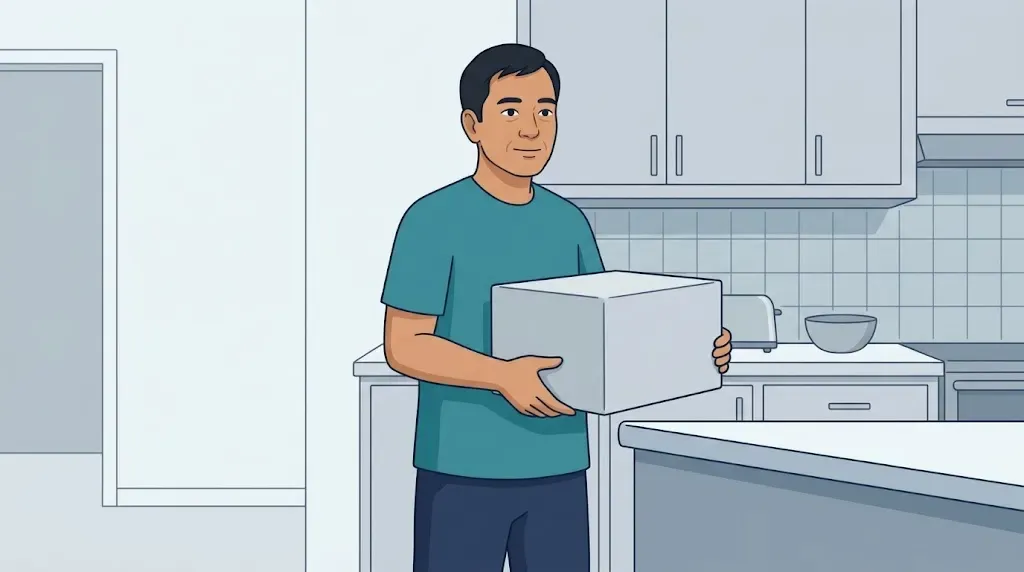
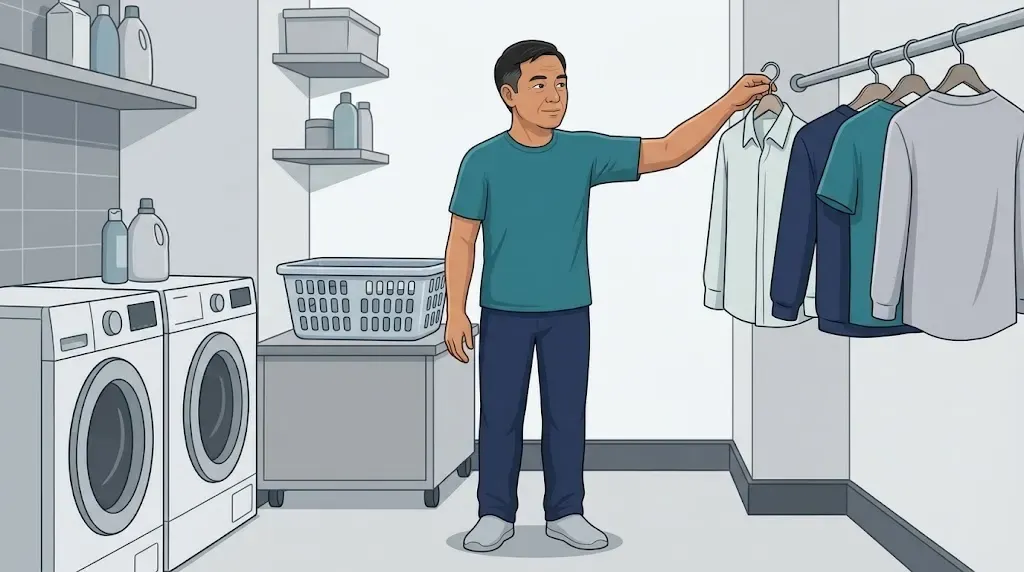
Once your movement is back to normal and your pain is minimal, keep a short maintenance routine going so the stiffness does not creep back.
Sleep
Night pain is the hardest part of the painful stage for most people. These positions help while it settles.
A short clip with no sound. Nothing downloads until you press play.
A short clip with no sound. Nothing downloads until you press play.
A short clip with no sound. Nothing downloads until you press play.
A short clip with no sound. Nothing downloads until you press play.
Prevention and self-care
There is no proven way to stop frozen shoulder happening. What you can do is reduce the chance of it becoming severe and drawn out.
Keep moving, gently. Stopping all movement makes stiffness worse. Stretch to a mild pull, stop at the first sign of sharp pain, and avoid sudden or jerky reaches.
Look after the conditions that go with it, particularly diabetes and thyroid disease.
Do not let a shoulder sit still after an injury or an operation. If you have to wear a sling, ask your doctor how much you may move the elbow, wrist and shoulder blade from day one.
Dressing and showering
A short clip with no sound. Nothing downloads until you press play.
A short clip with no sound. Nothing downloads until you press play.
Questions to ask your doctor
- Do my symptoms fit frozen shoulder, and which stage am I likely in?
- Do I need any further tests, and would the result change the treatment?
- Which exercises should I do, how often, and when should I stop?
- Should I see a physiotherapist, and how often?
- When should I come back, and what would make me come back sooner?
Frequently asked questions
Does frozen shoulder get better on its own?
Most people improve a great deal with time, but it is slow — often a year or two. Moving and stretching regularly gets more of the range back, and gets it back sooner, than waiting does. See a doctor to confirm that this is what is causing your symptoms.
Why does it hurt so much more at night?
During the day you keep the shoulder moving and your attention is elsewhere. Lying still lets the joint stiffen and the pain becomes obvious. Direct pressure on the affected shoulder is the most common cause of night waking, so position and a supporting pillow help a great deal.
Should I stretch as hard as I can to speed it up?
No. Forcing it, especially while it is still very painful, usually makes the pain worse and sets you back. Stretch to tension, not to pain, and hold for longer rather than pulling harder. If it is still worse the next morning, you went too far.
Will I need surgery?
Most people do not. Manipulation under anaesthesia or a capsular release is an option for people whose stiffness still limits daily life after a proper trial of everything else. It is a decision to make with your doctor.
Will the other shoulder get it too?
Some people do develop it in the other shoulder later. The same shoulder does not usually get it twice. If the other side starts to ache and stiffen, see a doctor early — the stage when the range is still good is the easiest to manage.
What has diabetes got to do with it?
Frozen shoulder is more common in people with diabetes, and it usually takes longer. Tell your doctor you have diabetes, and keep your blood sugar under control alongside the shoulder rehabilitation.
References
A self-care app for this condition
Free, and made by the author of this article.
 Frozen Shoulder Care
Walks you through shoulder exercises step by step with video, and shows how to sleep and manage daily tasks with less pain.
Open the appRelated educational reading
These pages explain tests, treatments and rehabilitation that often come up with this condition. They are general reading, not a treatment sequence arranged for you — that has to come from a doctor who has examined you.
Treatment
Related conditions
Written by Assoc. Prof. Sorawut Thamyongkit, M.D.