
Back pain
Low back pain is very common and most of it settles within a few weeks. What matters is knowing the few warning signs that need a doctor, and knowing that moving helps more than resting.
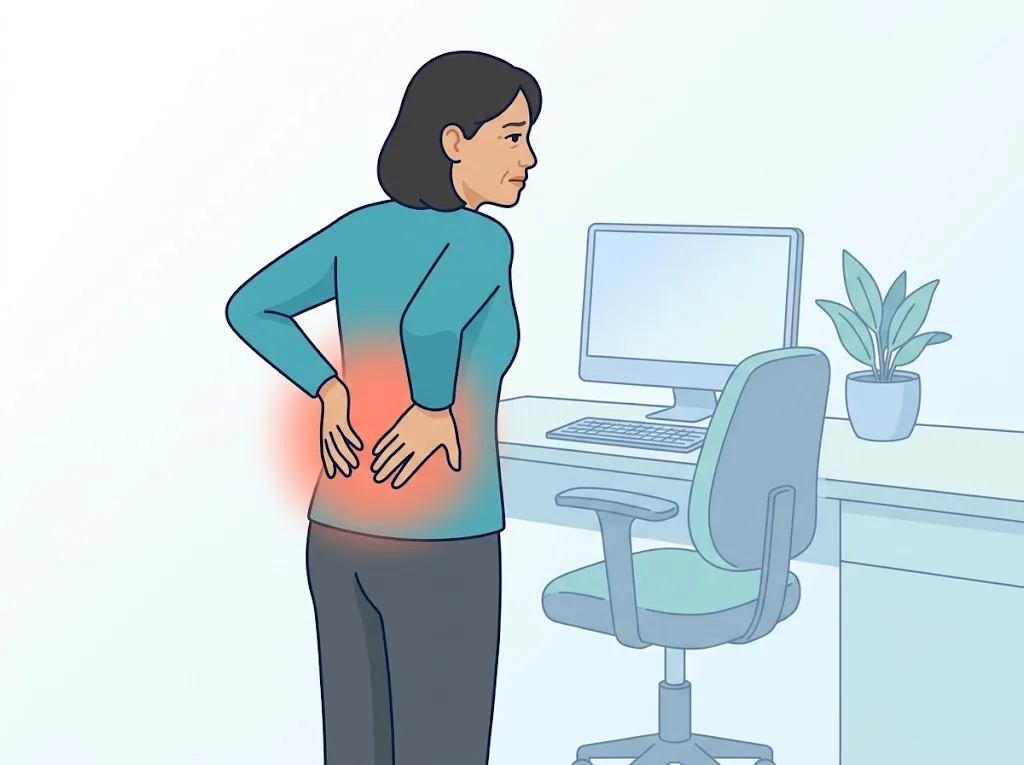
What it is
Your lower back is five vertebrae, the discs between them, small joints at the back, ligaments, and several layers of muscle. Together they carry your body weight and control how you move.
In most people a doctor cannot say exactly which structure is responsible — and that is not a problem. This group is called non-specific low back pain, it is by far the largest group, and most of it settles on its own.
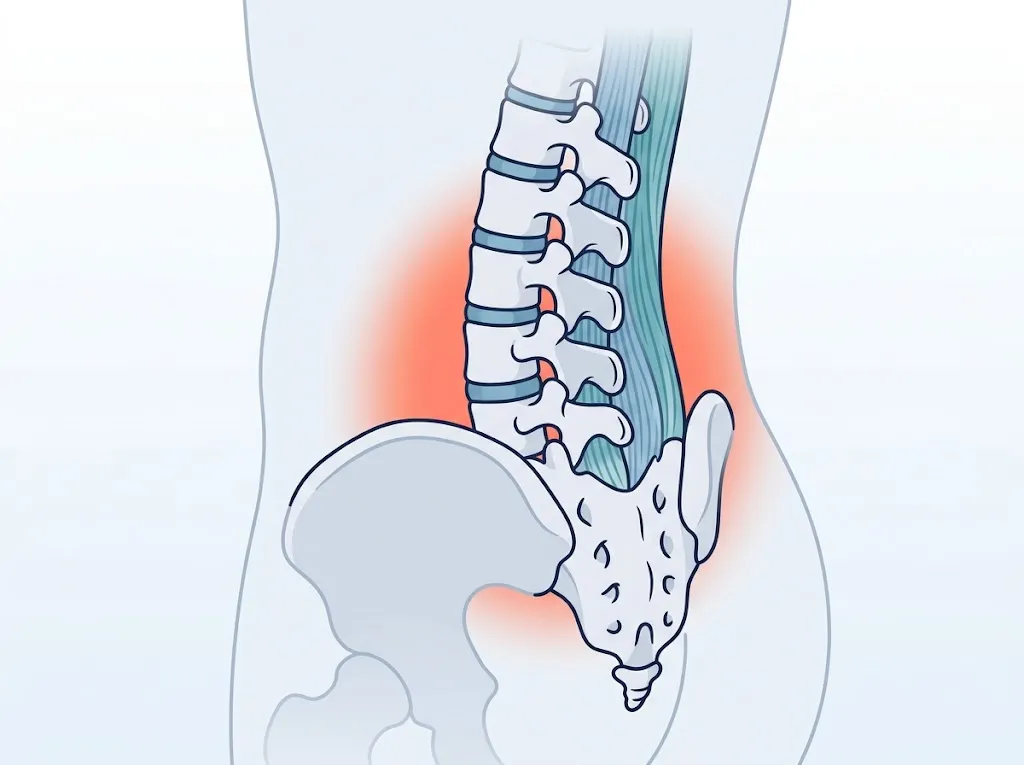
Symptoms
- A dull ache or soreness across the lower back
- Worse when bending, twisting, sitting for long periods, or standing for long periods
- Muscles that spasm and make moving difficult for the first few days
- Sometimes an ache spreading into the buttock or the back of the thigh
If the pain travels down past the knee, or you have numbness or weakness in the leg, that may involve an irritated or compressed nerve, which has its own article on sciatica.
Causes and risk factors
- Doing more than you are conditioned for in a short burst — lifting badly, or a full day of gardening after months of none
- Long periods of sitting and little movement
- Trunk and hip muscles that are not strong enough
- Carrying extra weight
- Smoking
- Stress, poor sleep and worry, which genuinely affect pain and recovery
- Getting older, which wears the discs and joints
When to see a doctor
Beyond those warning signs, see a doctor when:
- There is no improvement at all after four to six weeks
- The pain stops you working or looking after yourself
- The pain travels past the knee, or the leg is numb or weak
- You are over 50 and this is the first time you have had back pain
How it is diagnosed
History and examination do most of the work. Your doctor asks when it started, where it hurts, whether it travels into the leg, what makes it better or worse, and checks systematically for warning signs. Then looks at how you walk, how the back moves, and the strength, sensation and reflexes in your legs.
Imaging is not needed in most people early on. Your doctor will arrange it if there are warning signs, clear nerve symptoms, or no improvement as expected.
Blood tests may be done if infection or an inflammatory arthritis is suspected.
Treatment options
Non-surgical treatment
Keep moving. This is the first and most important advice. Return to your normal routine as soon as you can; short frequent walks beat lying still.
Exercise has the best evidence of anything for long-standing back pain. The best kind is the kind you will keep doing.
Pain relief. Paracetamol and non-steroidal anti-inflammatories may help you move. A muscle relaxant is used briefly in some people. Always ask a doctor or pharmacist first, particularly with stomach, kidney or bleeding problems, or blood thinners.
Heat eases muscle spasm for many people. Wrap it and use it for no more than 20 minutes.
Physiotherapy and hands-on treatment can reduce pain in the short term, and work best combined with an exercise programme.
Sleep and stress. Poor sleep and worry genuinely increase pain — this is not “all in the mind”, and addressing it is part of treatment.
Surgery
Surgery is not a treatment for non-specific low back pain. Your doctor considers it only when there is a clear cause that surgery can fix — a nerve compressed enough to cause weakness, a narrowed spinal canal that is shortening how far you can walk, or an unstable spine.
Recovery and rehabilitation
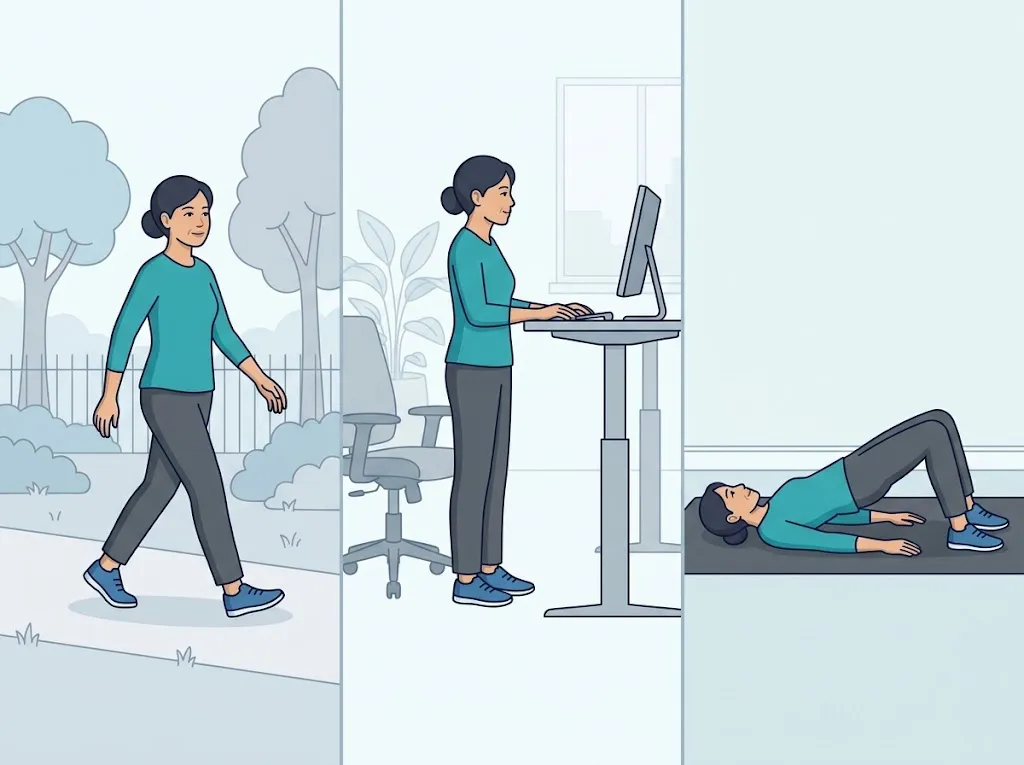
These focus on moving and controlling the trunk. Stop if you get sharp pain, or if pain travels further down the leg.
Pelvic tilt
2 rounds · 10 times
Lie on your back with both knees bent and feet flat. Gently flatten your lower back into the floor by drawing the stomach in. Hold 5 seconds, then release.
Watch for — this is a small movement. You are not lifting your bottom.
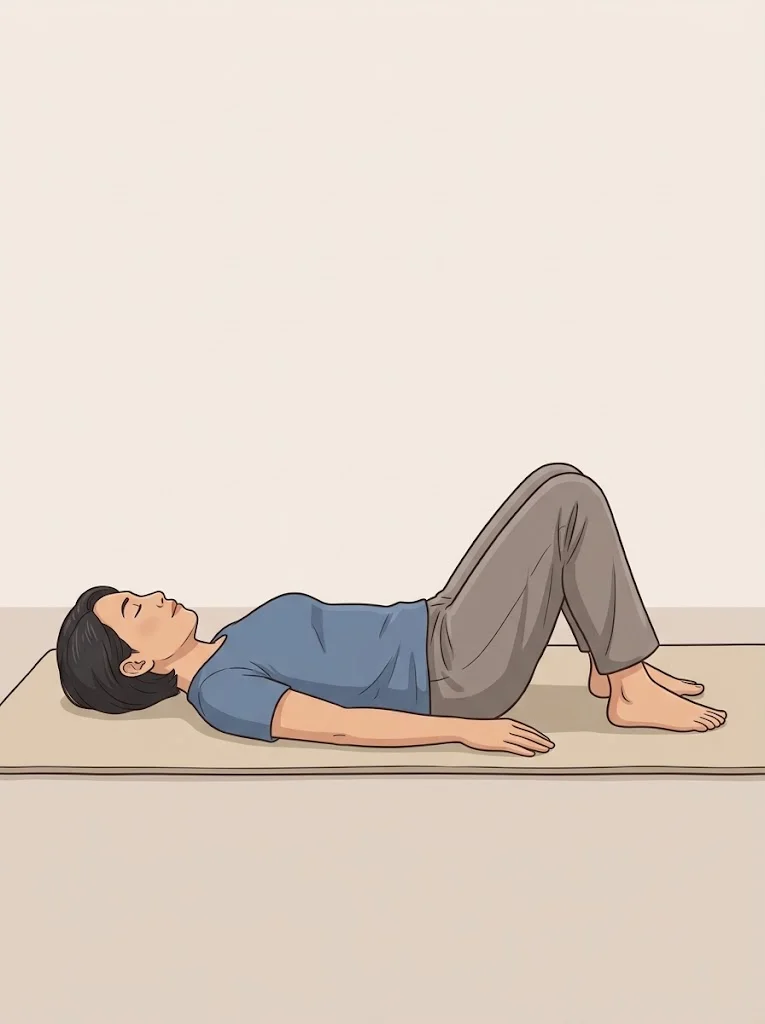
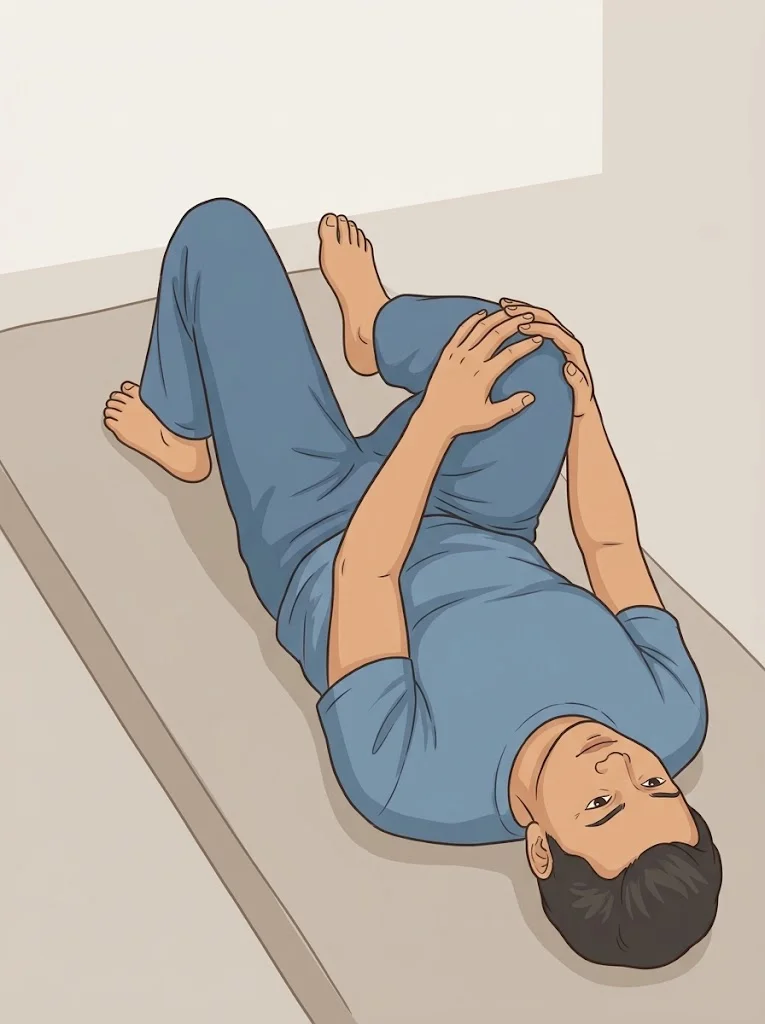
Knee to chest
5 each side · hold 20 seconds
Lie on your back with knees bent. Use both hands to draw one knee slowly towards your chest until you feel a stretch in the lower back. Hold, then swap sides.
Watch for — pull to a stretch, not to pain.
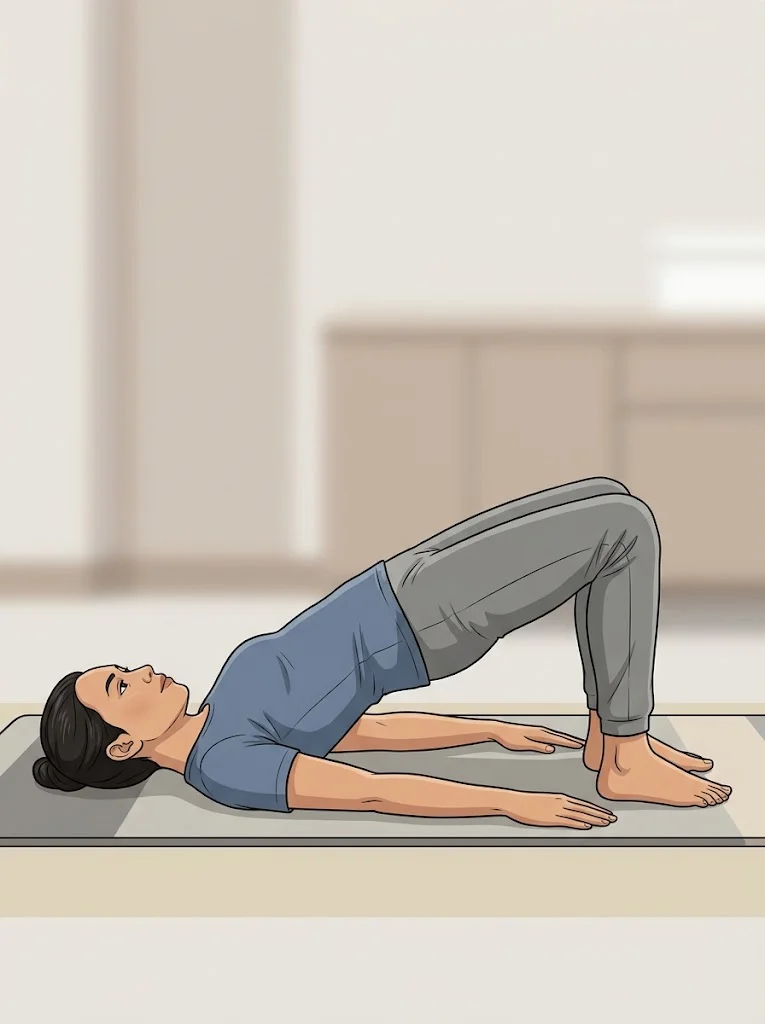
Bridge
2 rounds · 10 times · hold 3 seconds
Lie on your back with knees bent and feet flat. Squeeze your buttocks and lift your hips until your body and thighs are in a straight line. Hold, then lower slowly.
Watch for — the work comes from the buttocks, not from arching the back.
Walking
20–30 minutes a day
Walk at a pace where you can still talk but feel you are working. Split it into shorter spells through the day while it still hurts.
Watch for — walking is treatment you can do every day with no equipment.
Prevention and self-care
- Lift by hinging at the hips and bending the knees, not by rounding the back. Keep the load close to you, and never twist while lifting
- Get up and change position every 30–60 minutes if you sit to work
- Set up your desk so your feet are flat and your back is supported
- Exercise regularly, particularly walking and trunk strengthening
- Keep your weight in a healthy range, and do not smoke
- Sleep enough — too little sleep makes pain worse
Questions to ask your doctor
- Are there any warning signs in my case that I should be concerned about?
- Do I need imaging, and if not, why not?
- What should I avoid, and when can I return to work?
- What exercise should I do, and when should I start?
- How many weeks before I should expect improvement, and when should I come back?
Frequently asked questions
Should I rest in bed?
No. Current guidance is to keep moving and return to your normal routine as soon as you can. Lying still weakens the muscles and the pain usually lasts longer.
Do I need an X-ray or MRI?
Usually not in the first six weeks if there are no warning signs. Scans commonly show age-related changes that are not the source of the pain and do not change treatment. Your doctor will arrange one if there is a warning sign or things are not improving.
My X-ray says degeneration. What does that mean?
Degenerative changes are found in very many people who have no pain at all, especially with age. Seeing them on a scan does not prove they are causing your symptoms. Ask your doctor to explain them alongside what you actually feel.
Should I wear a back brace?
It may help you feel more confident for a short period when lifting, but it should not be worn all the time — it does not treat the cause and can let the trunk muscles do less.
What sort of exercise is best?
The sort you will actually keep doing. Walking, swimming, yoga and trunk strengthening all have evidence behind them. Consistency matters more than the choice.
References
Related educational reading
These pages explain tests, treatments and rehabilitation that often come up with this condition. They are general reading, not a treatment sequence arranged for you — that has to come from a doctor who has examined you.
Related conditions
Written by Assoc. Prof. Sorawut Thamyongkit, M.D.