
Meniscus root tear
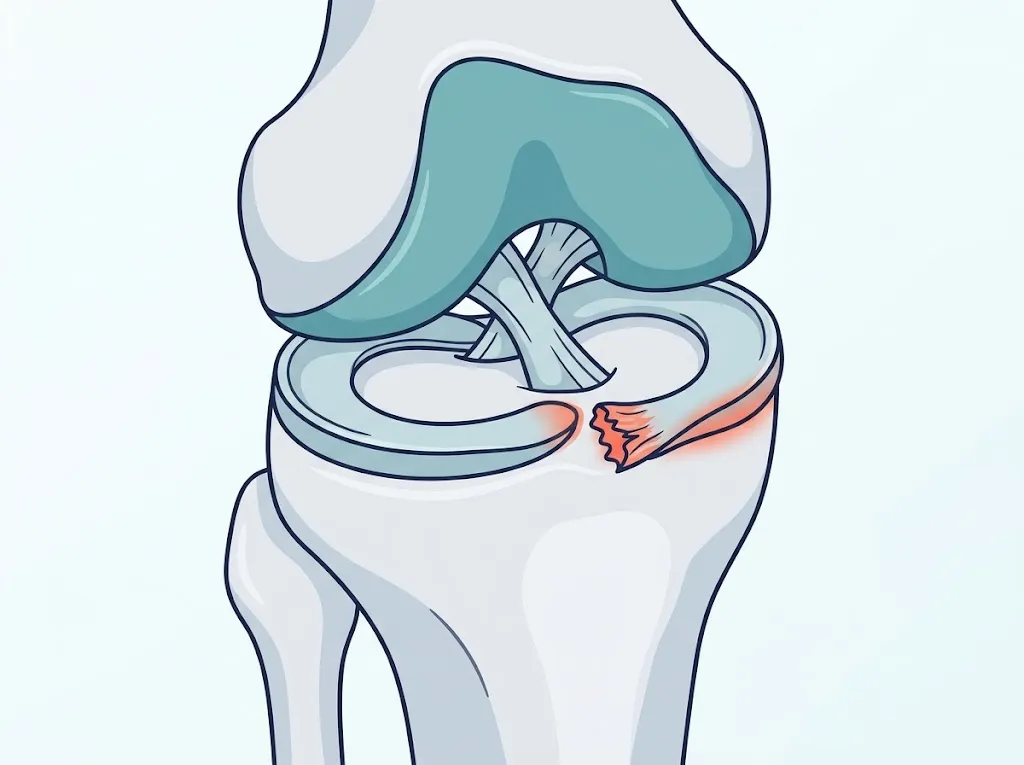
A tear at the root of the meniscus, where it anchors to bone. It leaves the meniscus unable to spread load across the knee, and can speed up wear of the joint.

What it is
The meniscus is a C-shaped pad of cartilage. Each of its two ends anchors into the shin bone at a point called the root.
That anchor matters more than the name suggests. When you put weight through the knee, the force tries to squeeze the meniscus sideways out of the joint. The root is what holds it in place and converts that squeezing force into tension along the ring of the meniscus. That is the mechanism that spreads the load instead of concentrating it in one spot.
When the root tears, that mechanism is gone. The meniscus slips sideways and can barely function, even though the body of the meniscus itself may look normal on a scan.
Symptoms
- A deep ache towards the back of the inner side of the knee, which is where the commonest root tear sits
- Some people hear or feel a “pop” while standing up from a squat or after a missed step
- Swelling over a day or two
- Worse squatting, bending deeply, on stairs, or walking any distance
- Pain at night, more often than with an ordinary meniscus tear
- In some people, the knee gradually bows inward over time
What makes this easy to miss is that there is usually no dramatic injury. Many people simply describe getting up off the floor and feeling something hurt.
Causes and risk factors
- Age 50 and over, particularly in women
- Carrying extra weight
- A knee that already bows inward, which puts more load through the inner compartment
- Regular squatting, kneeling and sitting cross-legged on the floor, which are everyday postures for many people in Thailand
- Sports injury in younger people, often alongside an ACL tear
When to see a doctor
See a doctor if you develop a deep ache on the inner side of the knee that started after standing up from a squat or a missed step and has not settled within two or three weeks — particularly if you are over 50.
How it is diagnosed
History and examination. The moment the pain began is an important clue. Your doctor feels for tenderness towards the back of the inner joint line, checks the range of movement, and looks at the alignment of the leg.
Standing X-ray shows how much osteoarthritis is present and whether the leg is bowed — the two things that decide whether surgery will help.
MRI confirms the diagnosis. As well as showing the torn root, it shows the important indirect sign — the meniscus displaced sideways out of the joint — and sometimes bone marrow swelling, which indicates bone taking abnormal load.
Treatment options
The decision rests on three things: your age and how much you use the knee, how worn the joint already is, and whether the leg is bowed.
Non-surgical treatment
Suitable for people whose joint is already significantly worn, people for whom surgery would be risky, and people whose symptoms are not greatly limiting.
- Adjust activity — less squatting, kneeling, and deep bending under load
- Lose weight if you are carrying extra, which is the single most direct way to reduce the force inside the joint
- Exercise and physiotherapy for the thigh and hip muscles
- Pain relief as advised. Always ask a doctor or pharmacist first
- Aids such as a stick during painful spells, or an insole in selected people
Surgery
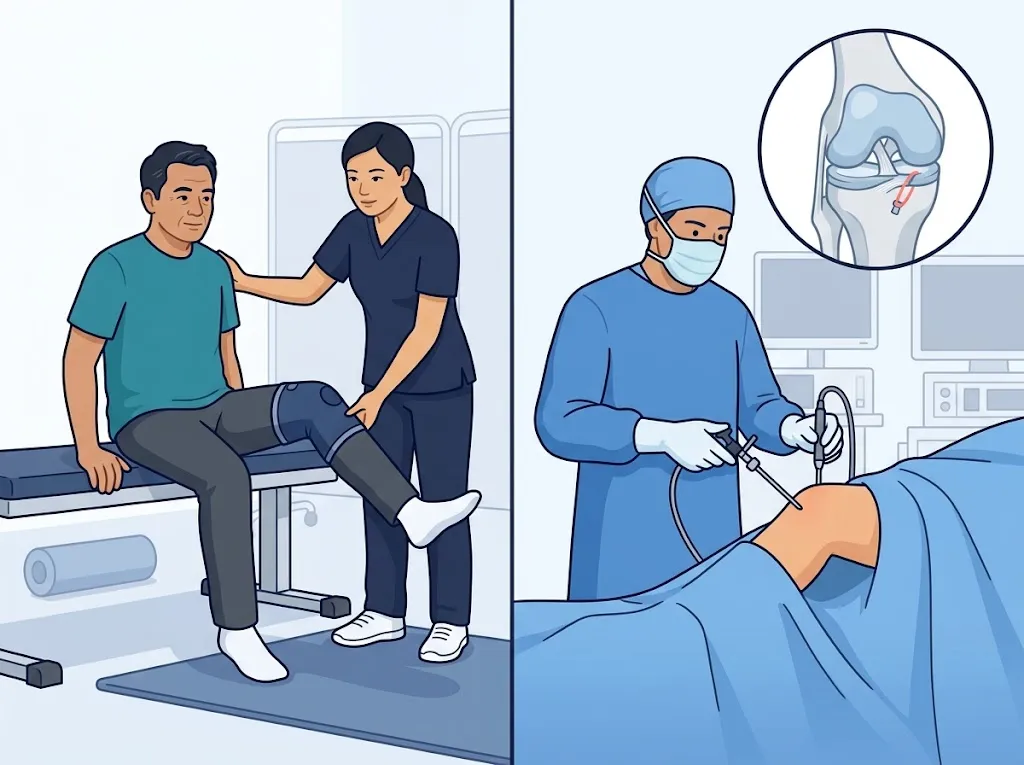
Root repair pulls the torn root back to the bone with sutures passed through a tunnel drilled in it, done through keyhole surgery.
Your doctor is more likely to consider it when you:
- Are not too old and still use the knee a lot
- Do not yet have advanced osteoarthritis
- Do not have a badly bowed leg, or can have the alignment corrected at the same time
Afterwards you must limit weight bearing and deep bending for several weeks — more strictly than after other meniscus operations.
Trimming out the damaged part is done in some cases where repair is not possible, but it does not restore the load-spreading function.
Realigning the leg may be done alongside in people whose knee bows inward significantly, to shift load away from the damaged side.
Recovery and rehabilitation
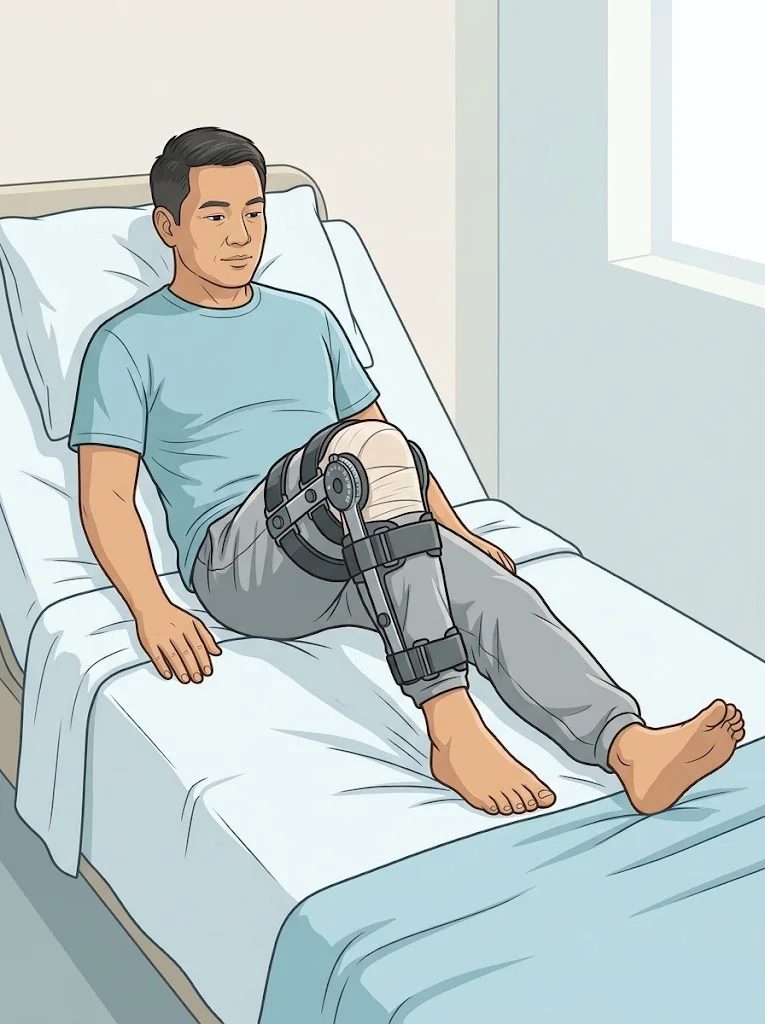
After a root repair, follow your surgeon’s instructions strictly. There are usually three limits in the first six weeks: how much weight you may put through the leg, how far you may bend the knee, and no deep bending under load.
The exercises that usually start earliest are the ones that neither load the leg nor bend it deeply.
Quadriceps setting
2 rounds · 10 times · hold 5 seconds
Lie on your back with the leg straight. Press the back of the knee down into the floor while tightening the front of the thigh so the kneecap draws up slightly. Hold, then release.
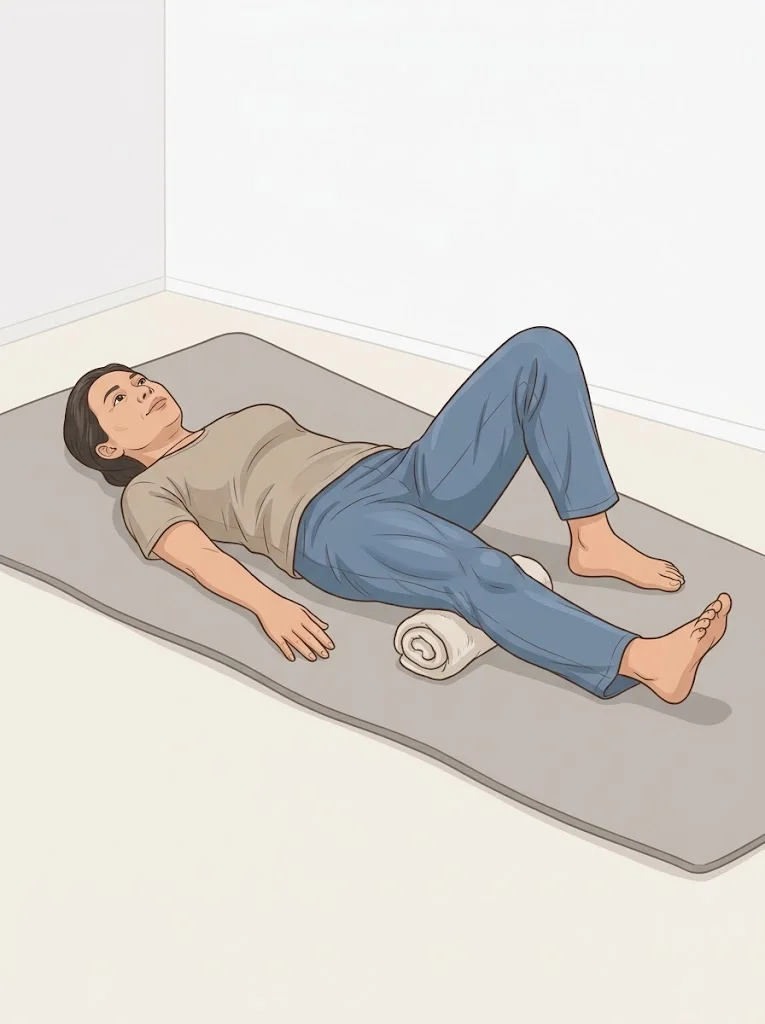
Straight leg raise
2 rounds · 10 times
Lie on your back with the other knee bent up. Keep the operated knee straight, tighten the thigh, and lift the leg about a hand’s width. Hold 3 seconds, then lower slowly.
Watch for — the knee must stay straight throughout. If it bends, the thigh is not tight enough.

Ankle pumps
often through the day
Point and flex the ankle slowly, about 20 times each spell. It keeps the circulation moving and reduces the risk of a clot.
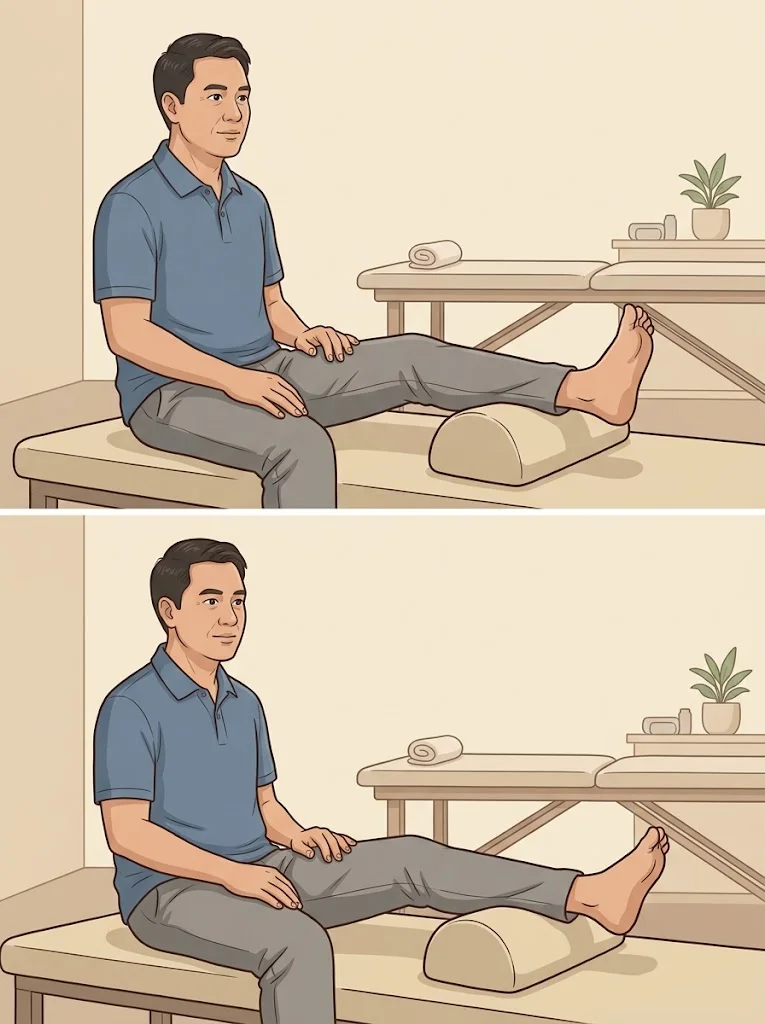
Knee bending within your allowed range
10 times
Lying or sitting on the bed, slide the heel towards you until you reach the limit your surgeon set, then straighten again.
Watch for — do not go past the set angle, even if it feels as though you could.
Prevention and self-care
- Keep your weight in a healthy range — the most effective way to reduce force in the knee
- Cut down squatting, kneeling and sitting cross-legged on the floor. Use a low stool or bench instead
- Get up from the floor slowly, using your hands for support and without twisting the knee
- Strengthen thighs and hips regularly
- Set up seating at a workable height in the bathroom and kitchen, so you bend deeply less often each day
Questions to ask your doctor
- Is my tear really at the root, and how far has the meniscus displaced?
- How worn is my joint, and is my leg bowed?
- In my case, how much would repairing the root help?
- If I have surgery, how long must I limit weight bearing and bending?
- If I do not have surgery, what is the likely course over the next five to ten years?
Frequently asked questions
What is the root of the meniscus?
The root is where each end of the C-shaped meniscus anchors to the shin bone. That anchor is what holds the meniscus in place so it can bear load. If the root tears, the meniscus slips sideways out of the joint and can barely spread load at all.
How is it different from an ordinary meniscus tear?
The difference is what it does to load. An ordinary tear leaves some load-spreading ability intact. A root tear takes away almost the whole function of that meniscus — mechanically it is close to having no meniscus there at all, which is why doctors take it more seriously.
Why do some surgeons want to operate early?
Because a meniscus that cannot do its job puts more pressure on the joint cartilage, which may accelerate osteoarthritis. In younger people whose joint is still in good condition, repairing the root back to bone is therefore often considered. It does not suit everyone.
Can it still be repaired if I already have arthritis?
If the joint is already significantly worn, repairing the root usually helps less, because the cartilage damage is already done. Your doctor will consider approaches aimed at the arthritis instead. The decision weighs your age, the alignment of your leg, and the state of the joint.
References
- Chang PS et al. Midterm Outcomes of Posterior Medial Meniscus Root Tear Repair: A Systematic Review. Am J Sports Med. 2021
- Khoo JR et al. Repair of meniscus root tear — is there a difference between medial and lateral meniscus root repair? A systematic review and meta-analysis. J Orthop Surg (Hong Kong). 2023
Related educational reading
These pages explain tests, treatments and rehabilitation that often come up with this condition. They are general reading, not a treatment sequence arranged for you — that has to come from a doctor who has examined you.
Related conditions

Written by Assoc. Prof. Sorawut Thamyongkit, M.D.