
Plantar fasciitis
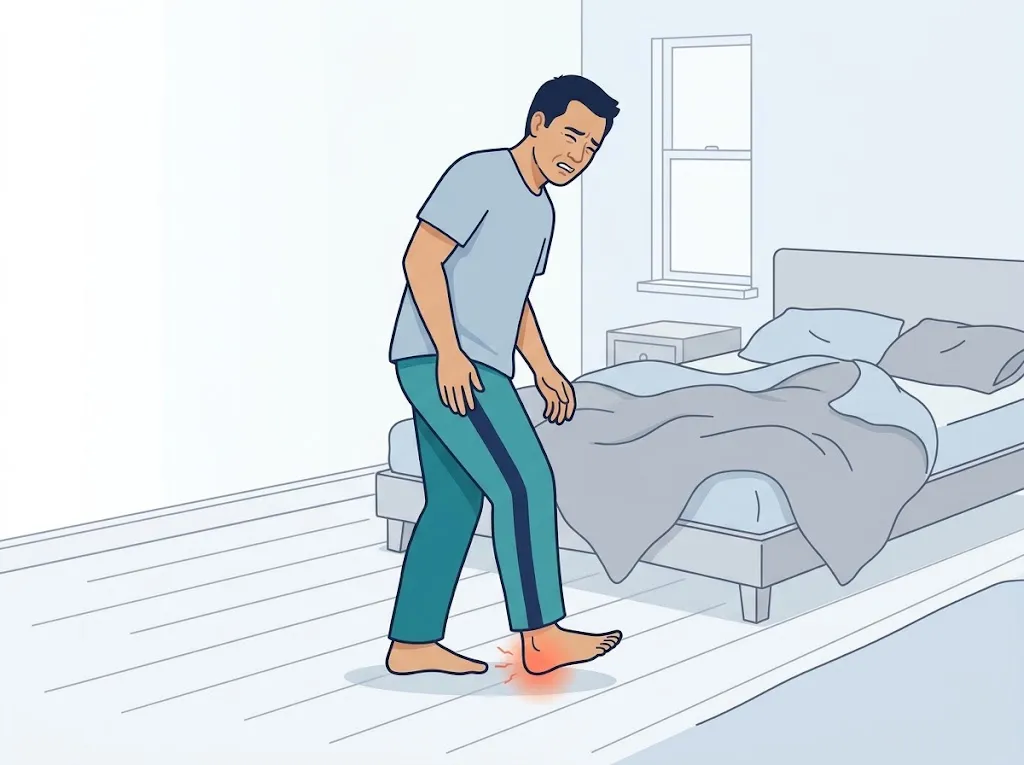
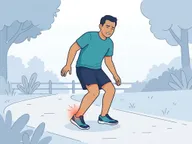
Heel pain from overloading the thick band of tissue under the foot. It hurts most on the first steps of the morning. Most people get better with stretching and better shoes.
What it is
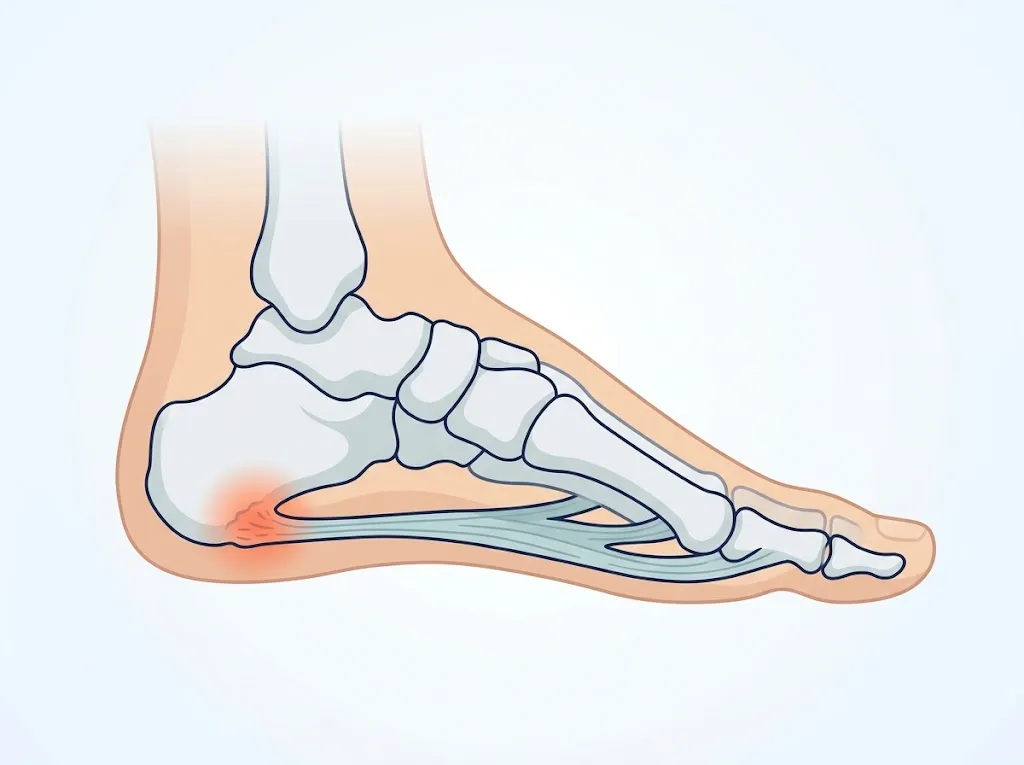
Under your foot runs a thick, tough band of tissue from the heel bone to the base of the toes, called the The thick band of tissue under the foot running from the heel to the base of the toes. It supports the arch and helps transmit force as you walk.. It supports the arch and helps transmit force as you push off.
When it is loaded beyond what it can take, small injuries accumulate where it attaches to the heel.
Although the English name ends in “-itis”, meaning inflammation, what is found in the tissue is usually degeneration rather than acute inflammation. That explains why anti-inflammatory medicine only helps so much.
Symptoms
- Pain under the heel, towards the inner side, tender at one specific spot when pressed
- Worst on the first steps of the morning, easing after 10–15 minutes of walking
- Returns after sitting for a long time and then standing up
- Worse standing for long periods or walking far, especially on hard floors or barefoot
- Usually no swelling and no redness. If there is, see a doctor
Causes and risk factors
- Increasing walking or running too quickly
- Standing or walking on hard floors for long periods, particularly in jobs that involve standing all day
- Carrying extra weight
- A tight Achilles tendon and tight calves — the commonest associated factor, and one you can do something about
- Shoes with thin soles or no arch support, and walking barefoot on hard floors
- A very high arch or a very flat foot
- Age 40–60
When to see a doctor
Otherwise, see a doctor if it has not improved after six to eight weeks of self-care, if it stops you walking or working, or if both heels hurt.
How it is diagnosed
The history and examination are usually enough, and the pattern of pain on the first steps of the morning is the clearest clue. Your doctor presses to find the tender point on the inner heel, checks how tight the Achilles and calf are, and looks at the shape of your foot and how you walk.
X-ray is not needed in most people. It is used when a stress fracture or another cause is suspected.
Ultrasound or MRI is reserved for people who are not improving as expected, or when a tear in the fascia or a nerve problem is suspected.
Treatment options
Non-surgical treatment
More than nine in ten people improve without surgery. What works is doing it consistently, rather than trying several things and abandoning each.
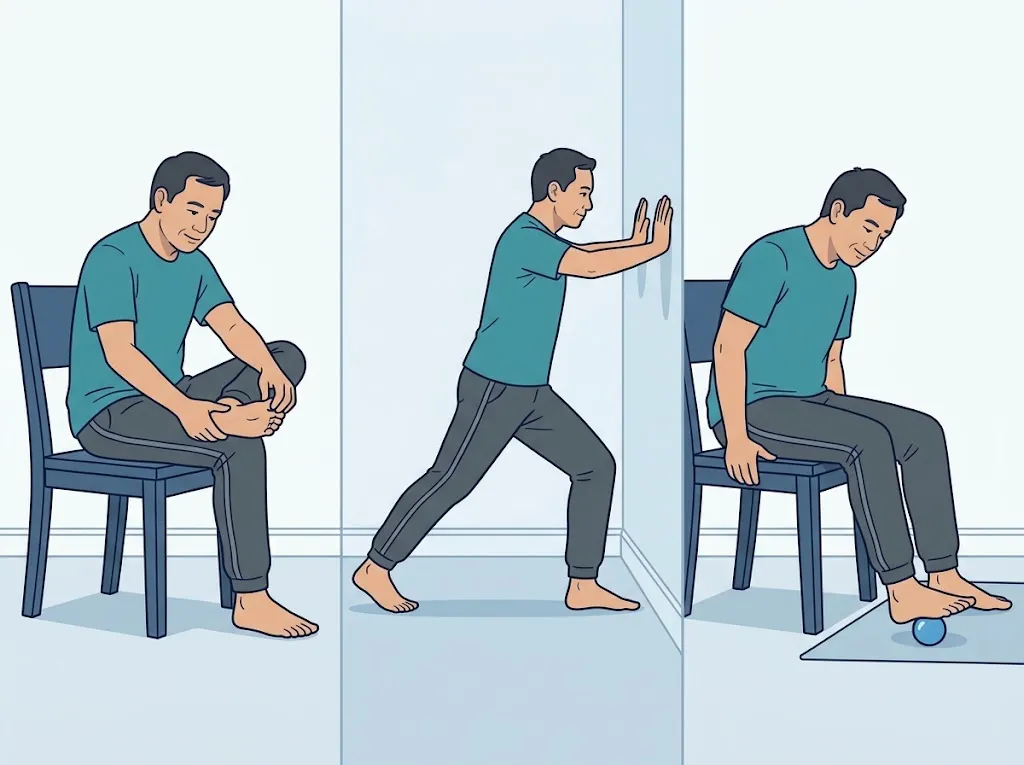
- Stretching both the plantar fascia and the Achilles tendon — the treatment with the best evidence
- Footwear. Wear shoes that support the arch and cushion. Do not walk barefoot on hard floors, particularly for the first steps of the morning
- Arch supports, ready-made or custom. Ready-made ones usually work as well as custom for this condition
- Adjust activity. Cut back running or standing temporarily, then build back
- Lose weight if you are carrying extra
- Pain relief for a short period. Always ask a doctor or pharmacist first
- A night splint holding the ankle in a slightly pulled-up position reduces morning pain for some people
- Other treatments such as injection or shockwave are your doctor’s decision, for people whose pain drags on
Surgery
Uncommon. Your doctor considers it only after at least six to twelve months of thorough non-surgical treatment when pain still limits daily life. The operation releases part of the fascia, and recovery takes several months.
Recovery and rehabilitation
Do these daily, and particularly before your first step in the morning, which is when they pay off most.
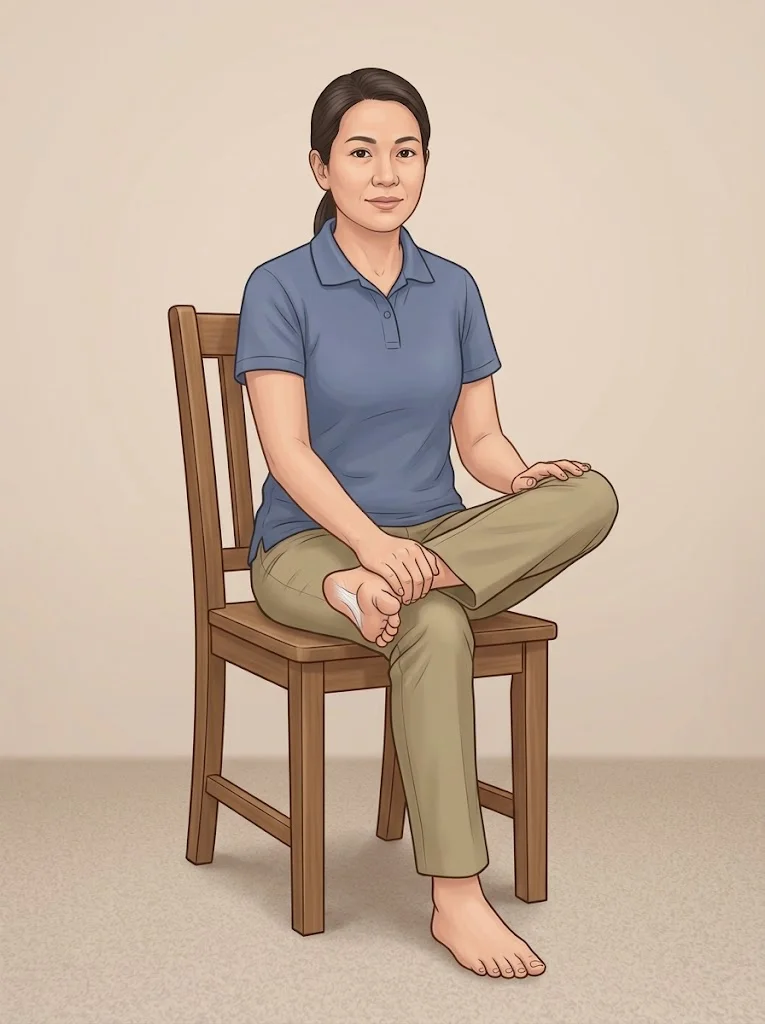
Plantar fascia stretch
3 rounds · 10 times · hold 10 seconds
Sit and cross the affected ankle over the opposite knee. Take hold of all five toes and pull them back towards your shin until you feel a stretch under the foot. Hold, then release.
Watch for — do this before getting out of bed each morning, and before standing after sitting for a long time.
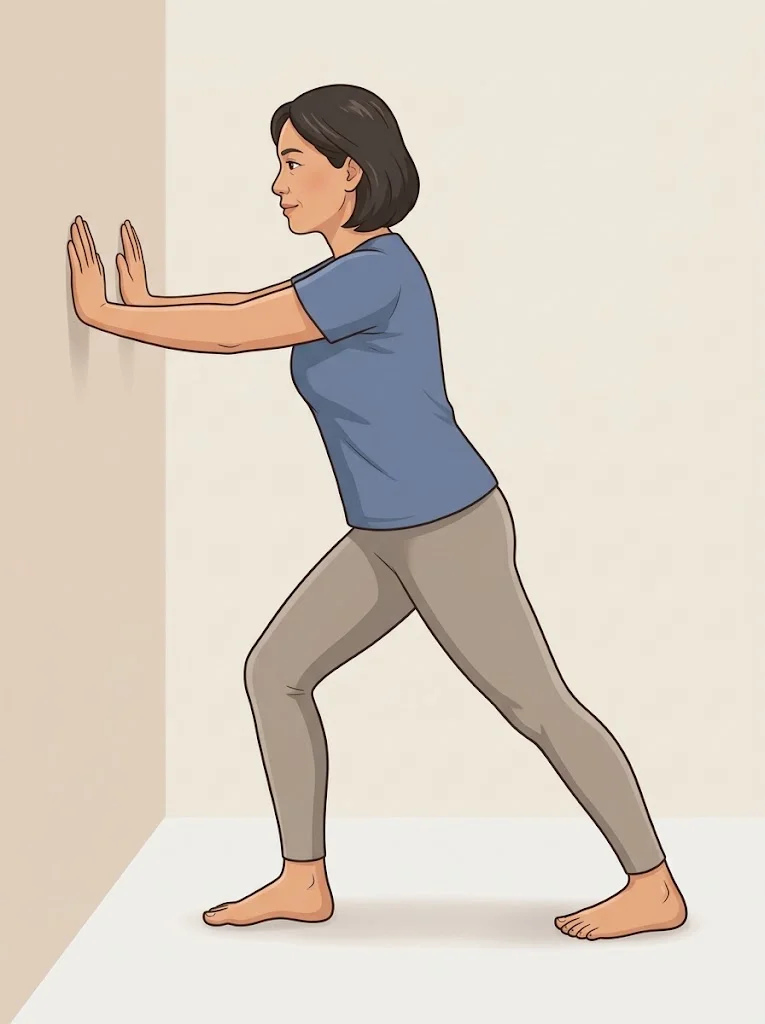
Calf stretch against a wall
3 each side · hold 30 seconds
Face a wall with both hands on it. Step the affected leg back, knee straight and heel flat on the floor. Lean towards the wall until you feel a stretch in the calf.
Watch for — repeat with the back knee slightly bent, to reach the deeper calf muscle.
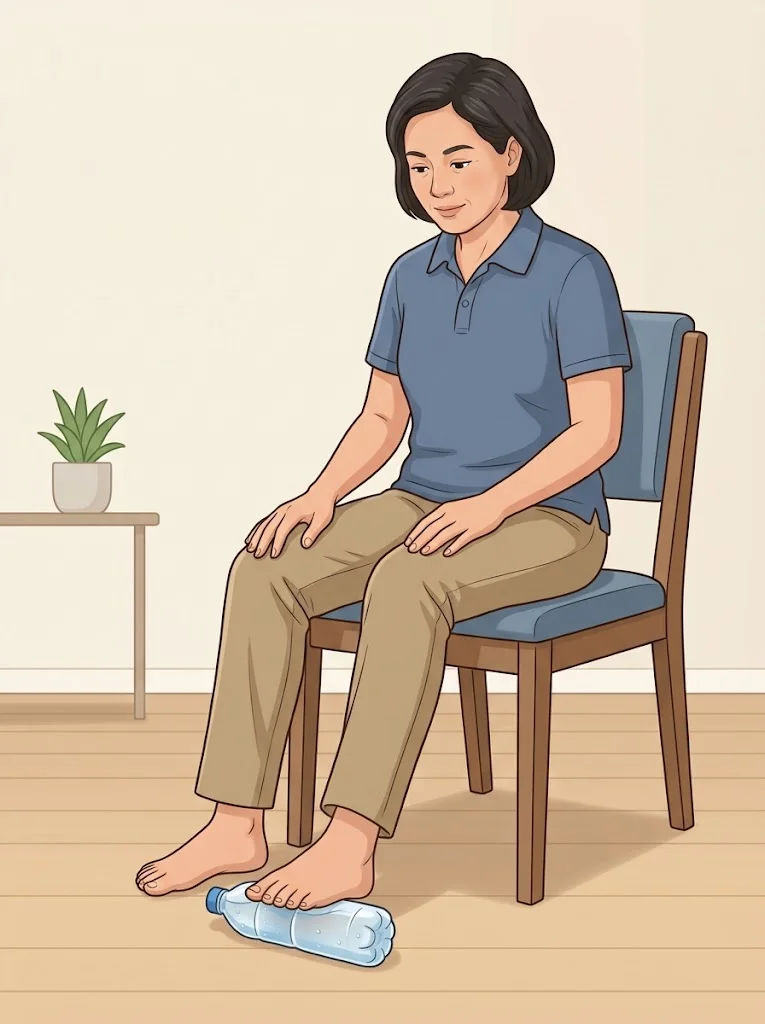
Rolling a chilled bottle underfoot
twice a day · 5 minutes each
Sit on a chair with a chilled bottle under the foot and roll it slowly from heel to toes, pressing down enough to feel it.
Watch for — press to a firm sensation, not to pain.
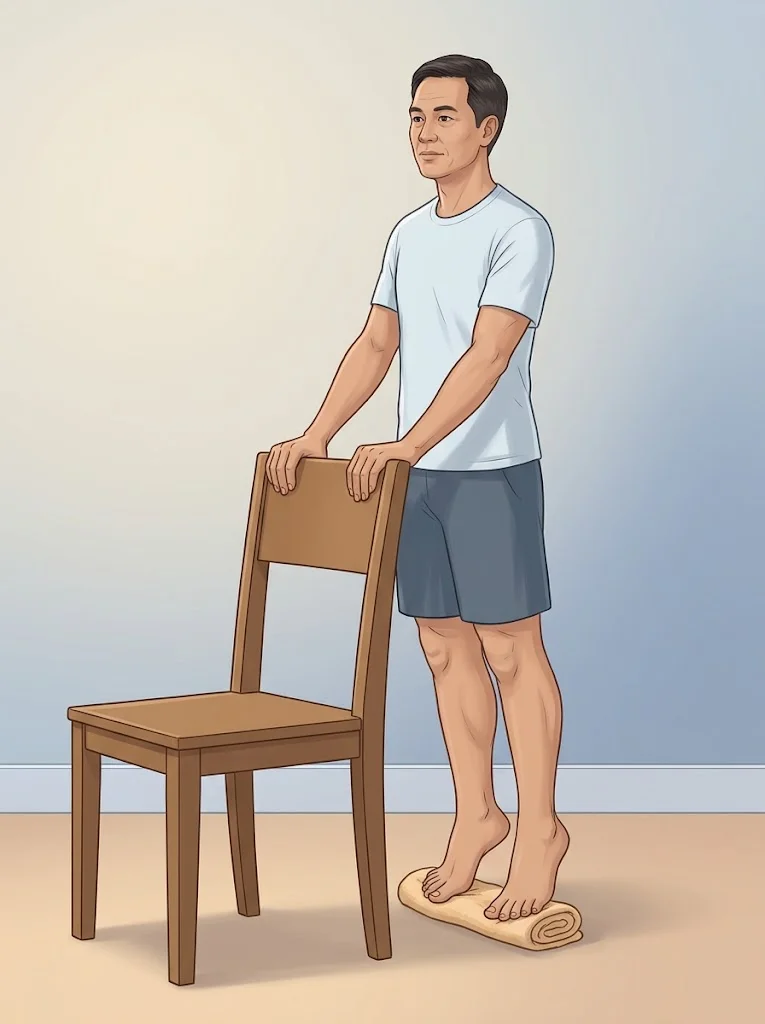
Heel raise with a towel under the toes
3 rounds · 12 times
Put a rolled towel under the base of your toes so they are bent upwards. Holding a chair, rise onto your toes over 3 seconds, hold, then lower over 3 seconds.
Watch for — this both stretches and strengthens. Start on two legs and progress to one when you can.
Prevention and self-care
- Do not walk barefoot on hard floors. Keep a supportive pair of sandals by the bed
- Wear shoes with a decent sole and arch support, and replace them when worn
- Stretch the calves and the sole daily, even when it does not hurt
- Increase walking or running gradually, by no more than about a tenth a week
- Keep your weight in a healthy range
- If you stand all day for work, use a cushioned mat and shift your position often
Questions to ask your doctor
- Does my heel pain fit plantar fasciitis, or is there another cause to rule out?
- Which stretches should I do, how often, and for how long before judging?
- What shoes and arch supports suit my feet?
- What activity should I cut back, and for how long?
- If it does not improve, what is the next step?
Frequently asked questions
Why is it worst on the first steps in the morning?
While you sleep the tissue under your foot sits in a shortened position. The first step stretches it suddenly, and that hurts. After walking for a while it loosens and eases — then it usually hurts again after you have been sitting for a long time.
I have a heel spur. Does it need removing?
No. Heel spurs are found in a great many people with no pain at all, and they are usually the result of the pull on the tissue rather than the cause of the pain. Treatment is aimed at the tissue, not at the spur.
How long does it take to get better?
Most people improve over several months, and for some it takes up to a year — longer than most expect. Doing the stretches and sorting out footwear consistently matters more than finding new treatments.
Do steroid injections help?
They reduce pain in the short term for some people, but they are not the first treatment and should not be repeated often, because of the risk of the tissue tearing and of the fat pad under the heel thinning. It is your doctor's decision.
References
Related educational reading
These pages explain tests, treatments and rehabilitation that often come up with this condition. They are general reading, not a treatment sequence arranged for you — that has to come from a doctor who has examined you.
Treatment
Related conditions
Written by Assoc. Prof. Sorawut Thamyongkit, M.D.