
Ankle sprain
Injury to the ligaments around the ankle from a twist. Very common, and almost always managed without surgery — but good rehabilitation is what stops it happening again.
What it is
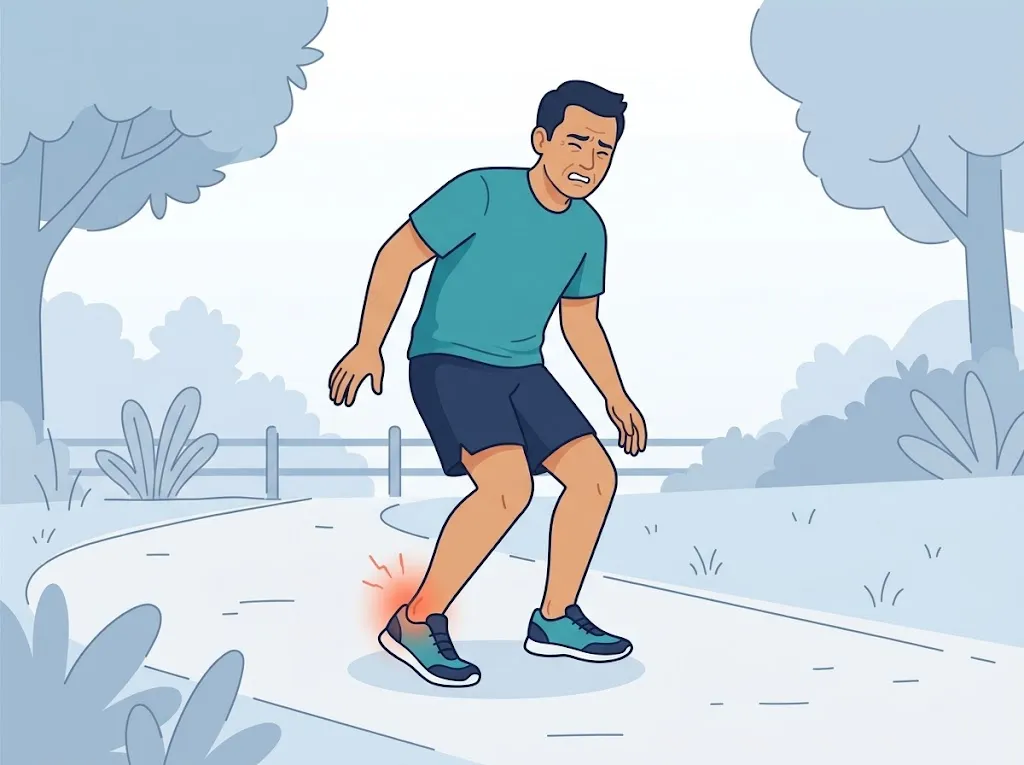
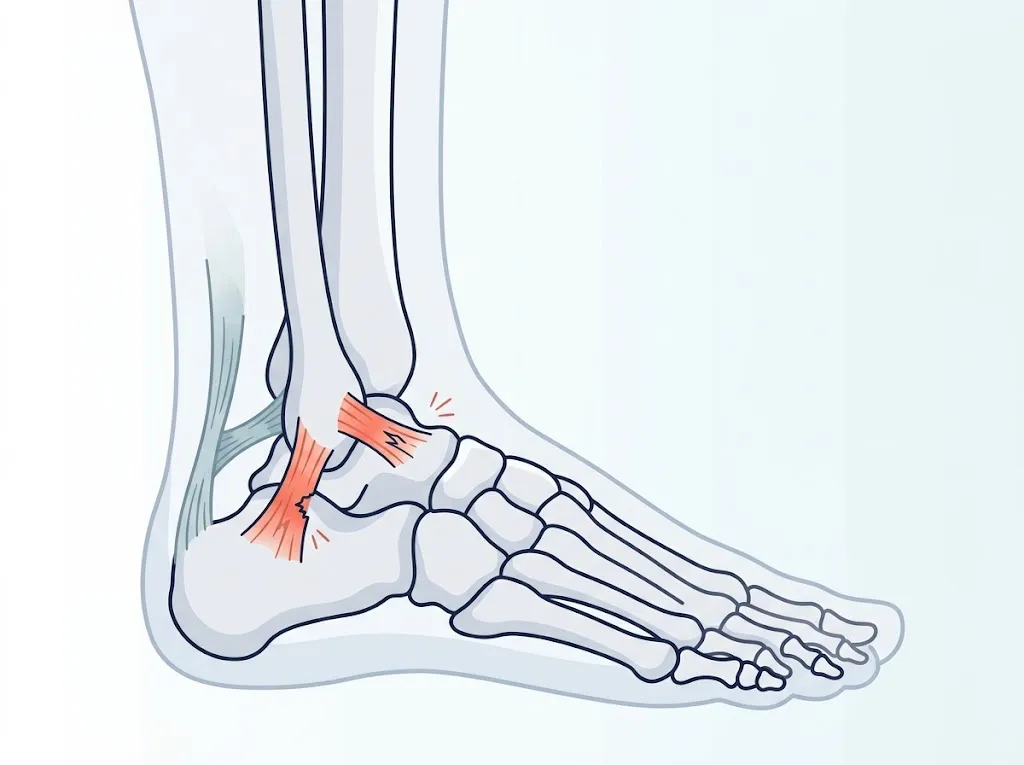
Several ligaments hold the bones of your ankle together and stop the joint twisting past its limits. An ankle sprain is when those ligaments are stretched or torn.
More than eight in ten happen by rolling the foot inward, which injures the group of ligaments on the outer side.
Severity is graded roughly:
- Grade 1 — the ligament is stretched. Little swelling, and you can walk
- Grade 2 — a partial tear. Clear swelling and bruising, and walking is difficult
- Grade 3 — a complete tear. Marked swelling and the joint feels unstable
Symptoms
- Immediate pain at the moment of twisting, worse when you put weight on it
- Swelling within a few hours, usually around the bony bump on the outside
- Bruising, which may appear a day or two later and can spread into the foot
- Tenderness over the ligaments on the outer side
- A feeling that the ankle is unstable, or gives way in certain moments
Causes and risk factors
- Missing a step, stepping off a kerb, or walking on uneven ground
- Sports with jumping and changes of direction — basketball, volleyball, football
- Having sprained that ankle before, which is the single biggest risk factor
- Incomplete rehabilitation after a previous sprain
- Unsuitable shoes, such as high heels or shoes worn down unevenly
- Weak muscles around the ankle and hip
When to see a doctor
Otherwise, see a doctor if there is no improvement at all after one to two weeks, if the ankle is still swollen a month later, or if it keeps turning over.
How it is diagnosed
Your doctor asks which way the ankle rolled and how many steps you could take afterwards, then feels systematically for tenderness — over the ligaments and over the specific bones that are commonly broken alongside — and tests the stability of the joint.
X-ray is done when the criteria suggest a fracture, not for everyone.
Ultrasound or MRI is used for people who are not improving as expected, or when damage to the cartilage or other ligaments is suspected.
A detailed stability examination is often repeated after four or five days, once the swelling and muscle guarding have settled, because it is far more accurate then.
Treatment options
Non-surgical treatment
The first two or three days are about pain and swelling.
- Ice for 15 to 20 minutes every 2 to 3 hours, always wrapped
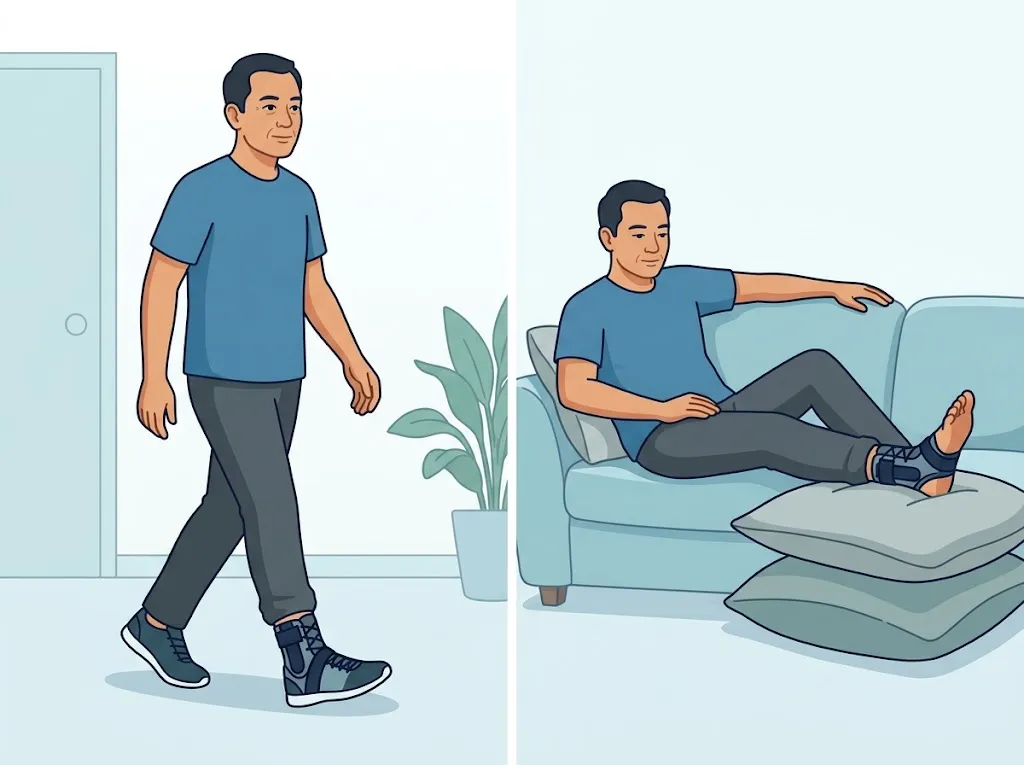
- Elevate the leg above heart level when sitting or lying
- Compression with an elastic bandage, not tight enough to numb the foot or turn the toes blue
- Bear weight as much as you comfortably can, using crutches if needed. You do not have to wait until the pain has gone
After that, the emphasis shifts to moving and training.
- A brace that still allows the ankle to move up and down works better than a rigid cast for an ordinary sprain
- Start moving the ankle from early on, as much as you can
- Balance training is what most reduces the chance of doing it again
- Pain relief for a short period. Always ask a doctor or pharmacist first
Surgery
Uncommon after a first injury. Your doctor considers it when the ankle remains unstable and keeps turning over despite thorough rehabilitation over several months, or when there is damage to the cartilage or other ligaments.
Recovery and rehabilitation
Progress step by step as the ankle allows. Stop if you get sharp pain, or if the ankle is more swollen the next morning.
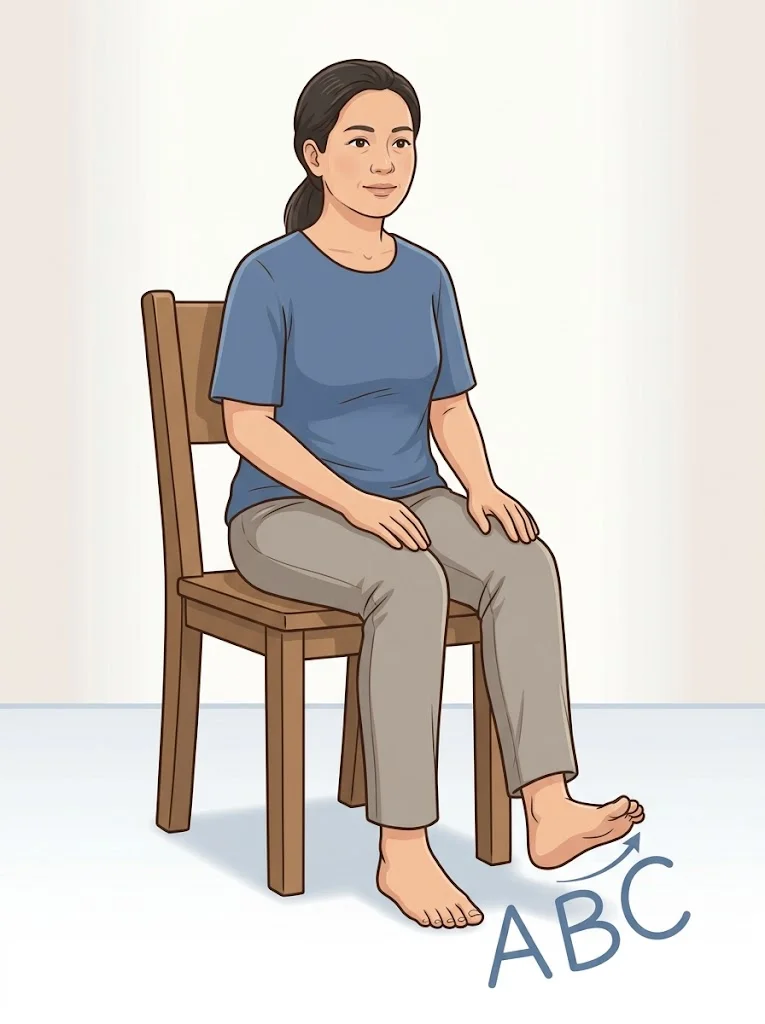
Draw the alphabet with your toes
2 rounds
Sit on a chair, lift the injured foot off the floor, and slowly draw the letters of the alphabet in the air with your big toe.
Watch for — you can start this in the first days, as long as it does not cause sharp pain.
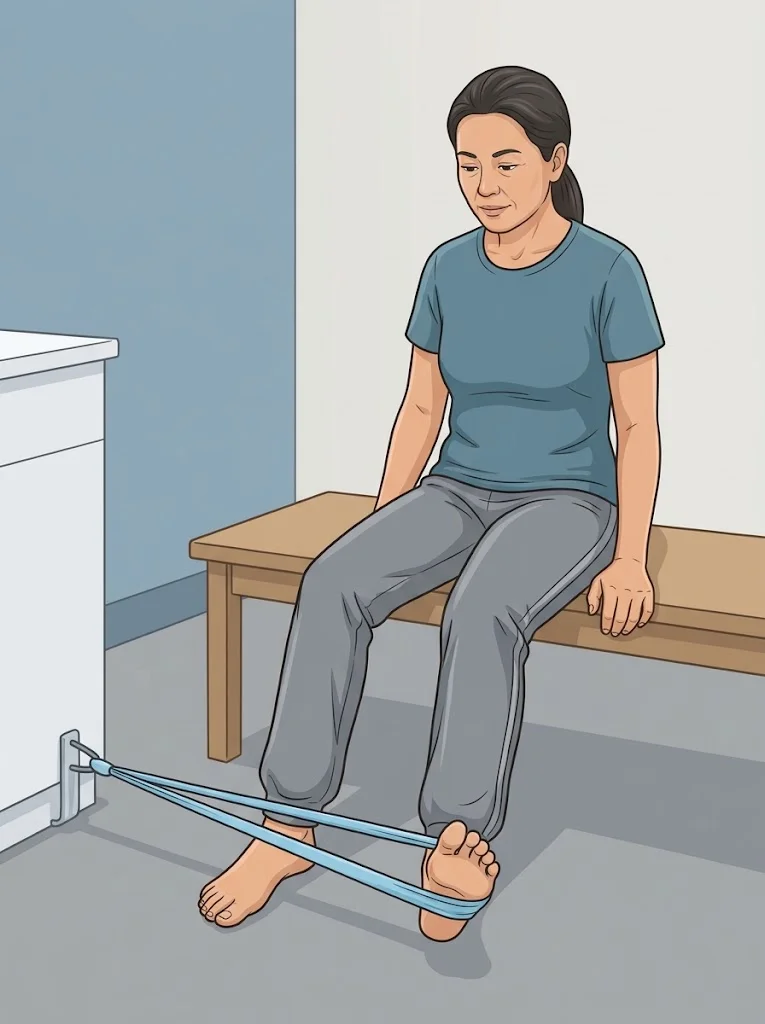
Resisted eversion with a band
3 rounds · 15 times
Sit with the leg out straight and a resistance band looped around the foot, anchored at the other end. Push the foot outward against the band, then return slowly.
Watch for — these are the muscles that protect you against rolling the ankle inward.
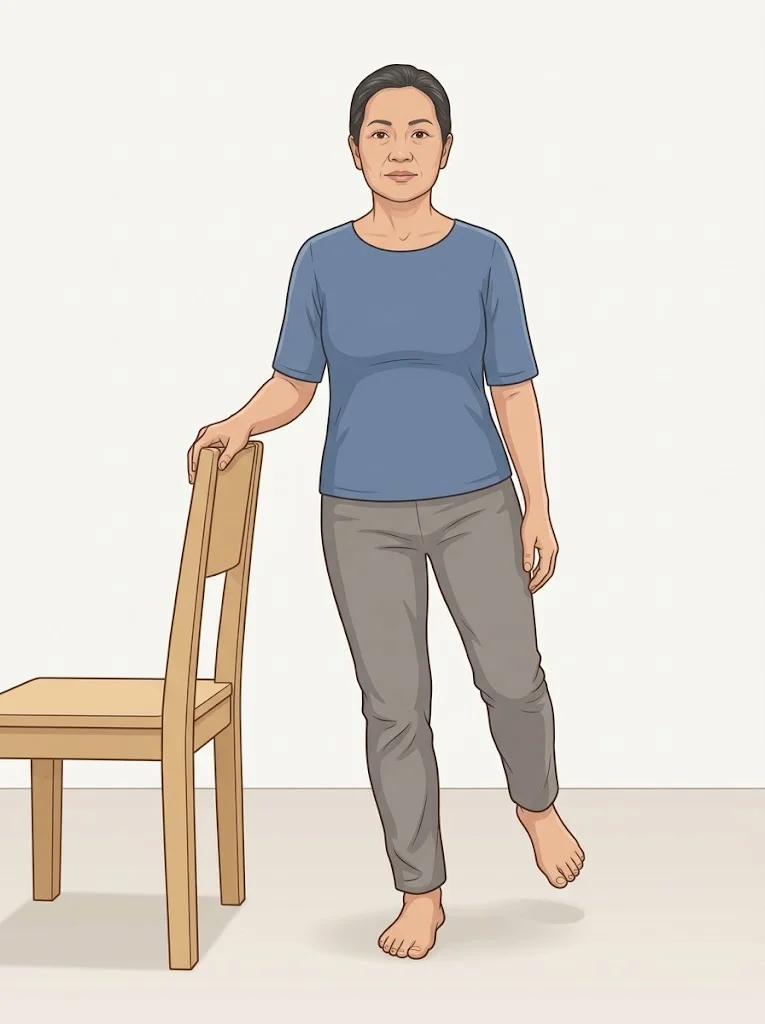
Single-leg stand
3 times · hold 30 seconds
Stand near a wall you can touch if you wobble, lift the other foot, and balance on the injured leg. When that becomes easy, try it with your eyes closed.
Watch for — this is the part people skip, and it is what most reduces the chance of doing it again.
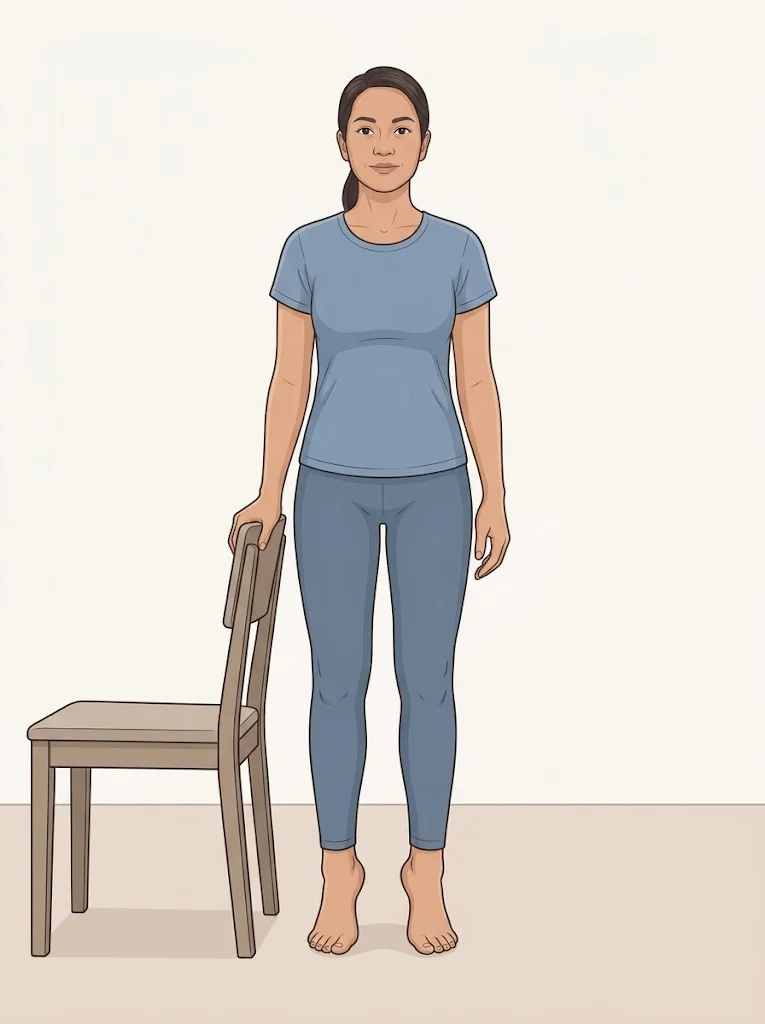
Heel raises
3 rounds · 15 times
Hold a chair back and rise slowly onto your toes, hold 2 seconds, then lower slowly. Move to one leg once two legs is comfortable.
Prevention and self-care
- Keep doing single-leg balance work even after it has healed, at least three times a week
- Use a brace or tape when returning to sport for the first six to twelve months after an injury
- Warm up before sport, and include balance work in the warm-up
- Wear shoes that fit and replace them when the soles wear unevenly
- Watch for changes in level and poor lighting at home, especially at entrances and on stairs
- Do not return fully to sport until you can balance on that leg with your eyes closed and run a zig-zag without hesitating
Questions to ask your doctor
- Does my ankle need an X-ray, and why or why not?
- What grade is the ligament injury, and is the joint still stable?
- How much weight should I put through it, and what kind of support should I use?
- When should I start balance training, and for how long?
- When can I walk normally, work, and play sport again?
Frequently asked questions
Do I always need an X-ray?
No. Doctors use examination criteria to decide — how many steps you could take, and whether there is tenderness at specific bony points. If you do not meet those criteria, the chance of a fracture is very low.
Ice or heat?
Ice for the first two or three days, 15 to 20 minutes at a time, always wrapped. After the swelling settles, many people prefer heat. What matters more than either is starting to move and to bear weight as soon as you comfortably can.
Do I need a cast?
Usually not. For an ordinary sprain, a support that still allows the ankle to move up and down, plus early weight bearing, works better than a rigid cast. Casts are for fractures or severe ligament injuries.
Why does my ankle keep giving way?
The commonest reason is incomplete rehabilitation. After a sprain, the sense that tells your brain where the ankle is positioned is temporarily lost. If that is not retrained, the ankle turns over easily again. Balance training is the part people skip.
References
- Martin RL et al. Ankle Stability and Movement Coordination Impairments: Lateral Ankle Ligament Sprains Revision 2021. J Orthop Sports Phys Ther. 2021
- Ruiz-Sánchez FJ et al. Management and treatment of ankle sprain according to clinical practice guidelines: A PRISMA systematic review. Medicine (Baltimore). 2022
Related educational reading
These pages explain tests, treatments and rehabilitation that often come up with this condition. They are general reading, not a treatment sequence arranged for you — that has to come from a doctor who has examined you.
Body basics
Treatment
Related conditions

Written by Assoc. Prof. Sorawut Thamyongkit, M.D.