
Neck pain
Most neck pain comes from the muscles and joints around the neck and settles on its own. Pain spreading into the arm, numbness or weakness needs further assessment.
What it is
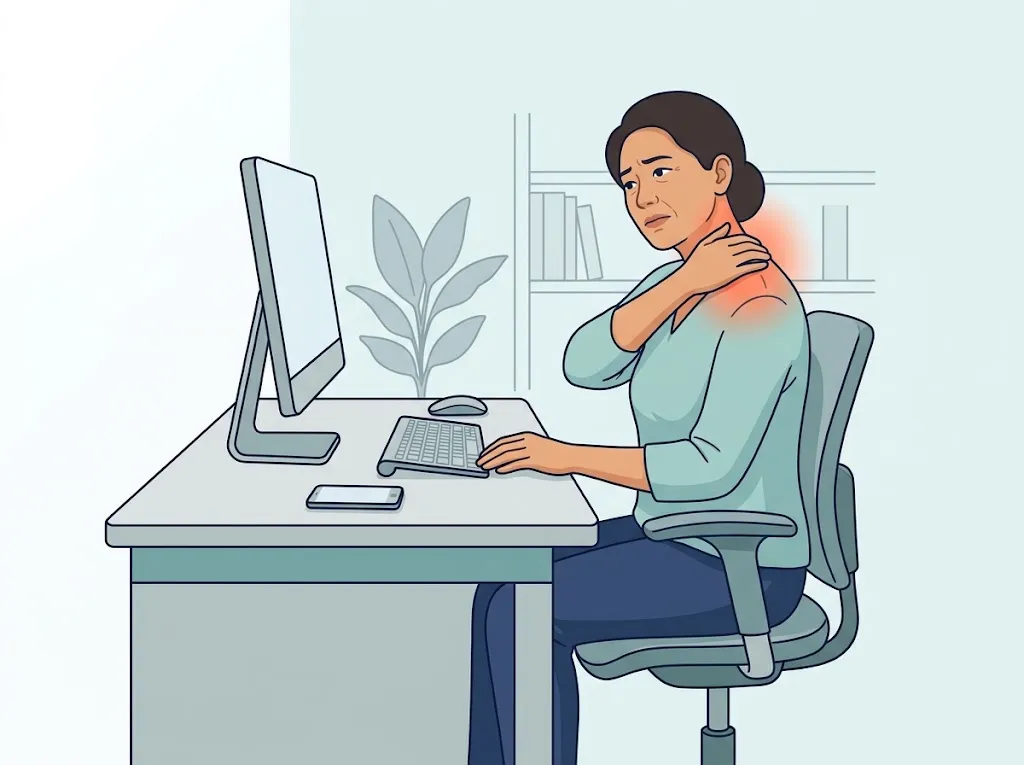
Your neck has seven vertebrae carrying a head that weighs four to five kilograms, while still turning and tilting through a wide range. A lot of muscles and ligaments work continuously to keep that balance.
In most people neck pain comes from muscles and joints that have been working hard or held in one position — not from serious structural damage.
Symptoms
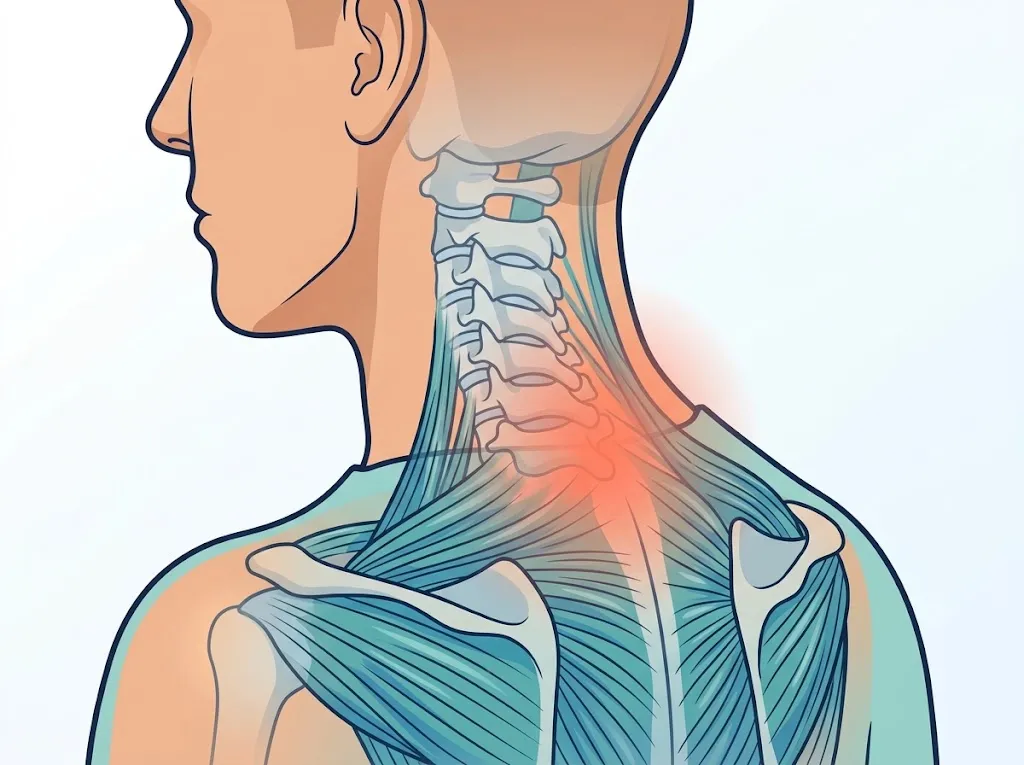
- A dull ache or tightness across the neck and upper shoulders, sometimes up to the base of the skull
- Less turning or tilting, particularly first thing in the morning
- Headache starting at the back of the head
- Tight bands of muscle you can feel across the shoulders
Signs a nerve may be involved: pain spreading down the arm past the elbow, numbness or tingling in the fingers, and weakness in the arm.
Causes and risk factors
- Holding one position for a long time — screen work, looking down at a phone, long drives
- Sleeping awkwardly or on an unsuitable pillow
- Stress and poor sleep, which increase muscle tension in the neck and shoulders
- Injury, such as a whiplash from a car accident
- Age-related change in the neck bones, which can narrow where the nerves exit
- Smoking
When to see a doctor
Otherwise, see a doctor when neck pain lasts more than four to six weeks without improving, when pain spreads into the arm with numbness, or when it keeps you awake several nights running.
How it is diagnosed
Your doctor takes a history and examines you — how far the neck moves, where it is tender, and the strength, sensation and reflexes in both arms. In some people they will also check how you walk and how your hands work, to see whether the spinal cord is being compressed.
Imaging is not needed in most people without warning signs. X-ray shows age-related change and stability; MRI is used when a compressed nerve or spinal cord is suspected, or when more invasive treatment is being considered.
Treatment options
Non-surgical treatment
- Move the neck gently and often while it still hurts, rather than keeping it still
- A collar is not recommended for continuous long-term use, because the neck muscles weaken. Use it only briefly if your doctor advises
- Heat relieves spasm for many people, wrapped and for no more than 20 minutes
- Pain relief — paracetamol and non-steroidal anti-inflammatories. Always ask a doctor or pharmacist first
- Physiotherapy focused on the deep neck muscles and the muscles around the shoulder blades, plus adjusting how you work
- Managing stress and sleep, which affects neck pain more than most people expect
Surgery
Uncommon. Your doctor considers it when a nerve or the spinal cord is compressed and causing progressive weakness, or when severe arm pain has not responded to a proper trial of everything else.
Recovery and rehabilitation
Go slowly and stay within the comfortable range. Stop if you get sharp pain, or if numbness in the arm increases.
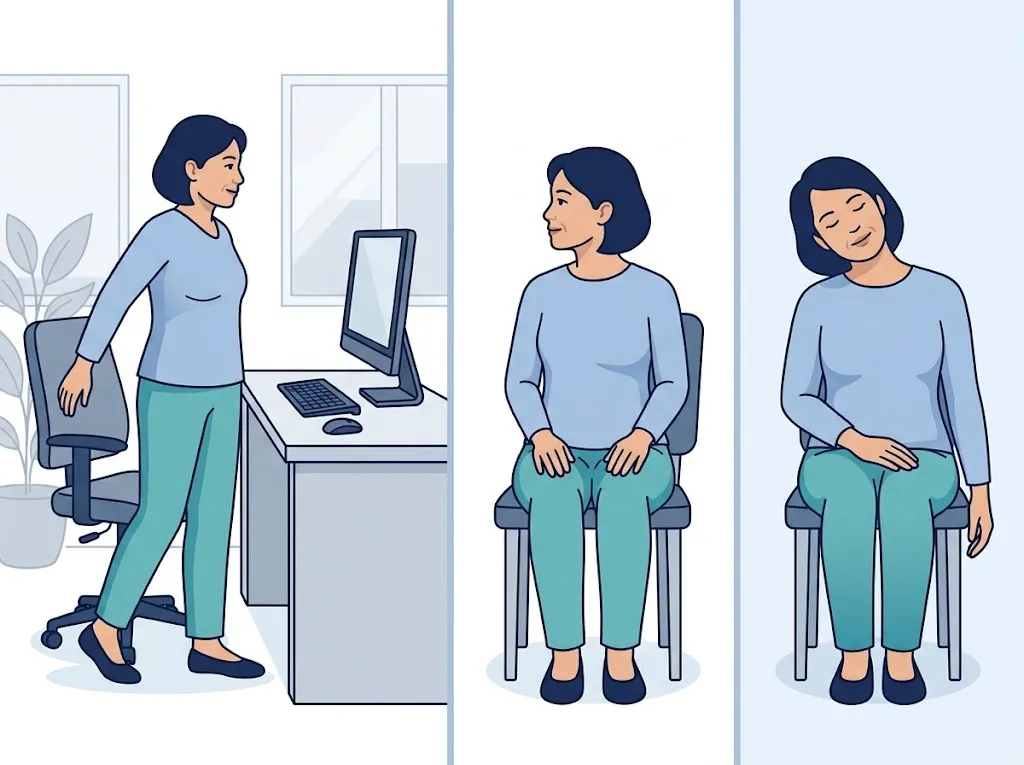
Chin tuck
2 rounds · 10 times · hold 5 seconds
Sit or stand tall, looking straight ahead. Gently draw your chin back towards your neck, making a double chin. Hold, then release.
Watch for — do not tip your head up or down. The chin slides backwards, that is all.
Slow neck rotation
5 each side · hold 5 seconds
Sit tall. Turn your head slowly to the left until you feel a stretch, hold, then return to the middle and swap sides.
Watch for — turn to a stretch, not to the very end of the range.
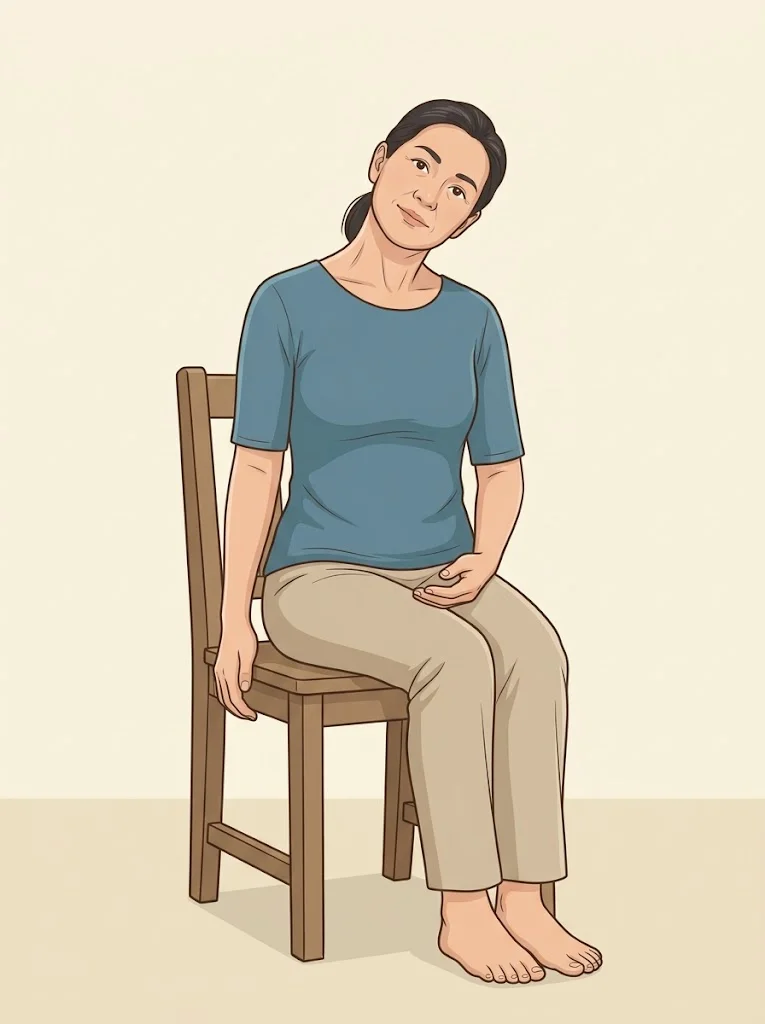
Upper trapezius stretch
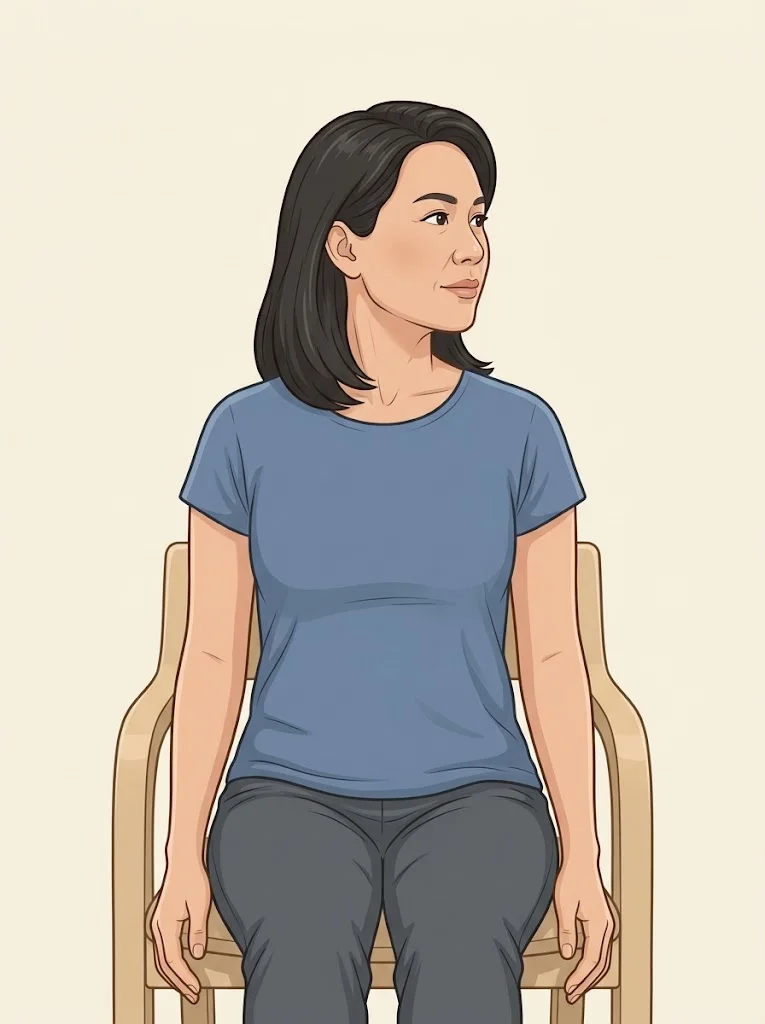
3 each side · hold 20 seconds
Sit tall and hold the edge of the chair with your right hand. Tilt your head to the left until you feel a stretch on the right side of your neck. Hold, then swap.
Watch for — the shoulder on the side being stretched must not lift.
Shoulder blade squeeze
2 rounds · 10 times · hold 5 seconds
Sit or stand tall with arms by your sides. Squeeze the shoulder blades together, hold, then release.
Watch for — shoulders stay down and the neck stays relaxed.
Prevention and self-care
- Set the top of your screen at eye level and your keyboard so the elbows sit at about 90 degrees
- Bring the phone up to eye level instead of bending your neck down to it
- Change position every 30–60 minutes, even just to stretch briefly
- Choose a pillow that keeps the neck in line with the body, neither too high nor too low
- Do not hold the phone between your ear and your shoulder
- Exercise regularly and manage stress
Questions to ask your doctor
- Is a nerve involved in my neck pain?
- Do I need imaging, and if not, why not?
- Should I wear a collar, and if so, for how long?
- Which exercises should I do, and what should I avoid?
- Are the medicines you suggest safe alongside my other conditions?
Frequently asked questions
How do I deal with neck pain from desk work?
What helps most is changing position often, rather than hunting for one perfect posture. Set the top of the screen at eye level, support your forearms, and get up every 30 to 60 minutes.
What is the best pillow?
No single pillow suits everyone. The principle is one that keeps your neck in line with your body while you sleep, neither propped up nor dropped down. Side sleepers usually need a thicker pillow than back sleepers.
Is it dangerous to click my own neck?
Forcefully cracking your own neck repeatedly is not advised — it does not address the cause and carries a small risk. If you want hands-on treatment, have it from someone trained, and after warning signs have been excluded.
What does neck pain spreading into my arm mean?
It may involve a nerve leaving the neck being compressed or irritated. Most cases improve on their own over weeks to months, but it is worth having a doctor record the strength and sensation in your arm as a baseline.
References
- Lim TH et al. Nonpharmacological Spine Pain Management in Clinical Practice Guidelines: A Systematic Review Using AGREE II and AGREE-REX Tools. J Orthop Sports Phys Ther. 2025
- Childs JD et al. Neck Pain: Clinical Practice Guidelines Linked to the International Classification of Functioning, Disability, and Health. J Orthop Sports Phys Ther. 2008
Related educational reading
These pages explain tests, treatments and rehabilitation that often come up with this condition. They are general reading, not a treatment sequence arranged for you — that has to come from a doctor who has examined you.
Related conditions
Written by Assoc. Prof. Sorawut Thamyongkit, M.D.