
Carpal tunnel syndrome
A nerve at the wrist is compressed, causing numbness in the fingers, classically at night, and sometimes clumsiness. Most people improve with a night splint and adjusted activity.
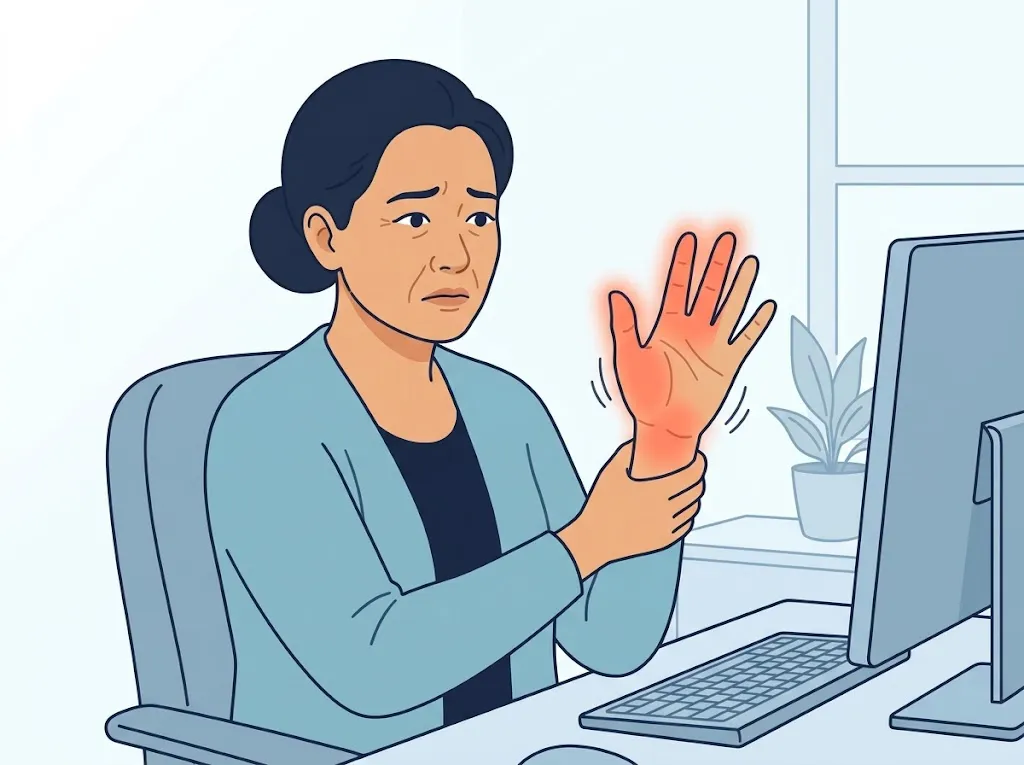
What it is
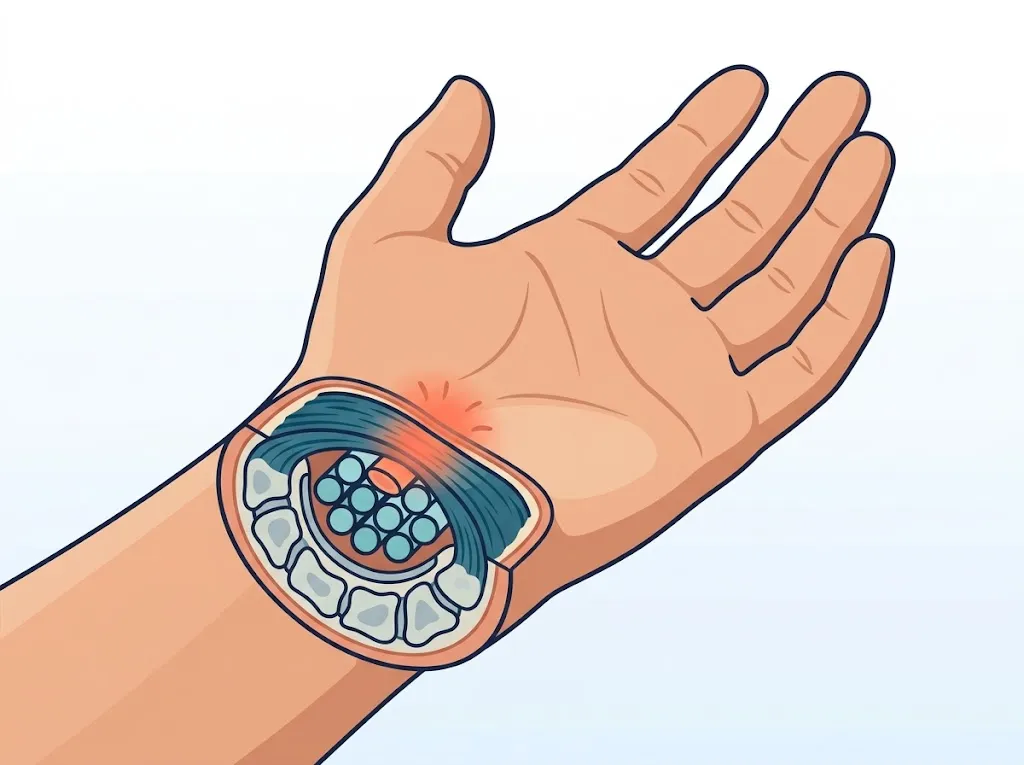
On the palm side of your wrist there is a narrow channel formed by the wrist bones below and a tough band of tissue across the top. It is called the carpal tunnel. Nine finger-bending tendons and one nerve pass through it together.
That nerve is the The nerve that passes through the carpal tunnel. It supplies sensation to the thumb, index, middle and half the ring finger, and powers the muscles at the base of the thumb., which supplies sensation to the thumb, index, middle and half the ring finger, and powers the muscles at the base of the thumb.
When the pressure in the tunnel rises — from swollen tendon sheaths, from holding the wrist bent or extended for long periods, or from another condition in the body — the nerve is squeezed and starts sending abnormal signals.
The tunnel cannot expand, because its floor is bone and its roof is a tough band. When something inside swells there is nowhere for it to go, and the nerve is the softest thing in there.
Symptoms
- Numbness or tingling in the thumb, index, middle and half the ring finger. The little finger is typically spared, which is a useful clue
- Numbness that wakes you at night — the commonest symptom of all
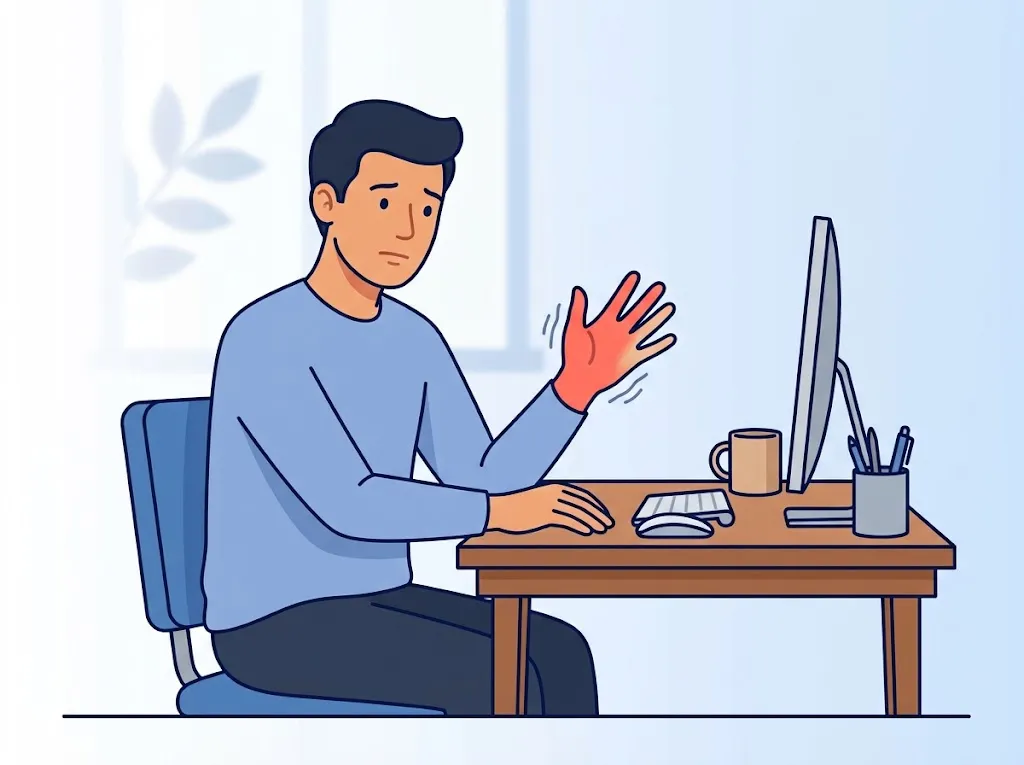
- Shaking the hand makes it better, which is a very telling sign
- Numbness while driving, holding a phone, or holding a book
- As it progresses, numbness all the time and dropping things — a glass slipping, or difficulty with buttons
- Late on, the muscle at the base of the thumb wastes into a visible hollow
Causes and risk factors
Often no specific cause is found. Associated factors include:
- Being female, and age 40–60
- Pregnancy, which usually settles after delivery
- Diabetes and an underactive thyroid
- Rheumatoid arthritis
- Carrying extra weight
- Work with repeated wrist bending or extension, and work with vibrating tools
- A previous wrist fracture, which changes the shape of the tunnel
When to see a doctor
Otherwise, see a doctor when numbness disturbs your sleep several nights running, when it is steadily getting worse, or when you start dropping things.
How it is diagnosed
History and examination. The pattern tells the most. Your doctor asks which fingers are numb, when it happens, and whether shaking the hand helps, then tests sensation in the fingertips, the strength of the thumb muscles, whether they have wasted, and performs manoeuvres that raise the pressure in the tunnel to see whether they reproduce the symptoms.
Nerve conduction studies confirm the diagnosis, indicate the severity, and separate it from a neck problem or another nerve. They are usually done when the diagnosis is unclear or when surgery is being considered.
Ultrasound is used in some people to look at the size of the nerve and what is compressing it.
Blood tests may look for associated conditions such as diabetes or thyroid disease.
Treatment options
Non-surgical treatment
Suitable when symptoms are not severe and the muscle has not wasted.
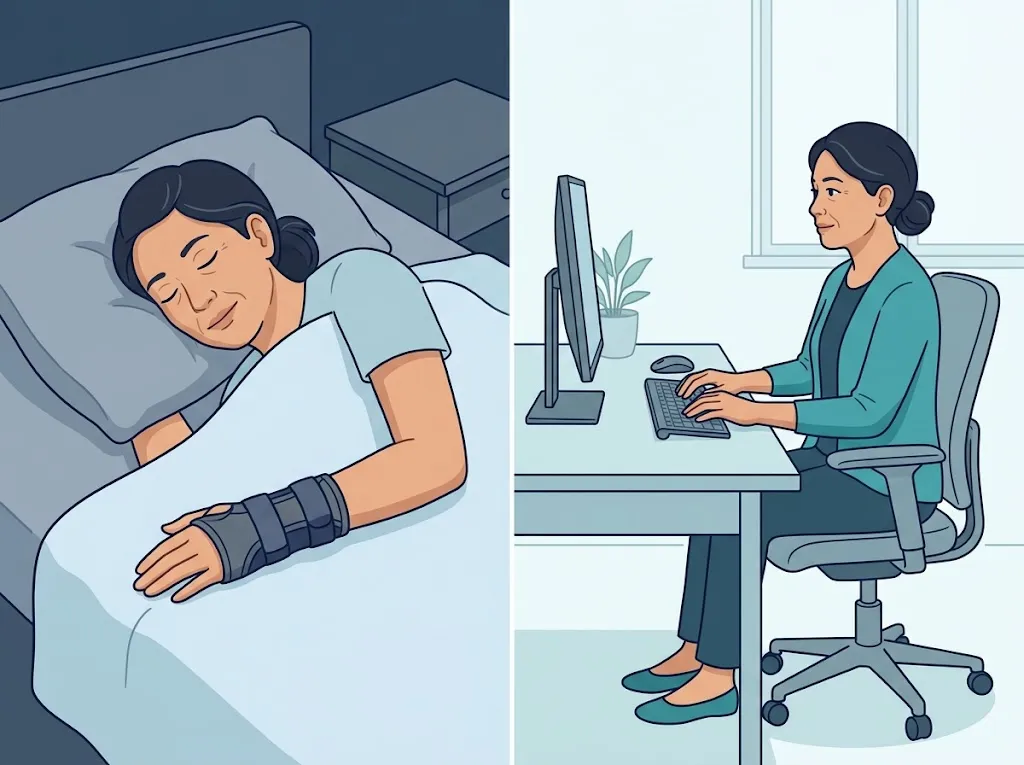
A wrist splint is the recommended first treatment. Worn at night with the wrist held straight — the position where the pressure inside the tunnel is lowest. Wear it consistently for several weeks before judging whether it works.
Adjust how you use the hand. Cut down tasks that hold the wrist bent or extended for long periods, take breaks, and set your desk up so the wrist stays straight.
Nerve and tendon gliding exercises help the nerve move more freely within the tunnel.
Treat associated conditions, particularly diabetes and thyroid disease.
A steroid injection into the carpal tunnel helps many people, often for the medium term. It is your doctor’s decision and should not be repeated often.
Surgery
Your doctor will consider it when:
- Symptoms have not improved after several months of other treatment
- Nerve conduction studies show the nerve is significantly compressed
- The muscle at the base of the thumb is wasting, or sensation is clearly reduced — which should not be left
The operation divides the band of tissue forming the roof of the tunnel, giving the nerve more room. Night-time numbness usually improves quickly. Strength and sensation can take months, and in long-standing cases may not fully return.
Recovery and rehabilitation
Do these two or three times a day, when the hand is not painful. Stop if the numbness gets worse while doing them.
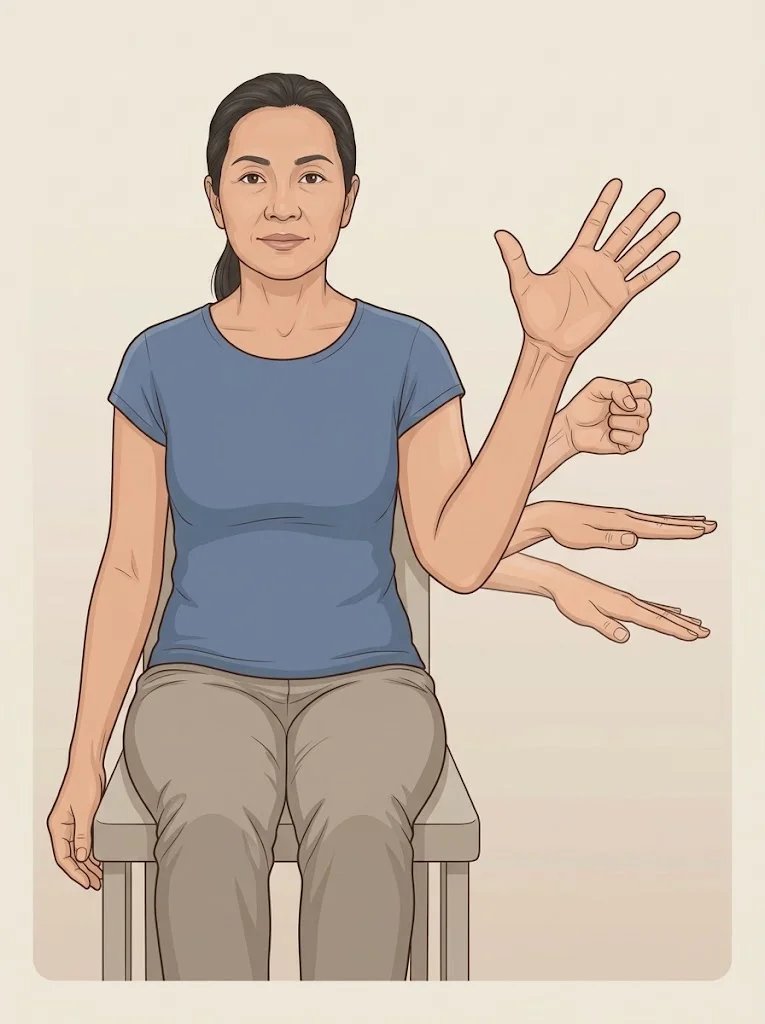
Median nerve glide
3 rounds · 5 times · hold each position 5 seconds
Start with a fist, thumb outside. Then open the hand with the fingers straight; then bend the wrist back; then take the thumb out to the side; then slowly return to the start.
Watch for — this should feel like a light pull only. Never do it until the numbness increases.
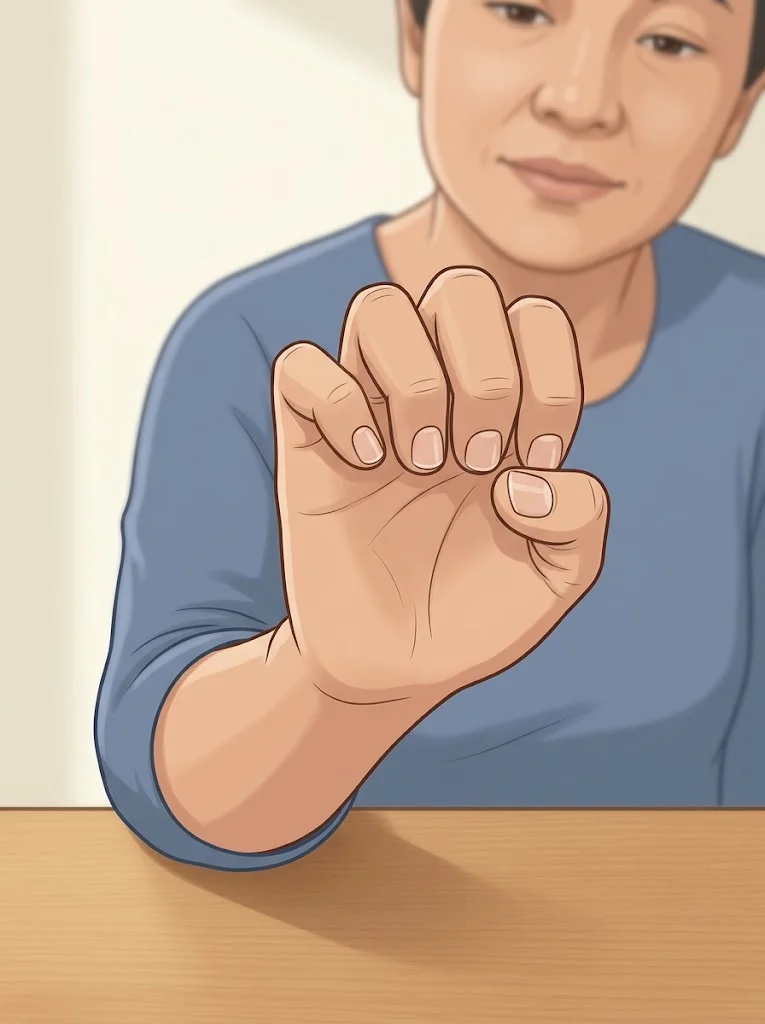
Tendon glide
3 rounds · 5 times
Start with the fingers straight. Then bend the fingertips into a hook with the knuckles straight; then make a full fist; then straighten out again.
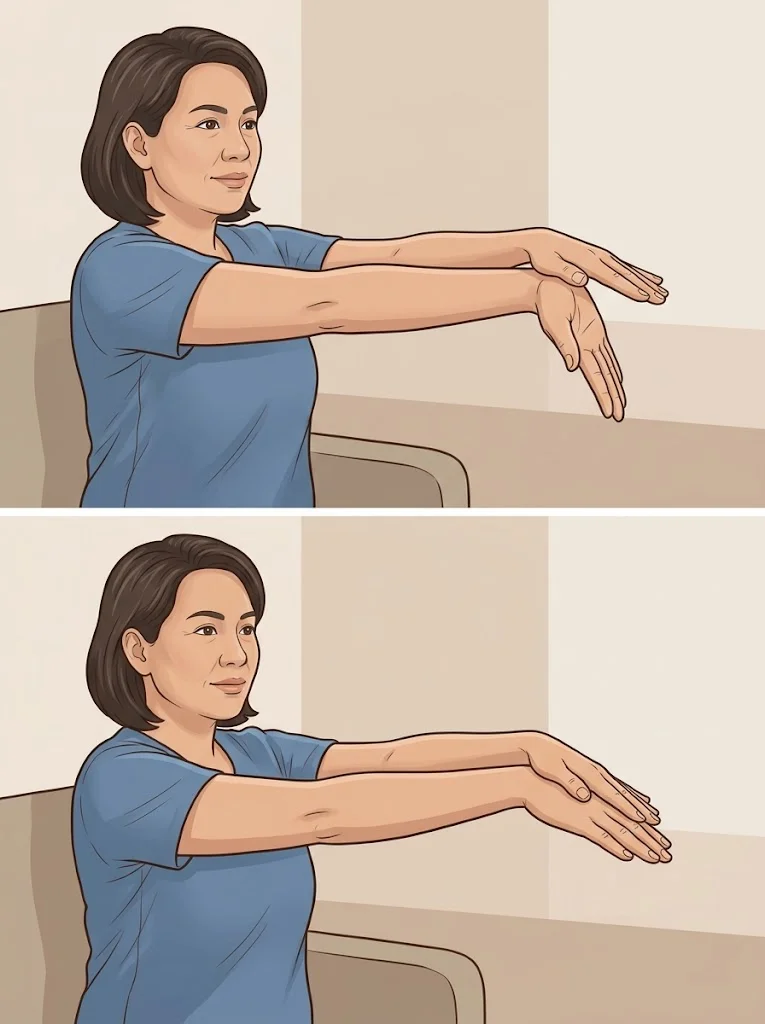
Wrist stretch
3 each side · hold 20 seconds
Stretch the affected arm out in front, palm up, and use the other hand to draw the fingertips down until you feel a stretch in the forearm. Then turn the palm down and press the back of the hand down instead.
Prevention and self-care
- Set your desk up so the wrist stays straight when typing or using a mouse, and use a wrist rest
- Take a break and change position every 30–60 minutes if you use your hands repetitively
- Hold your phone without bending the wrist, and rest it on a table rather than holding it for long periods
- Wear the night splint consistently if your doctor has recommended one
- Manage diabetes, thyroid and weight
- Use anti-vibration gloves if your work involves vibrating tools
Questions to ask your doctor
- Is my numbness coming from my wrist or from my neck?
- Should I have nerve conduction studies, and would the result change the treatment?
- Has the muscle at the base of my thumb started to waste?
- What sort of splint should I wear, when, and for how long?
- How long should I try non-surgical treatment before considering surgery?
Frequently asked questions
Why is it worse at night?
Many people bend or extend the wrist without realising while asleep, which raises the pressure inside the tunnel, and body fluid distributes differently at night. That is why symptoms come at night and why shaking the hand helps.
Does a wrist splint really work?
Yes, and it is the recommended first treatment, particularly worn at night, because it holds the wrist straight — the position where pressure inside the tunnel is lowest. Wear it consistently for several weeks before judging.
What happens if I leave it?
In mild cases many people stay stable or improve. But if the nerve stays compressed long enough for the thumb muscle to waste, strength and sensation may not fully return even after surgery. It is not worth waiting until that point.
Does surgery cure it, and how long is the recovery?
Release of the carpal tunnel works well for most people, and the night-time numbness usually improves quickly. Strength and sensation can take months, and in long-standing cases may not fully return. Time off work depends on your job.
References
- Shapiro LM et al. American Academy of Orthopaedic Surgeons/ASSH Clinical Practice Guideline Summary: Management of Carpal Tunnel Syndrome. J Am Acad Orthop Surg. 2024
- Jiménez-Del-Barrio S et al. The effectiveness of manual therapy on pain, physical function, and nerve conduction studies in carpal tunnel syndrome patients: a systematic review and meta-analysis. Int Orthop. 2021
Related educational reading
These pages explain tests, treatments and rehabilitation that often come up with this condition. They are general reading, not a treatment sequence arranged for you — that has to come from a doctor who has examined you.
Related conditions

Written by Assoc. Prof. Sorawut Thamyongkit, M.D.