
Trigger finger
A finger tendon cannot glide smoothly through its sheath, so the finger catches, locks, or is hard to straighten — worst on waking. Most people improve without surgery.
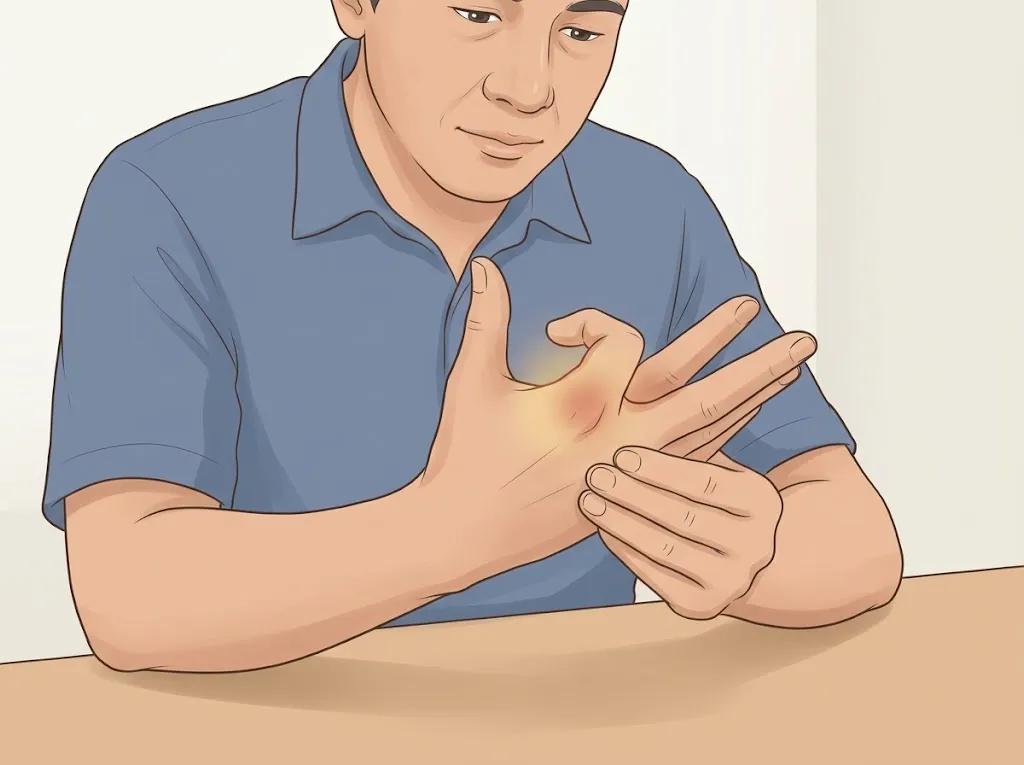
What it is
The tendons that bend your fingers start from muscles in the forearm, pass through the wrist, and run to the fingertips. Along the way they run inside a lubricated sheath, held against the bone at intervals by small rings of tissue so that they do not bowstring when you bend.
The first of those rings sits at the base of the finger in the palm. When that ring thickens, or the tendon at that point swells, the tendon can no longer glide freely. Bending the finger squeezes it through; straightening it catches, and then it pops through — which is the triggering.
That is why the tender spot is at the base of the finger in your palm, even though it is the joint further up that locks. Many people are puzzled that pressing on the locked joint does not hurt.
The fingers most often affected are the ring finger, the middle finger and the thumb.
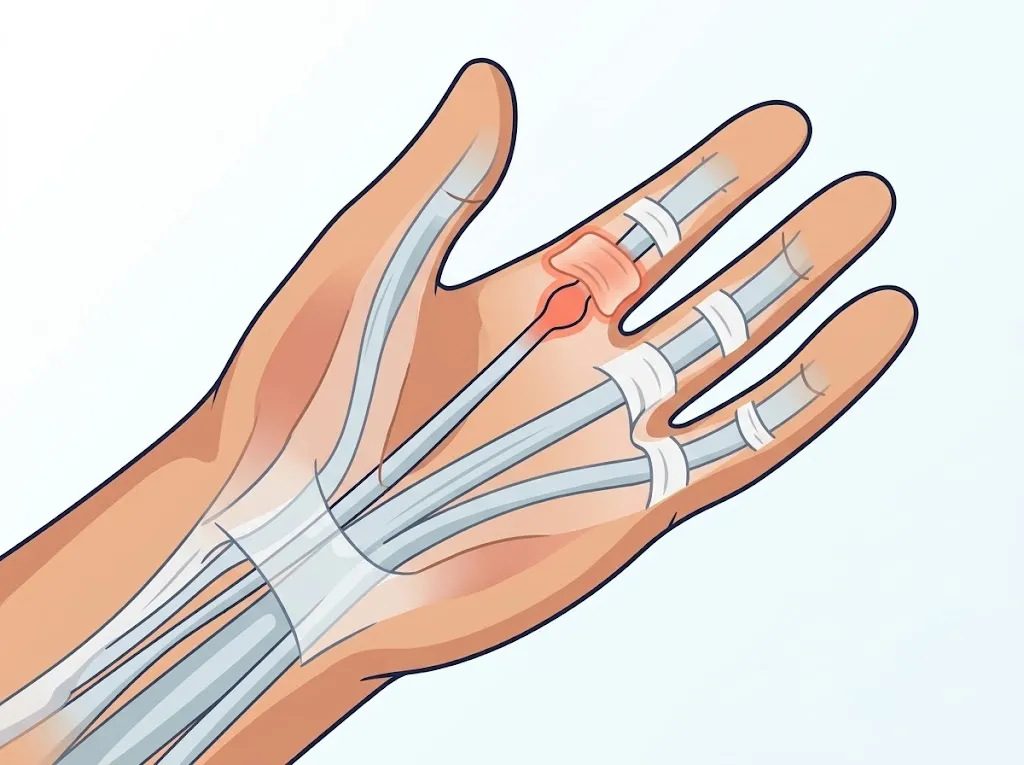
Symptoms
It usually progresses in this order:
- Stiffness or tightness at the base of the finger, especially in the morning
- A small tender lump at the base of the finger in the palm, which moves as you bend and straighten
- The finger catches as it straightens, with a click or a snapping sensation
- The finger locks bent and you have to use the other hand to prise it straight
- Late on, the finger stays bent and will not fully straighten even with help
Symptoms are usually worst on waking and ease once you have used the hand for a while.
Causes and risk factors
Often no specific cause is found. Associated factors include:
- Being female, and age 40–60
- Diabetes, the clearest of all — often several fingers, and less responsive to treatment
- Rheumatoid arthritis
- An underactive thyroid
- Work or activity involving repeated firm gripping — using scissors, squeezing tools, or carrying heavy loads hooked over the fingers
- It commonly occurs alongside carpal tunnel syndrome
When to see a doctor
Otherwise, see a doctor when the locking interferes with everyday use of the hand, when it is getting steadily worse, or when several fingers are involved.
How it is diagnosed
The history and examination are usually enough, and special tests are rarely needed.
Your doctor watches you bend and straighten the finger to see the catching, feels for the tender lump at the base of the finger in the palm, and assesses whether the finger can still be fully straightened — which indicates the severity and affects the choice of treatment.
Ultrasound is used in some people to look at the thickness of the ring and any fluid around the tendon.
Blood tests may look for associated conditions such as diabetes or thyroid disease, particularly when several fingers are involved.
Treatment options
Non-surgical treatment
Rest from what provokes it, particularly repeated firm gripping and carrying loads hooked over the fingers. Switch to thicker, softer handles.
A splint holding the knuckle straight, worn at night for several weeks, reduces morning locking for many people.
Tendon gliding movements and gentle massage at the base of the finger — done gently, not by forcing a locked finger straight.
Warmth and gentle movement before using the hand in the morning helps the tendon pass more easily.
Pain relief for short periods. Always ask a doctor or pharmacist first.
A steroid injection into the tendon sheath works well for many people, particularly recent cases affecting a single finger. Some resolve completely; some recur and can be injected again, though the number of injections is limited. It is your doctor’s decision.
Manage associated conditions, particularly diabetes, which affects how well treatment works.
Surgery
Your doctor considers it when non-surgical treatment has been tried thoroughly without success, when it keeps recurring, or when the finger is locked and will not straighten — which should not be left, because a joint held bent for a long time can stiffen permanently.
The operation divides the tight ring so the tendon can glide freely. It is a small procedure usually done under local anaesthetic; most people can move the finger immediately afterwards, and the locking usually stops for good.
Recovery and rehabilitation
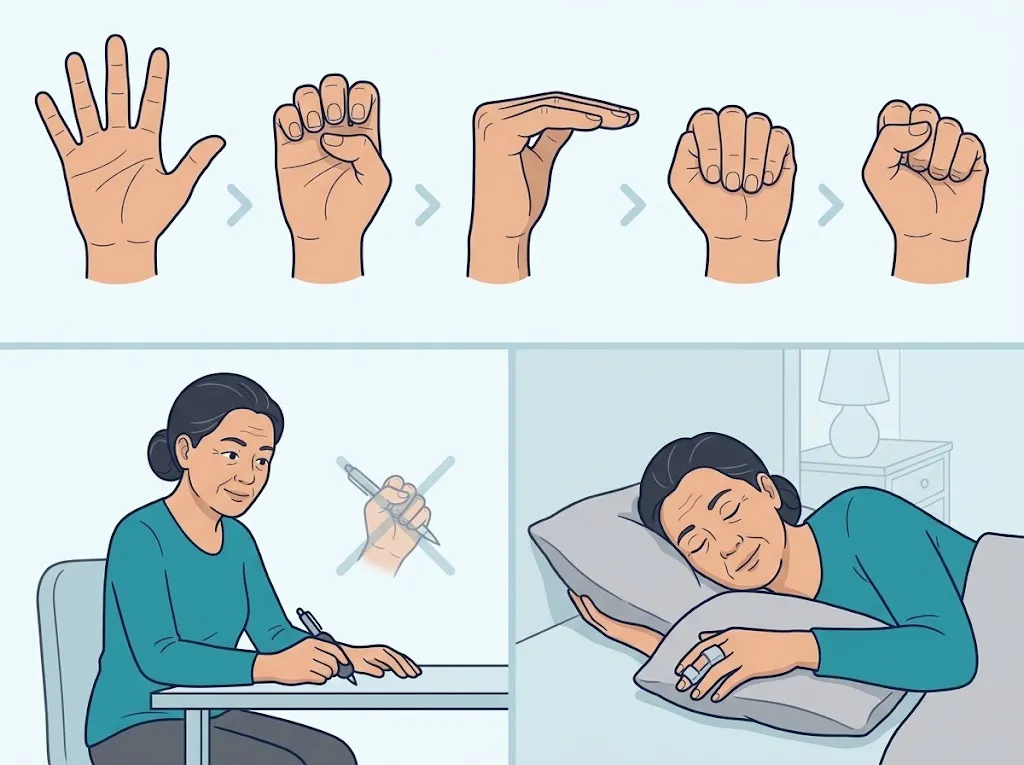
Do these two or three times a day, gently, and stop if you get sharp pain.
Tendon glide
3 rounds · 5 times · hold each position 3 seconds
Start with the fingers straight. Then bend the fingertips into a hook with the knuckles straight; then make a full fist; then straighten out again.
Watch for — this moves the tendon through its full range without needing a hard grip.
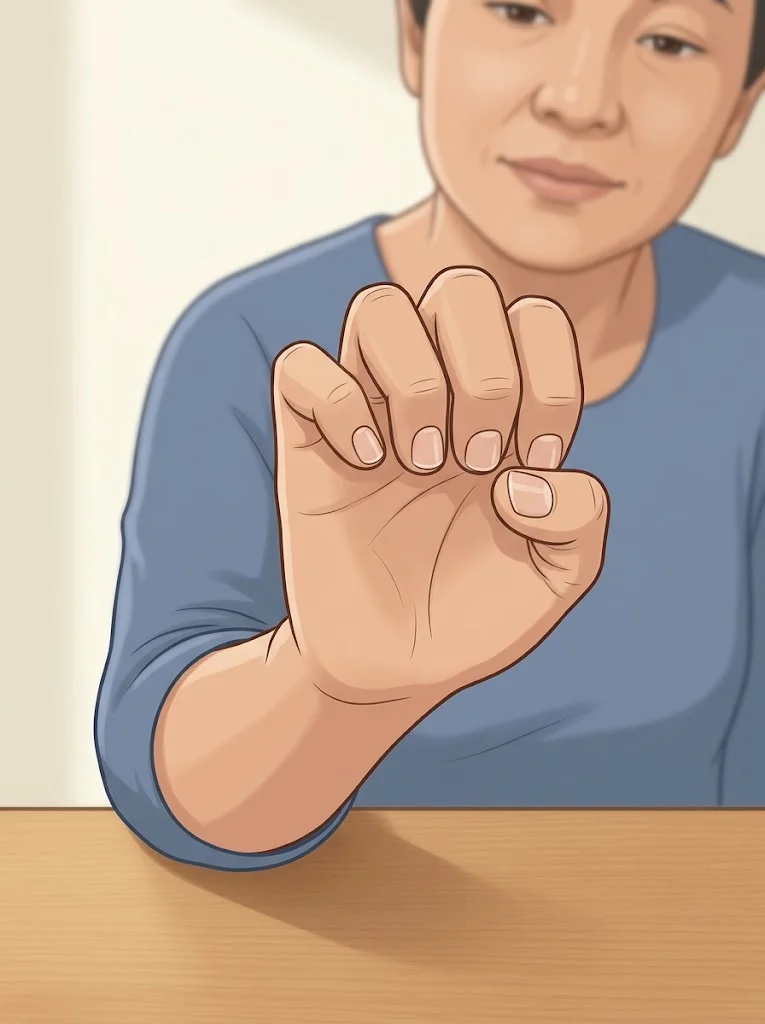
Blocked finger extension
2 rounds · 10 times
Use the other hand to hold the knuckle of the affected finger straight, then bend and straighten only the middle and end joints slowly.
Watch for — this glides the tendon without provoking the point where it catches.
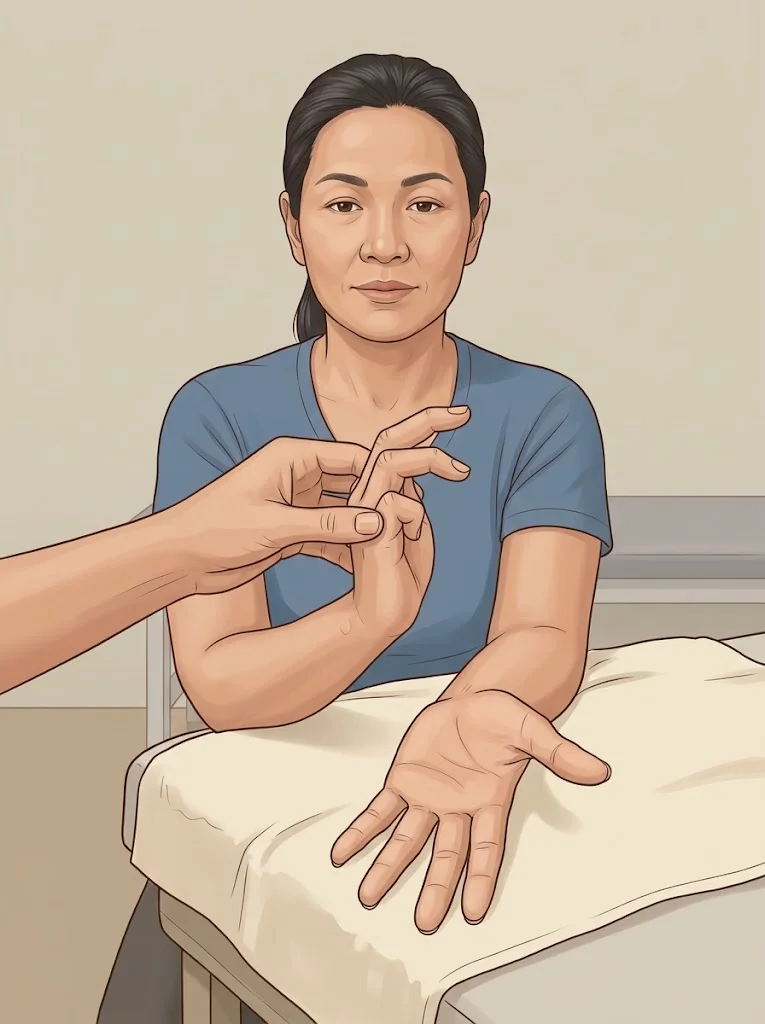
Gentle massage at the base of the finger
twice a day · 2 minutes each
Use the thumb of your other hand to press and circle gently over the tender lump at the base of the finger in the palm.
Watch for — press firmly enough to feel it, not enough to hurt, and never force a locked finger straight.
Prevention and self-care
- Avoid long spells of repeated firm gripping, and take breaks to change position
- Use thicker, softer handles on tools and equipment you use often
- Carry bags over your forearm or on your shoulder rather than hooked over your fingers
- Warm the hand and move it gently before using it in the morning
- Do not force a locked finger straight
- Manage diabetes and thyroid disease
Questions to ask your doctor
- Can my finger still fully straighten, and what stage is it at?
- Should I try a splint first, and for how long?
- Would an injection suit me, and how likely is it to come back?
- How many injections can I have?
- If I have surgery, how long off work, and when can I move the finger?
Frequently asked questions
Why is it worst when I wake up?
The hand tends to rest in a bent position for hours while you sleep, and fluid gathers around the tendon, so the sheath is at its tightest. The tendon therefore has most difficulty passing first thing, and it usually eases after you have used the hand for a while.
Does massaging or straightening it help?
Repeatedly forcing a locked finger straight tends to irritate it further. What helps more is resting the hand from what provokes it, wearing a splint, and doing gentle tendon-gliding movements.
How well does an injection work?
A steroid injection into the tendon sheath works well for a good many people, particularly recent cases affecting one finger. Some resolve completely, some recur and can be injected again — but the number of injections is limited. It is your doctor's decision.
What has diabetes got to do with it?
People with diabetes get trigger finger more often, frequently in several fingers, and respond to injection less well. Tell your doctor you have diabetes, and keep your blood sugar under control alongside treatment.
References
Related educational reading
These pages explain tests, treatments and rehabilitation that often come up with this condition. They are general reading, not a treatment sequence arranged for you — that has to come from a doctor who has examined you.
Related conditions
Written by Assoc. Prof. Sorawut Thamyongkit, M.D.