
Snapping hip
A click or a clunk you can feel or hear in the hip when you move the leg. What causes it, and whether it is anything to worry about.
What it is
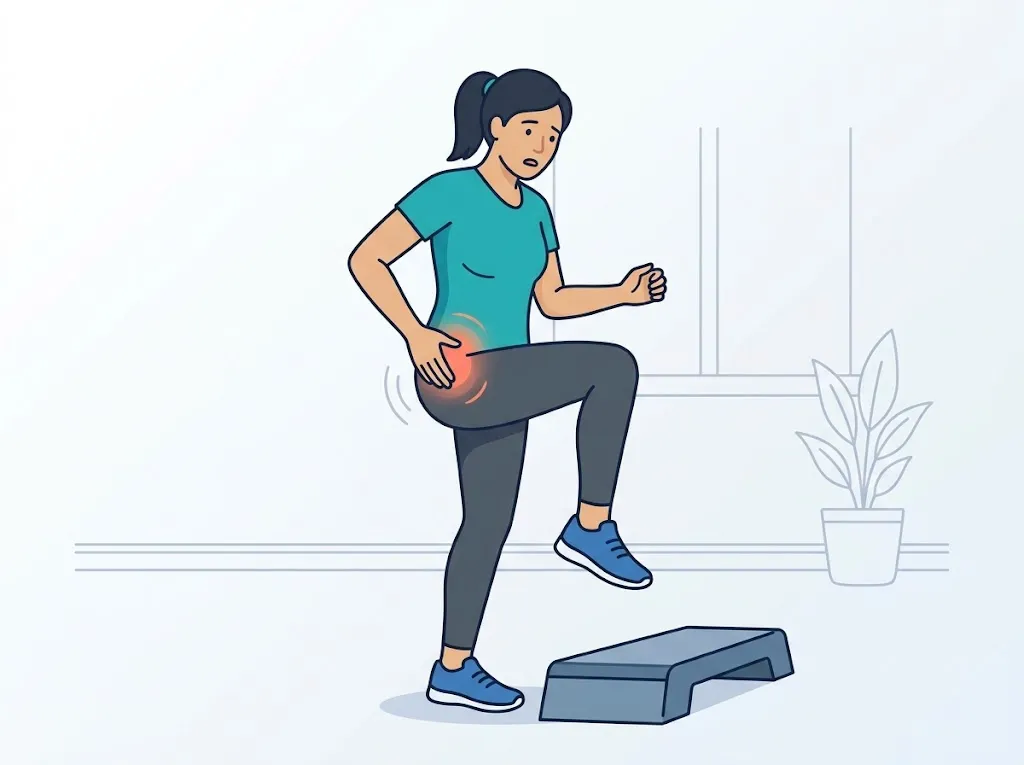
Many people have felt or heard a click or a clunk around the hip when standing up, walking, climbing stairs or swinging the leg. This is called snapping hip syndrome.
Most of the time it is not harmful if there is only the noise and no pain. But if the rubbing is allowed to continue for a long time, it can inflame the tendon or the bursa around the hip joint, and pain can start alongside it.
Symptoms
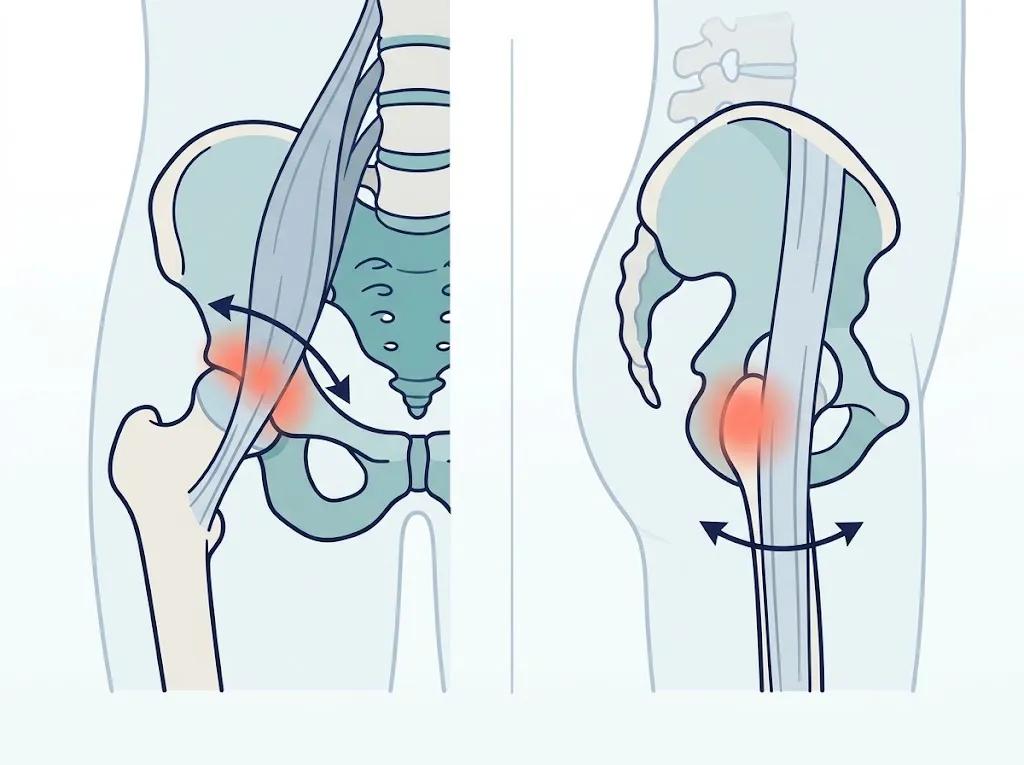
The click is nearly always a tendon or muscle around the hip that has become too tight, flicking over a bony prominence as the leg moves. There are three main kinds.
External snapping hip
- The most common kind. The band down the outside of the thigh (the IT band) or the buttock muscle (gluteus maximus) is tight and flicks over the bony point on the outside of the thigh bone (the greater trochanter).
- You can often see the tendon jump or flick at the side of the hip as the leg moves.
Internal snapping hip
- The tendon of the hip flexor at the front (the iliopsoas) flicks over the pelvis or the pubic bone.
- It is usually felt as a deep clunk in the groin, when the leg is straightened after the hip has been bent.
Intra-articular snapping hip
- Less common. It comes from something inside the joint itself — a tear of the rim of cartilage around the socket (a labral tear), or a loose fragment of cartilage floating in the joint.
- It usually comes with a deep, catching ache, or a feeling that the joint locks.
Causes and risk factors
- Athletes, especially runners, dancers, gymnasts and footballers, who use the hip muscles hard and bend and straighten the hip over and over.
- People with tight muscles, who do not stretch, so the tendons lose their give.
- Teenagers who are growing quickly, whose bones can outpace the flexibility of the muscles and tendons.
When to see a doctor
As above, a click with no pain is usually not something that needs urgent treatment. But see a doctor if you have any of the following.
Treatment options
The core of the treatment is reducing the tightness in the muscles and tendons.
- Rest and change what you are doing. Cut back on activities that bend the hip repeatedly. If it is painful, a cold pack on the sore spot can help.
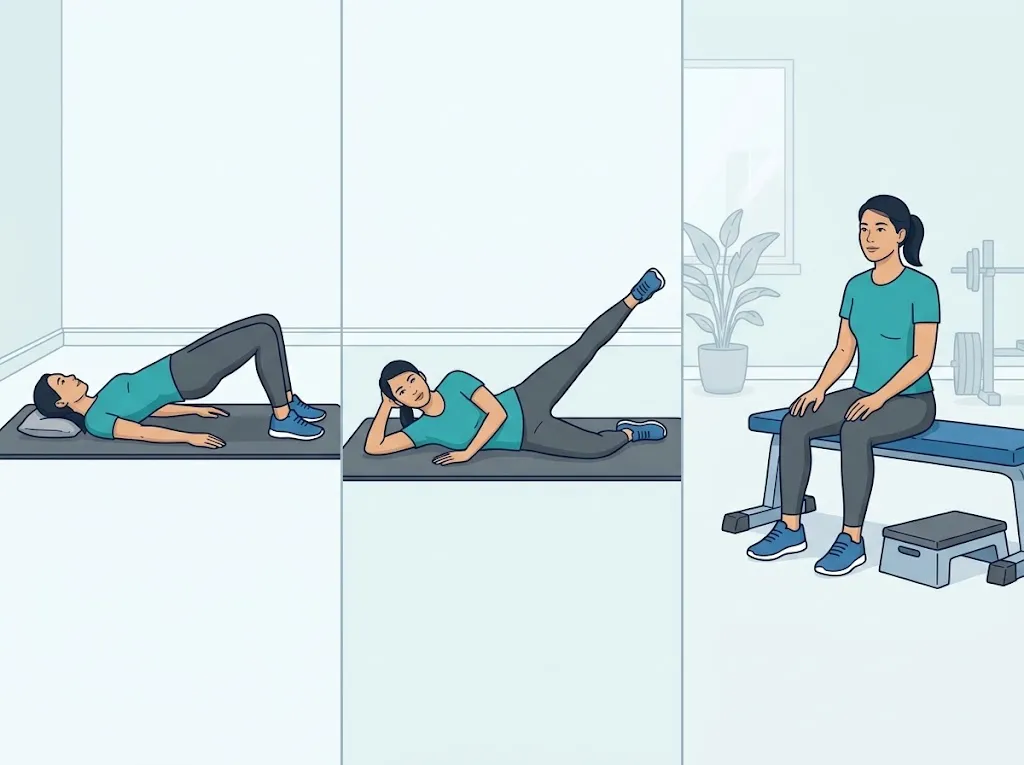
- Stretching. This works best. Concentrate on the outside of the thigh (the IT band) and the hip flexors at the front, and keep it up.
- Strengthening. Build strength in the hip muscles and the core, so the joint moves more steadily.
- Medical treatment. If the pain is persistent, your doctor may suggest anti-inflammatory medicines or physiotherapy, or — where there is a lot of inflammation — a targeted injection. Surgery is considered only for people who genuinely have not improved with anything else, or where something inside the joint is torn.
Questions to ask your doctor
- Which structure is the click in my hip most likely coming from?
- Do I need any further tests, and would the result change the treatment?
- Which muscles should I stretch, and how often?
- Can I carry on with my sport or my usual exercise?
- How many weeks should it take to improve, and when should I come back?
References
Related conditions
Written by Assoc. Prof. Sorawut Thamyongkit, M.D.