
Hip pain
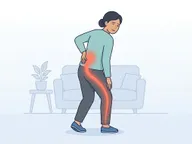
Hip pain comes from several different places — the joint itself, the tendons around it, or the muscles. Where it hurts is the clearest clue to which.
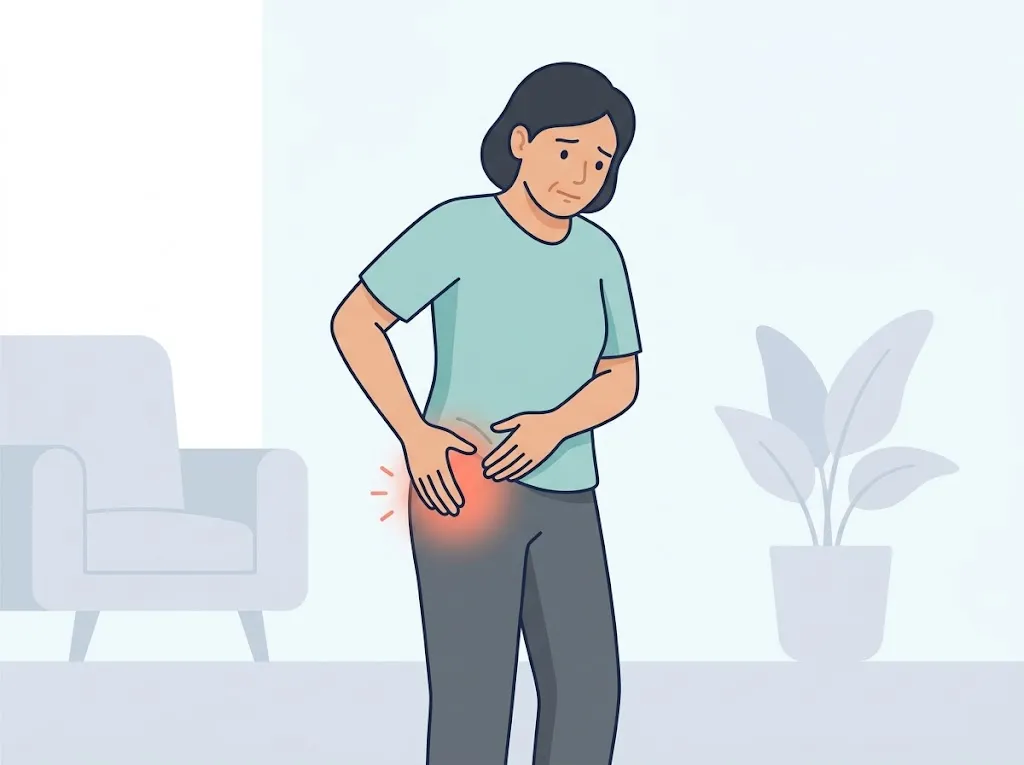
What it is
Hip pain is common at every age. The character of the pain and, above all, where it is felt give a first indication of whether the problem is in the hip joint itself, in the tendons, or in the muscles around it.
Symptoms
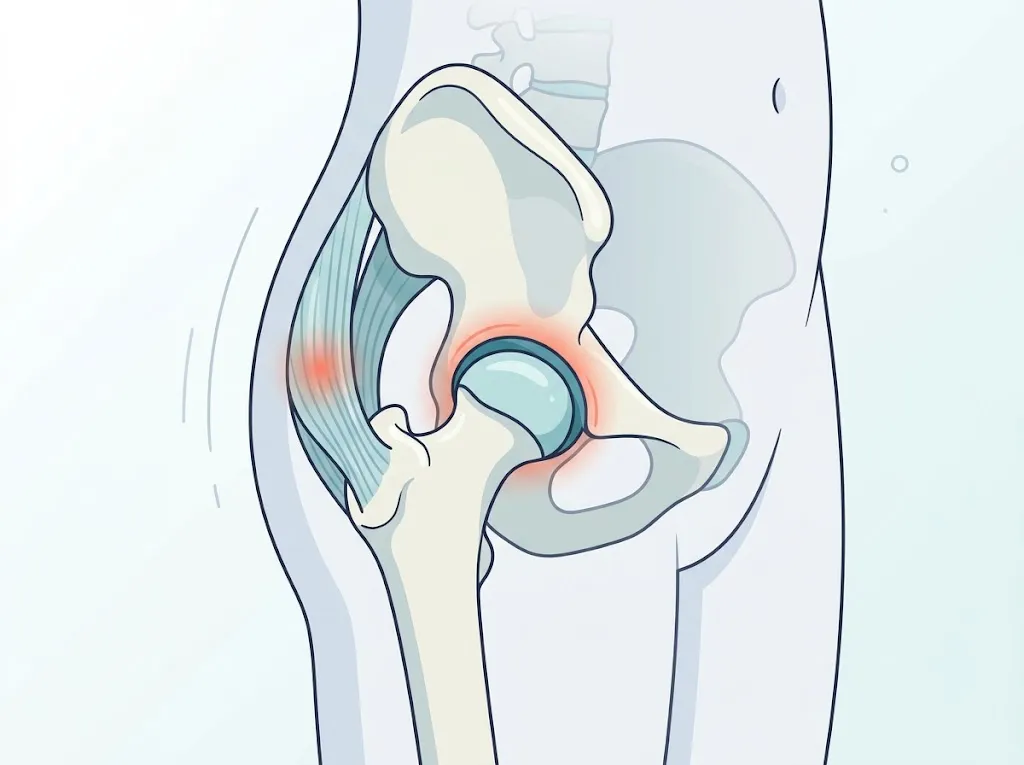
What the location tells you
| Where it hurts | What it may be related to |
|---|---|
| Groin pain | A problem inside the hip joint itself — hip osteoarthritis, a tear of the rim of cartilage around the socket, or inflammation in the joint |
| Lateral hip pain, on the outside | Inflammation of the tendons or the bursa around the hip (trochanteric bursitis), or tightness of the band of tissue down the outside of the thigh (the IT band) |
| Buttock pain, at the back | A muscle in the buttock pinching the nerve (piriformis syndrome), or pain referred from the lower back, such as a disc pressing on a nerve |
Causes and risk factors
- Hip osteoarthritis. Common with age. The The smooth surface covering the ends of the bones inside a joint. It lets the joint move easily and helps absorb load. wears with use, which causes pain and stiffness — most noticeably on waking, or after walking for a long time.
- Bursitis or tendinitis around the hip. Common in people who do the same movement repeatedly, such as runners, and in people who always sleep on the same side.
- Muscle strain. From lifting something heavy, twisting awkwardly, or playing sport.
- Pain referred from the spine. Low back pain that travels down into the buttock and the back of the thigh.
When to see a doctor
Where none of the warning signs below apply, mild pain from everyday use can usually be managed at home first. But the two groups below are very different from each other, and it is worth telling them apart.
Treatment options
Looking after it yourself
- Rest it. Avoid what makes the pain worse — running, stairs, lifting heavy things.
- Cold and heat. Cold for the first two or three days if it started with an injury; after that, warmth can help the muscles let go.
- Change your position. Avoid sitting with your legs crossed, and avoid lying on the painful side — or put a pillow between your knees.
- Stretch. Gently stretching the hip and the outside of the thigh reduces the tension on the tendons.
Treatment from a doctor
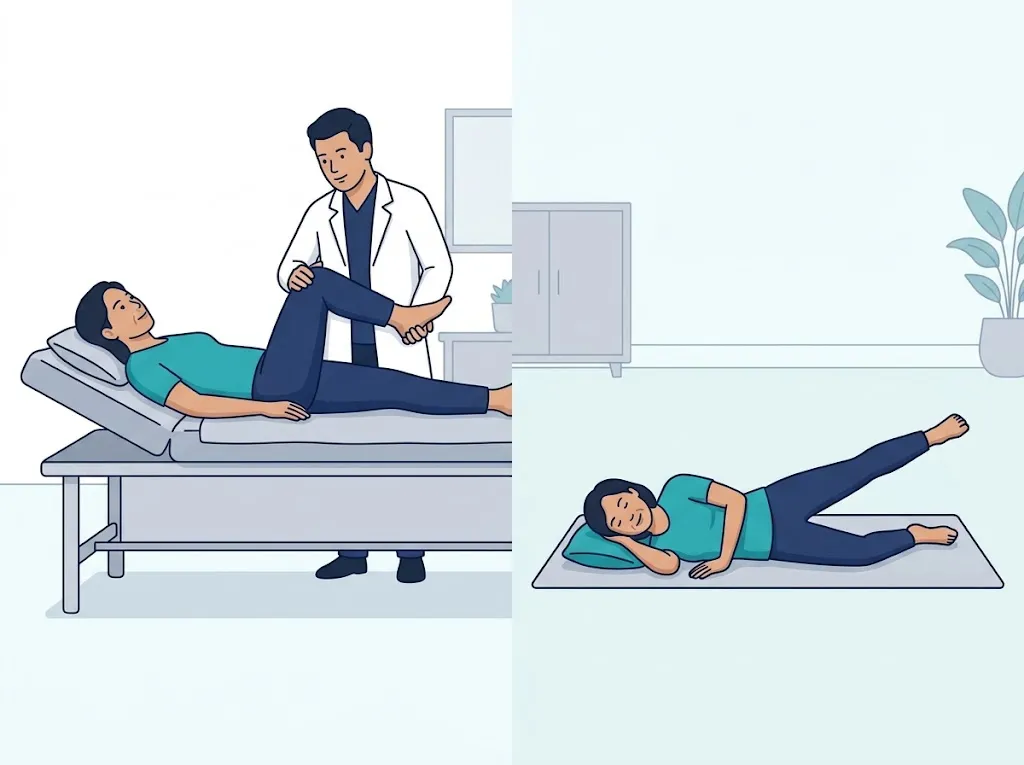
If self-care has not helped, your doctor may consider anti-inflammatory medicines, physiotherapy, a targeted injection to reduce inflammation, or — where the joint is severely worn — a hip replacement.
Questions to ask your doctor
- Where is my hip pain most likely coming from?
- Do I need an X-ray or any other test, and would the result change the treatment?
- What kind of exercise should I do, and what should I avoid?
- Are the medicines you suggest safe alongside my other conditions?
- How many weeks should it take to improve, and when should I come back?
References
- Hunter DJ, Bierma-Zeinstra S. Osteoarthritis. Lancet. 2019
- Hannon CP et al. American Academy of Orthopaedic Surgeons Clinical Practice Guideline Summary: Management of Osteoarthritis of the Hip. J Am Acad Orthop Surg. 2024
- Kolasinski SL et al. 2019 American College of Rheumatology/Arthritis Foundation Guideline for the Management of Osteoarthritis of the Hand, Hip, and Knee. Arthritis Care Res. 2020
- Dancy ME et al. Gluteal Tendinopathy: Critical Analysis Review of Current Nonoperative Treatments. JBJS Rev. 2023
Related conditions
Written by Assoc. Prof. Sorawut Thamyongkit, M.D.